A Tribute: A Canterbury Tale

If the most important subjects of film are light and time, I can’t think of a more poignant work than A Canterbury Tale. As seen by the Archers—the writing-directing-production team of Michael Powell and Emeric Pressburger—light and time are the basis of our identity, which happens to be the theme of this film.
A Canterbury Tale (1944) is about clues, not as in a detective story (although the search for the mysterious “glue man” almost qualifies it as one), but clues leading to what is most essential or, perhaps, the real “why we fight” of life: culture, landscape, history, the senses. These things are woven into a slight double narrative, simultaneously very rich and very absurd: a mysterious man pouring glue onto the hair of young women and the personal journey of three people—modern-day pilgrims—who, according to Powell, “receive in Canterbury their blessings.”
Why do we fight? This wartime question was given an impeccable, contemporary answer by the Frank Capra team, in the United States, and by the documentarian-poet Humphrey Jennings, in England. The Archers, though, were stretching the boundaries, as if reaching for another reality. The film seems to be strictly about the everyday, while at the same time dealing with things almost never touched upon in cinema. The immaterial made concrete by the camera work of Erwin Hillier. A wholly fantastic mise-en-scène by Powell, intriguing because he does exactly the same and more with “realist” and “documentary” material as with studio magic, and with a unique activation of human senses, made sacred through the purest means of cinema. And all this based on the strangest of scenarios, developed by the greatest writer of cinema (at least since F. W. Murnau’s Carl Mayer): Emeric Pressburger.
The film is a triumphant return to original grace, about a nation and a set of values and a culture—not as something static but with a surprise every second. I’d call the Archers’ approach, based on an absolute respect for realism, “mythical neorealism”—comparable to the great Italian movement, to whose achievements A Canterbury Tale can be seen as adding something unique. In a letter to a friend recommending the Archer team’s I Know Where I’m Going! (1945), no less than Raymond Chandler defined that something: “I’ve never seen a picture that smelled of wind and rain in quite this way, nor one that so beautifully exploited the kind of scenery people actually live with, rather than the kind that is commercialized as a showplace.” I will just add that only three years later, the Archers created a remote Himalayan community entirely in the Pinewood Studios, for their heady, exotic Black Narcissus.
Enter faces. You seldom feel this kind of love for actors and the people they depict. I feel I should first mention a marginal figure. Esmond Knight was once almost a matinee idol, until the fatal moment of an explosion during a battle mission, when he lost an eye. But he had a friend and admirer in Powell, who made him an Archers regular—here, for instance, in three roles: a soldier, the village idiot, and the film’s opening narrator. Epitomizing, once again, the agenda of “why we fight.” And we love this film’s characters: the lovely young woman who has lost her man; the stern and serious American; the organist with a dream. Even Colpeper, whose puritanical convictions have caused him to become the mysterious terror of the night, the fanatical yet still gentle glue man, ready to risk all and to ridicule himself for a greater, though misguided, idea.
In the best tradition, the “bad” man here is once again given the most generous role. The glue man is a living paradox, leading a lonely fight for the community and ending in isolation; again, to quote Powell, “He has tried to play God, and the part of God is a lonely one.” Eric Portman’s Colpeper can be ranked with another great Powell and Pressburger character, Anton Walbrook’s harsh/gentle impresario Boris Lermontov, in The Red Shoes (1948). Colpeper might expound his philosophy in a ruthless way, but he is certain that he is acting for the cause of Culture (as Lermontov does for the cause of Art), without compromise. For characters with such a twisted perception of the world, their fight can only be strange.
There are so many moments of wonderment in this film, many of them extremely simple, and just as many made golden by their deep humanity. How the wind waves the hair of the girl; night scenes where only mysterious sounds seem to exist; how the passage of a train into the shadows of a tunnel produces a short moment of ecstasy; the first sight of Canterbury. Or one of the greatest sequences in all of cinema: the organ in Canterbury Cathedral, symbolizing the fulfillment and absolute sameness of the everyday and the sacred. At its best, film can be a synthesis of mysterious signs and moments. A Canterbury Tale—like its sister films, the entirely different The Life and Death of Colonel Blimp (1943) and A Matter of Life and Death (1946)—achieves that rare synthesis. Unbearably moving at times, it touches the heart as well as the soul.

More: Essays
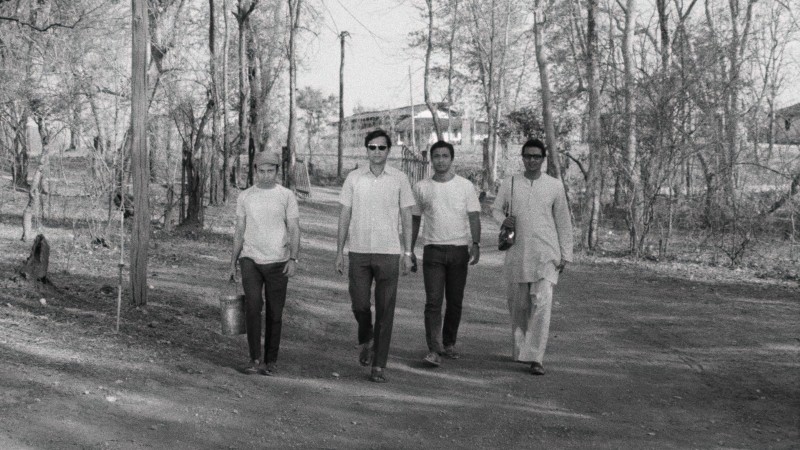
Days and Nights in the Forest: Into the Woods
In this tale of four privileged bachelors who embark on a trip to the Indian countryside, Satyajit Ray balances a biting critique of masculine fragility with splendid visual grace.
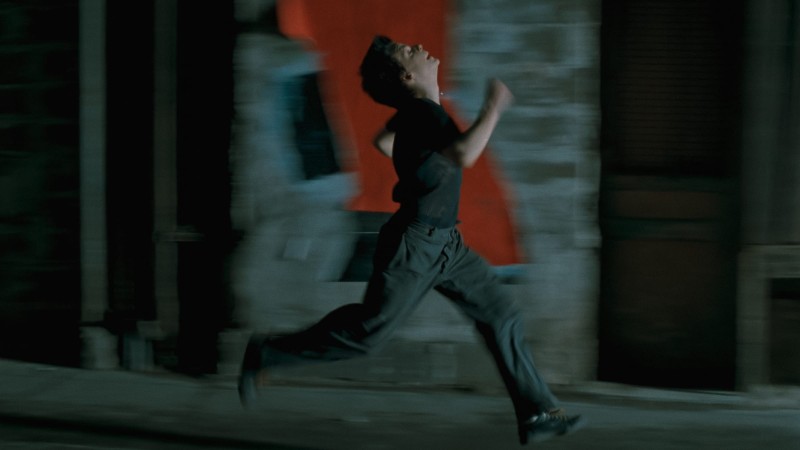
Three Films by Leos Carax: Vital Signs
With their mix of comedy, ecstasy, and aesthetic strangeness, the French auteur’s first three features grant us access to psychic states that we might not otherwise be able to enter.
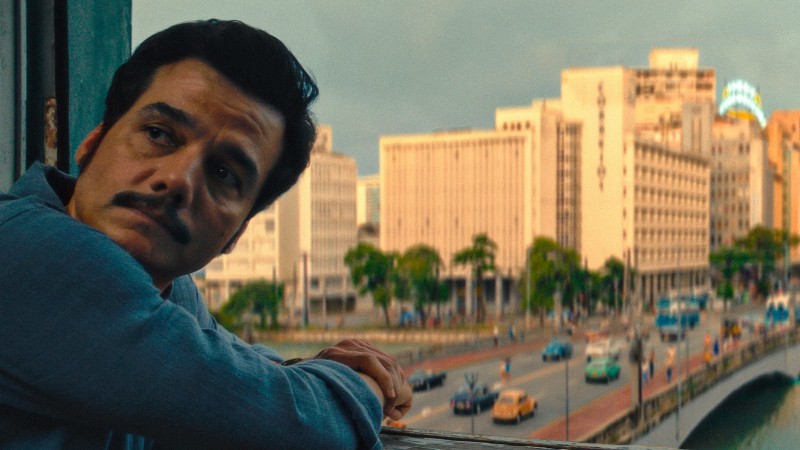
The Secret Agent: Left Out of History
Kleber Mendonça Filho explores the elisions of history and memory in this splendidly polymorphous thriller about a man on the run in 1977 Brazil.
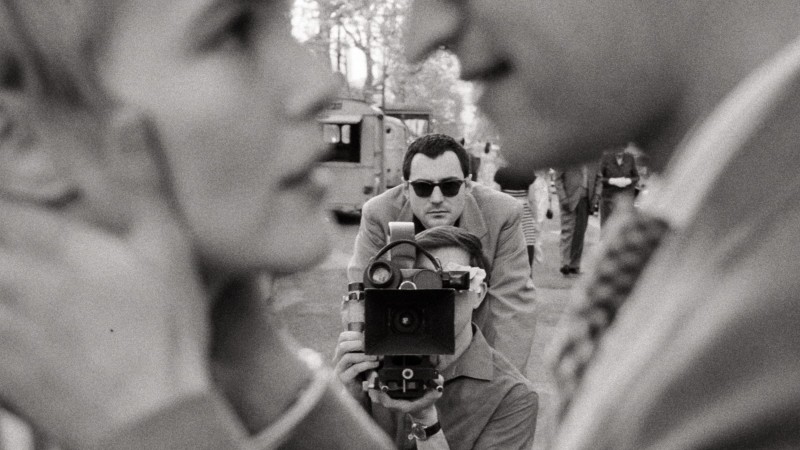
Nouvelle Vague: Insolent Like No One Else
In this exhilarating account of the making of Jean-Luc Godard’s Breathless, Richard Linklater lovingly reconstructs the vanished world of late-fifties Paris and the cinephilic culture surrounding the French New Wave.