The Shop on Main Street: Not the Six Million but the One
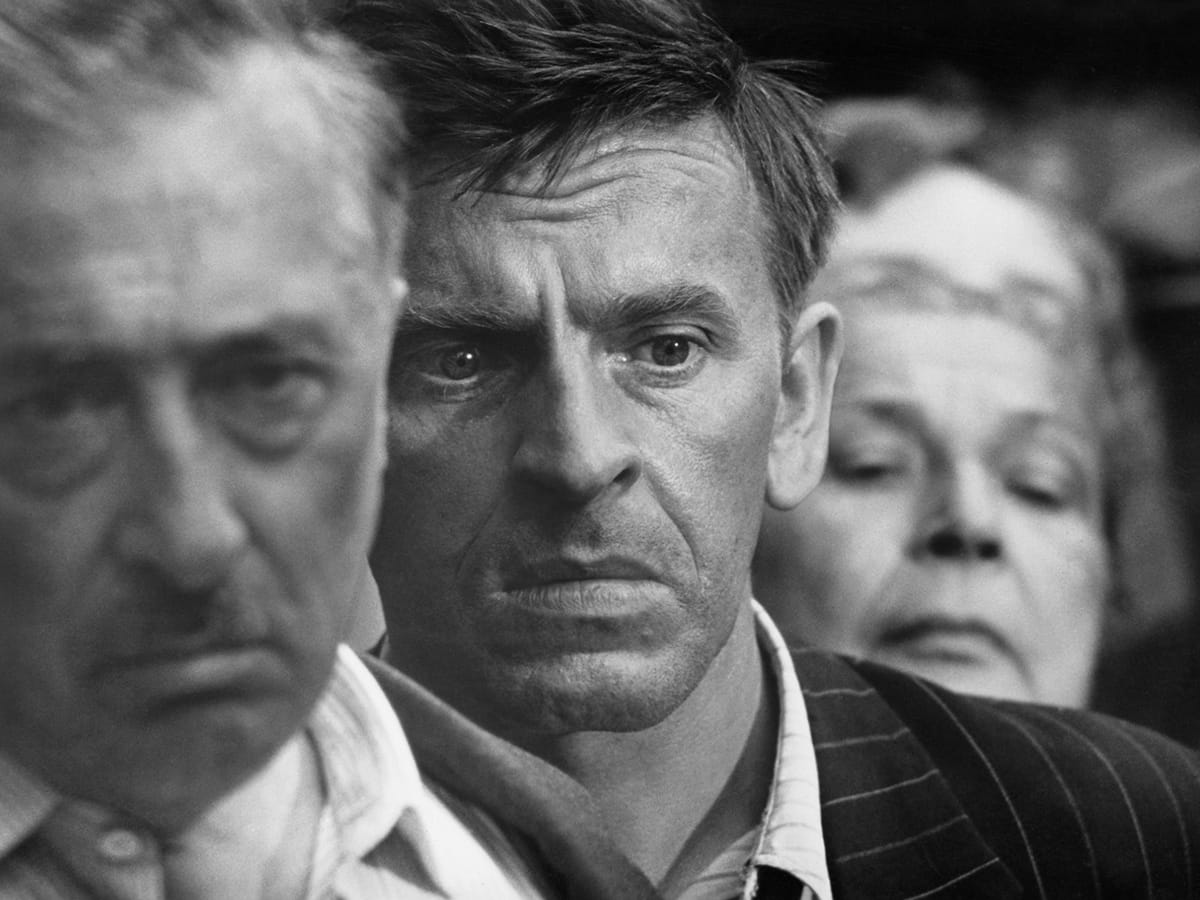
Of all my films, The Shop on Main Street touches me most closely. Elmar Klos and I usually work as equal partners, but in this case he left me a free hand. He knows that I am not thinking of the fate of all the six million tortured Jews, but that my work is shaped by the fate of my father, my friends’ fathers, mothers of those near to me and by people whom I have known. I am not interested in the outer trappings—figures, statements, generalizations. I want to make emotive films. I believe their revival is coming and emotive films grow from the feeling of the director.
Ladislaw Grosman’s short novel The Trap, later called The Shop on Main Street, attracted Klos and myself by its special angle of truthfulness, the tragicomedy of the story and the author’s humanistic approach. He has created a tragedy around one couple, Rozalie Lautmann and Tono Brtko, and in so doing has seen fascism from within. Grosman wrote the screenplay himself; we merely adjusted some details for the purpose of filming. Such specific subject matter does not allow for the usual methods of co-authorship.
The plot actually turns on a misunderstanding. Humor is not lacking in even the most tragic situations, but the viewer or reader knows that life is in the balance. The author knows the people he writes about intimately, and he is also a master of style. The Shop on Main Street gives a picture of Slovak fascism with all the provincialism and familiarity peculiar to it and with its consequences all the more horrifying. While told through two characters, it touches wider issues so that it can be applied to any type of fascism. While presenting the fate of individuals, it in fact portrays a prototype. For the lot of the Jews one can substitute the lot of anyone in this world.
The Shop on Main Street, in short, is an episode of high tragedy, a concentration of the world’s absurdities, in which good, ignorant, and indecisive people like Brtko enable “force” to get a firm hold.
Ladislav Mnacko wrote in connection with the Eichmann trial that he found the key to understanding in the fate of the Jews he had known personally, not in the sum total of those indirectly killed by Eichmann. Numbers tell us nothing. In this I agree with Mnacko. Armand Gatti in L’enclose said more about Communists during the war than would a sweeping epic or a powerful external film. The most perfect reconstruction of a situation—and this brings us to The Shop on Main Street—cannot outdo a picture of fascism concentrated in the tragedy of a single human being.
We laid the scene in Sabinov, a small Slovak town near the northeastern frontier. The author had not taken his story from there, but it is a town which has not changed in appearance since the days of the Slovak State. People helped us to reconstruct details. We found that the local citizens were wonderful as extras. They were uninhibited, they enjoyed working and playing. They were disciplined, too, and honest in their daily work and in making a movie. It would have been out of the question to film all this with professional extras. But we did not use the system of cinema verité; the people naturally and consciously acted out the screenplay.
As for the leading performers, Ida Kaminská and Josef Kroner, they so lived their parts that they gave content to Mnacko’s apt statement: “The die was cast with the passing of the Nuremberg laws. The rest was a matter of fantasy.”
The role of Tono Brtko has been Kroner’s greatest opportunity. For the first time he has been able to pull out all the stops. I operated with Kroner, not with Brtko. I knew before shooting started that Kroner was the only candidate for the part. The first rushes proved I was right. They somehow merged and Kroner ranged from the level of a man’s terrible crisis at having killed, to moments of almost Chaplinesque quality. He helped in an amazing way to underline the farcical aspects of the story. His work defies classification—he is too strong a personality.
When I thought about casting the part of Heinrich Lautmann’s widow, who runs the shop that sells ribbons, lace, buttons, I was at a loss. Czechoslovakia has no actress of the older generation with the experience of life to create such a complex, exceptional character. But Polish colleagues drew our attention to Ida Kaminská. Over 60, she is manager, producer, and leading actress at the Jewish Theater in Warsaw. She is a daughter of Esther Rachel Kaminská, the famous Polish actress who founded the theater just 100 years ago. The Kaminská family represents something of a dynasty of actors for Ida. Her husband, daughter, and son-in-law are now acting at the theater. Ida Kaminská carries the widow Lautmann’s fate within herself, and she plays from actual experience.
We were fortunate to obtain Kroner and Kaminská as our protagonists in The Shop on Main Street. Their dramatic unity has swept me off my feet. And I am sure that audiences will find it difficult to forget the white-haired, hard-of-hearing, and bewildered old lady with the innocent face. She is the most powerful reminder I know of fascism and its victims.
This article first appeared in the New York Herald Tribune on January 23, 1966. Reprinted here with permission from the Center for American History, University of Austin.

More: Essays
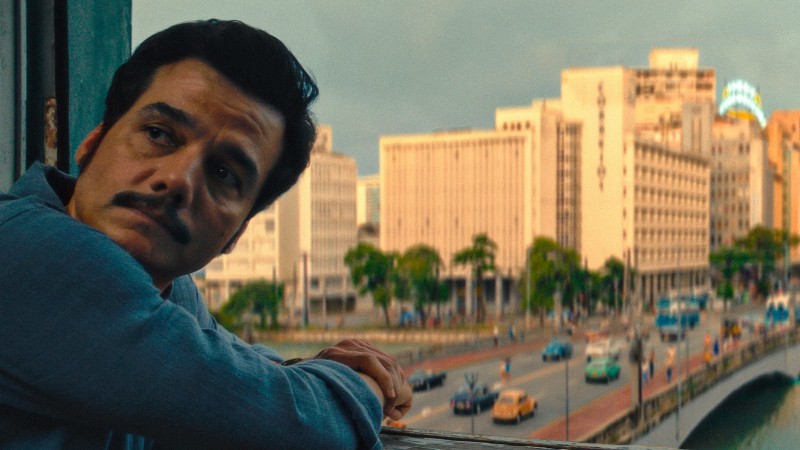
The Secret Agent: Left Out of History
Kleber Mendonça Filho explores the elisions of history and memory in this splendidly polymorphous thriller about a man on the run in 1977 Brazil.
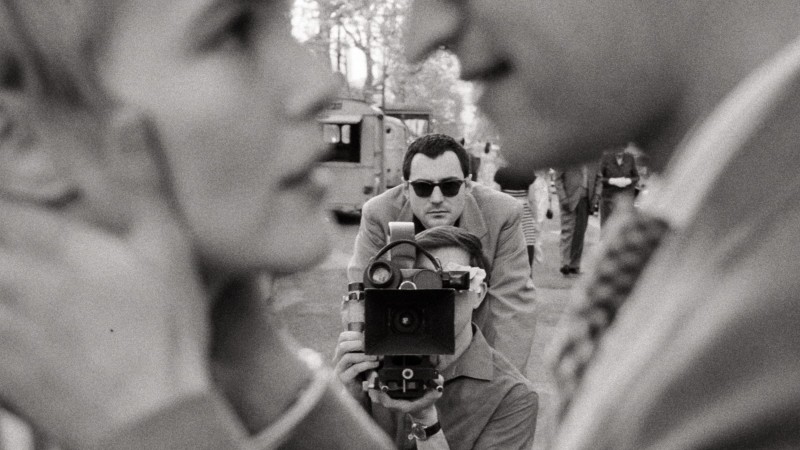
Nouvelle Vague: Insolent Like No One Else
In this exhilarating account of the making of Jean-Luc Godard’s Breathless, Richard Linklater lovingly reconstructs the vanished world of late-fifties Paris and the cinephilic culture surrounding the French New Wave.
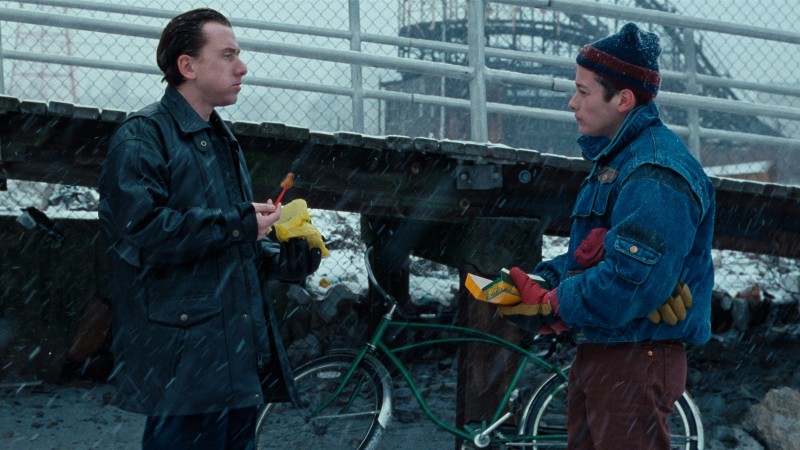
Little Odessa: He Ain’t Heavy, He’s My Brother
James Gray’s extraordinary debut feature is a painstakingly distilled tale of crime and family dysfunction, captured with a merciless gaze and a sharp attention to idiosyncratic detail.
American Dream: The Time Is Right
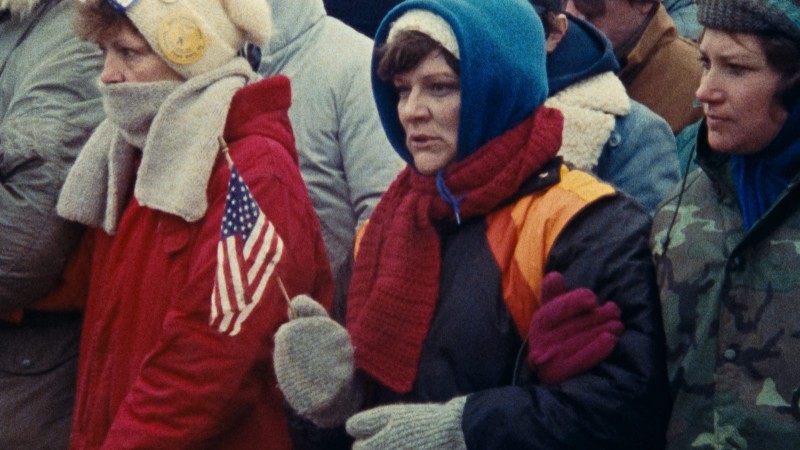
In her second film, Oscar-winning documentarian Barbara Kopple captures the anguish and perils of disunity in the labor movement and the corrosion of union power during the Reagan era.