Do the Right Thing

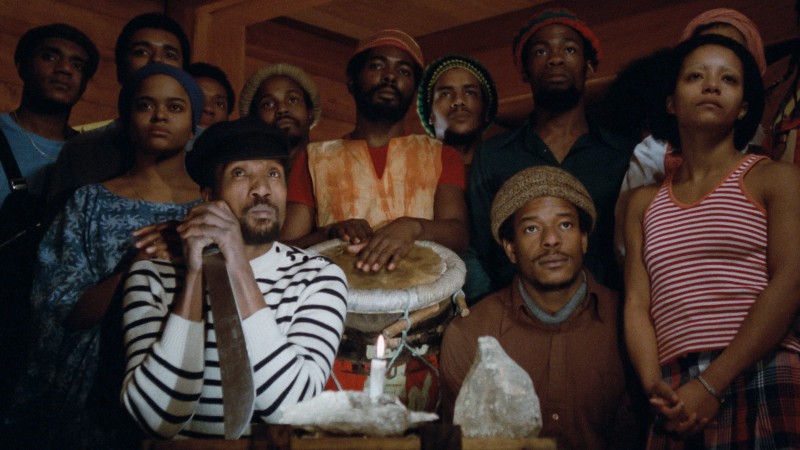
Leaving the theater after the tumultuous world premiere of Do the Right Thing at Cannes in May of 1989, I found myself too shaken to speak, and I avoided the clusters of people where arguments were already heating up. One American critic was so angry she chased me to the exit to inform me, “This film is a call to racial violence!” I thought not. I thought it was a call to empathy, which of all human qualities is the one this past century seemed most to need.
Perhaps I was too idealistic, but it seemed to me that any open-minded member of the audience would walk out of the movie able to understand the motivations of every character in the film—not forgive them, perhaps, but understand them. A black viewer would be able to understand the feelings of Sal, the Italian-American whose pizzeria is burned by a mob, and a white viewer would be able to understand why a black man—who Sal considered his friend—would perform the action that triggers the mob.
It is this evenhandedness that is at the center of Spike Lee’s work, and yet it is invisible to many of his viewers and critics. Because he is black and deals with anger, he has been categorized as an angry man. However, it is not anger, but rather a certain detached objectivity that I see in his best work. His subject is the way race affects the way lives are lived in America. More than any filmmaker before him, he has focused his stories on African-American characters, considering not how they relate to the white society, or it to them, but how they relate to each other. School Daze is no less about skin color because all of its characters are black. Jungle Fever is not only about a romance between black and white, but about all of the social, class and educational factors that race stands in for. Malcolm X is about a man who never abandons his outrage at racism, but comes to understand that skin color should not define who he can call his brother.
In Do the Right Thing, the subject is not simply a race riot, but the tragic dynamic of racism, racial tension, and miscommunication, seen in microcosm. The film is a virtuoso act of creation, a movie at once realistic and symbolic, lighthearted and tragic, funny and savage; one of the reasons we recoil at the end is that we thought, somehow, the people of this neighborhood, this street, whom we had come to know, would not be touched by the violence in the air all around them. We knew them all, Da Mayor and Radio Raheem, as well as Sal and his sons. And they knew each other. Surely nothing bad could come between them.
And yet something bad does happen. Radio Raheem is murdered; Sal’s Pizzeria is destroyed. Spike Lee has been clever enough to make us sympathize with Sal, to like him and his pizzeria, so that it is not an easy target but a shocking one. And Lee twists the story once again, making the instrument of Sal’s downfall not a “negative” character but the one we like the most, and identify with: Mookie, the delivery man played by Lee himself. The woman who found the movie a call to violence was most disturbed, I suspect, because it was Mookie who threw the trash can—Mookie, who the movie led her to like and trust. How could he do such a thing to Sal?
The answer to that question is right there on the screen, but was elusive for some viewers, who recoiled from the damage done to Sal’s property but hardly seemed to notice, or remember, that the events were set in motion by the death of a young black man at the hands of the police. Among the many devastating effects of Lee’s film, certainly the most subtle and effective is the way it leads some viewers (not racist, but thoughtless or inattentive or imbued with the unexamined values of our society) to realize that they have valued a pizzeria over a human life.
I have written here more about Lee’s ideas than about his style. To an unusual degree, you could not have one without the other: style is the magician’s left hand, distracting and entertaining us while the right hand produces the rabbit from the hat. It’s not what Lee does that makes his film so devastating, but how he does it. Do the Right Thing is one of the best-directed, best-made films of our time, a film in which the technical credits, the acting, and Lee’s brazenly fresh visual style all work together to make a statement about race in America that is all the more powerful because it blindsides us.
Do the Right Thing was the finest, the most controversial, most discussed and most important film of 1989. Of course, it was not nominated for an Academy Award as Best Picture (that award went to Driving Miss Daisy, which has a view of race in America that is rotated just 180 degrees from Lee’s). To an extent, I think some viewers have trouble seeing the film; it is blurred by their deep-seated ideas and emotions about race in America, which they project onto Lee, assuming he is angry or bitter. On the basis of this film it would be more accurate to call him sad, observant, realistic—or empathetic.