49th Parallel
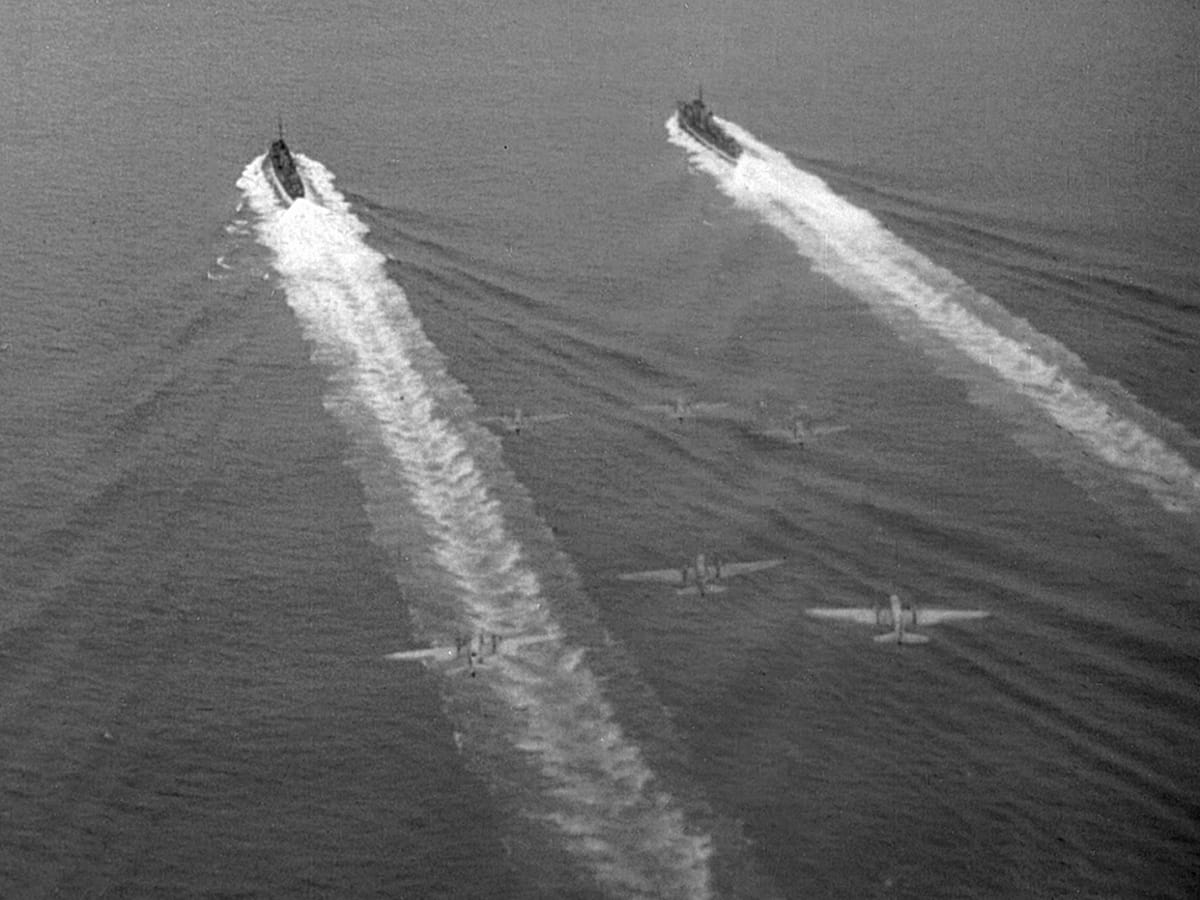
Michael Powell’s 49th Parallel (originally released in the United States as The Invaders) is one of the great thrillers of World War II. It ranks alongside Hitchcock’s Foreign Correspondent as one of the two finest amalgams of suspense and propaganda to grace the big screen during the years 1939-45.
The film’s plot is simplicity itself: during 1941, a German submarine raiding Canadian coastal waters is sunk by Royal Canadian Air Force bombers, but six survivors attempt to reach safety in the then-neutral United States. Along the way, as they flee from the manhunt in their wake, they meet a cross-section of Canadians—French, Scottish, Eskimo, German, Native American, and English—in a series of encounters that are alternately lyrical, humorous, and savage.
49th Parallel is more than a mere thriller, however, and was far more important than its two Oscar nominations—including Best Picture—and Academy Award for Best Original Story would indicate. Begun during the darkest days of World War II, immediately after the fall of France, it set a standard for filmmaking that transformed British cinema during the war and ultimately altered it forever.
Director/producer Michael Powell and screenwriter Emeric Pressburger made a movie that defied the limits of filmmaking in wartime. In the midst of crippling travel restrictions, they crisscrossed the Atlantic and the length and breadth of Canada, covering more than 50,000 miles making their film. In the face of a British film industry that was close to collapse, they forged ahead with a topical thriller of two hours’ length, with a cast drawn from all over the world. They assembled from all of this a film filled with such beauty, vision, and vibrancy, that it was taken to heart by American audiences in a way that no British film before it—including Hitchcock’s celebrated thrillers—ever had been.
The quality of Powell and Pressburger’s achievement also inspired J. Arthur Rank, head of Britain’s General Film Distributors and its parent company, the Rank Organization, to expand production. While other British studios were cutting back on operations, Rank used 49th Parallel and its success in America (where, by Powell’s estimate, it netted an unheard of $5 million in box-office receipts) as the basis for establishing independent production companies headed by Powell and Pressburger (The Archers), David Lean (Cineguild), and Filippo Del Giudice and Laurence Olivier (Two Cities) resulting in such celebrated films as Stairway to Heaven, Henry V, In Which We Serve, Odd Man Out, Oliver Twist, Black Narcissus, and The Red Shoes.
British films, once overshadowed by their American cousins (except when Hitchcock was involved) were never the same again. Within two years, Warner Bros.—which had scarcely deigned to look northward for story settings in its previous 16 years of existence—came up with Northern Pursuit (1943), starring Errol Flynn as a mountie chasing Nazis across Canada. Warners also took the trouble to unofficially remake Powell and Pressburger’s next film, starring Errol Flynn and Ronald Reagan as a pair of Allied pilots shot down over Germany.
49th Parallel surpassed all later attempts to cash in on its success, thanks, in part, to a pair of extraordinary performances. Anton Walbrook—who would go on to become a screen legend in Powell and Pressburger’s Life and Death of Colonel Blimp and The Red Shoes—is spellbinding in the role of an anti-Nazi German (a part that got Powell and Pressburger into trouble with the war office). And Eric Portman is terrifying in the part of Hirth, the Nazi true believer who outwits his pursuers.
Among the movie’s less obvious but equally compelling attributes is the alternately haunting and majestic music of Ralph Vaughan Williams, the reigning giant of 20th century British music, who made his motion picture debut with 49th Parallel at the age of sixty nine. 49th Parallel also employed the services of two star cinematographers, Freddy Young (Lawrence of Arabia, Doctor Zhivago) and Osmond Borrodaile (The Four Feathers), and was edited—by Powell’s admission, to a brilliantlyconcise two hours—by a fellow named David Lean, who was about to go on to bigger things. Put them all together and you have an overwhelming piece of cinema history as well as one of the most finely wrought thrillers ever put on celluloid.

More: Essays
West Indies: The Fugitive Slaves of Liberty: Torrents of Fire, Torrents of Blood
Unfolding in a blaze of vivacious color, Med Hondo’s musical masterpiece is a wildly ambitious exploration of the history of French colonial aggression, the enslavement of African peoples, and their subsequent liberation struggles.

Sentimental Value: Between Trauma and the Sublime
In this powerful drama about family and memory, Joachim Trier explores how the past lives on in us, shapes us, and partly determines who we are and how we feel.
Lenny: High-Wire Act
Featuring a quasi-documentary format that was innovative for its time, Bob Fosse’s complex portrait of stand-up comedian Lenny Bruce is a gesture of postmortem outreach from one prickly, jagged-edged artist to another.
Fresh Kill: Fluid Transmission
New-media pioneer Shu Lea Cheang’s astonishingly prescient dystopian vision takes place in a world where technology feels sticky and bodily, and where networks seep into food, water, and flesh.