Ikiru
In the movies as in life, love and death hold sway, exerting an irresistible attraction on our imagination. Love usually dominates in cinema; we sit entranced for hours as affairs of the heart wax and wane. Death seldom holds the field for so long, but erupts in spectacular finales or provocative opening scenes, functioning as punctuation or plot resolution, hardly ever insisting that we confront our own mortality. Serious films about death are rare, success in this genre even rarer.
Kurosawa challenges this tradition immediately. Ikiru’s first image is an x-ray; a voice reveals the diagnosis is cancer. Kenji Watanabe, we soon learn, has six months to live. Ikiru encompasses these six months; by facing this death Kurosawa fashions an affirmation of life, characteristically clear-headed in its exploration of man’s fate.
Of the origin of Ikiru, Kurosawa has said, “Occasionally I think of my death . . . then I think, how could I ever bear to take a final breath; while living a life like this, how could I leave it?”
But the task for Watanabe, played by Takashi Shimura with almost painful intensity, seems just the opposite of this. Not how to bear leaving a vibrant life, but how to charge empty existence with significance enough that leaving matters. For Watanabe, we are told, has been dead for twenty-five years, buried in a pattern of meaningless routine. We meet him at his desk in City Hall, stamping documents that exist only to be stamped, surrounded by subordinates who will soon be as moribund as he.
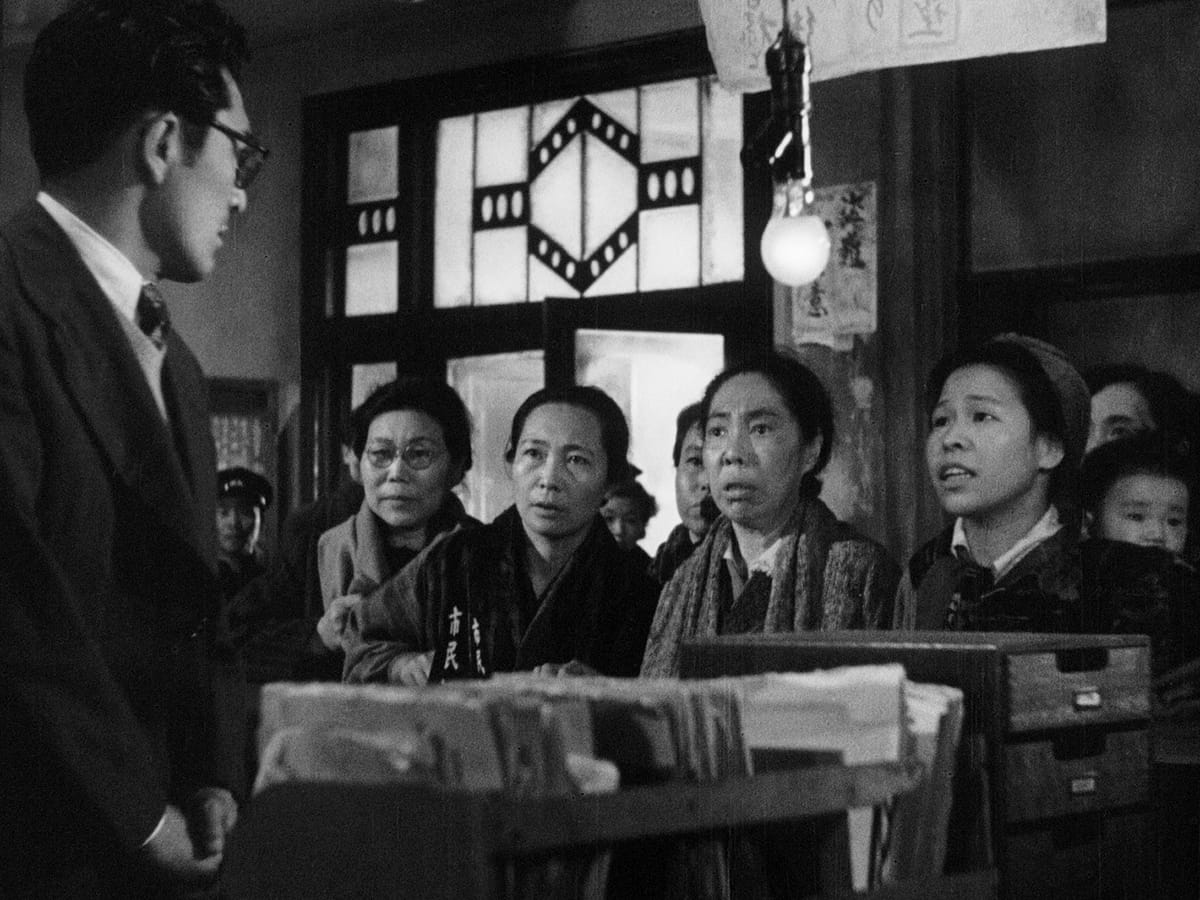
Kurosawa affirms the futility of such a life when some women come to request that a playground be built. Shunted heedlessly from office to office, they end where they began, angry and defeated. Sixteen wipes, probably more than one could find in the whole of western cinema in the preceding decade, give point and intensity, rhythm and dynamism to this indictment of Japanese bureaucracy.
At this point Watanabe learns of his death sentence and Ikiru’s unrelenting focus on death becomes a search for meaning in life, presented in two uneven halves. In the first the bustle and energy of contemporary Tokyo provide the setting for Watanabe’s stunned acceptance of his fate, evoking a struggle to awaken to life before he loses it. The second, five months later at Watanabe’s wake, offers a retrospective view of this awakening and its failure to change the life of his colleagues.
Watanabe’s search, accentuated by movement, noise, a flow of people and places, reaches its cinematic peak in the Faustian night-town sequence. Unable to talk to his family, Watanabe confides his despair to a writer encountered in a bar. Though the most serious talk of life and death in the film occurs here, the result is a descent into hell. The writer calls himself Mephistopheles, “but a virtuous one who won’t demand payment”—an ironic virtue, indeed, since the payment, Watanabe’s death, has already been exacted. In response to despair, Mephistopheles offers pleasure, wine, women and song. They plunge into the Tokyo night of surging crowds, blaring western music, glittering reflective surfaces, with Watanabe forever a small knot of bewildered pain in this teeming sea of pleasure. His one instance of solace, the one genuine moment for him, comes as he stolidly sings an old love song, “Life is so short/Fall in love, dear maiden” rather to the horror of those surrounding him. Brilliant and dreadful, this night-town scene perhaps begins Watanabe’s awakening; he learns something: pleasure is not life.
Next, more modestly, he clings to a young former colleague who offers something more comforting than pleasure, human companionship, then finally, the spark that rekindles life, a toy rabbit. Watanabe clutches it and starts down the stairs, his rebirth bright on the soundtrack in the voices from across the room singing “Happy Birthday,” heard through the next scene as, back in his office, Watanabe searches out the petition for a playground and hurries out into the rain—committed to action, free of despair.
Cut to a picture of Watanabe on his funeral altar as the narrator says, “Five months later our hero died.” A new style, static and visually spare, fits this ceremonial gathering of family, colleagues and superiors, in formal dress and formally arranged, but growing progressively more drunk and disorganized as they discuss Watanabe with varying degrees of hypocrisy, misunderstanding and, rarely, sympathy, with the most profound and sincere grief expressed in a brief interruption by women of the playground. Through this long scene in which every word and gesture is significant, a series of flashbacks—without ever showing the crucial moments or decisions—reveal the true story of the playground, ending with one of the most poignant images in cinema: Watanabe in the softly falling snow, swinging slowly in the children’s playground, singing to himself, “Life is so short/Fall in love, dear maiden”—now no mere moment of solace but the inner voice of a life regained and so, worth losing.
Kurosawa’s stature in the West stems primarily from our response to his samurai films, from Rashomon to Ran, filled by exotic characters with familiar emotions, action and conflict and dazzling passages of masterful cinematic creation. By contrast Ikiru is quiet and contemplative, and surely less entertaining. Yet critics both East and West have called it Kurosawa’s greatest achievement—attributing to this one lonely death more weight than that of forty bandits killed with such bravado in Seven Samurai. I am not sure that I agree, but why should an artist be limited to one masterpiece?

More: Essays
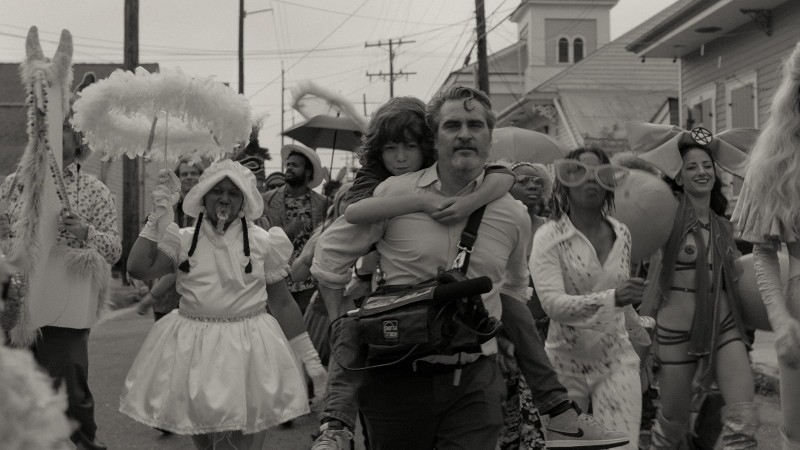
The Films of Mike Mills: A Human Space
In his fiction features Beginners, 20th Century Women, and C’mon C’mon, the acclaimed director casts a sensitive gaze on the rich psychodynamics of human relationships and the hidden interconnections of our unconscious motivations.
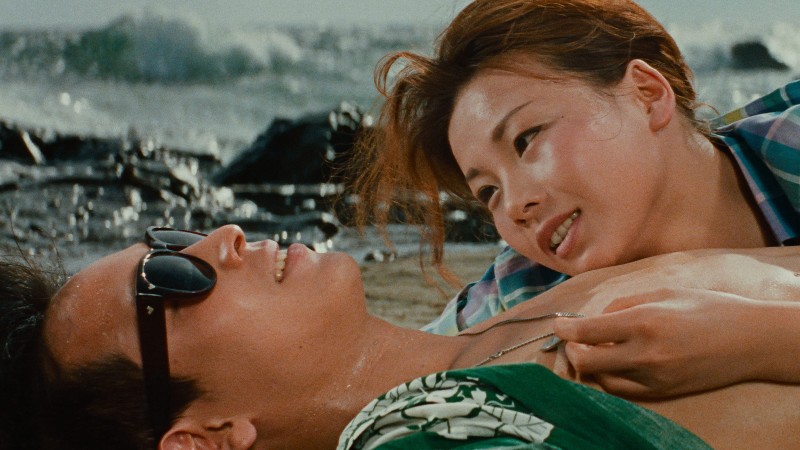
Cruel Story of Youth: A Blank Generation
In his second feature film, Nagisa Oshima explores the alienation of young Japanese people and their doomed attempts to assert themselves in a corrupt and increasingly conservative society.
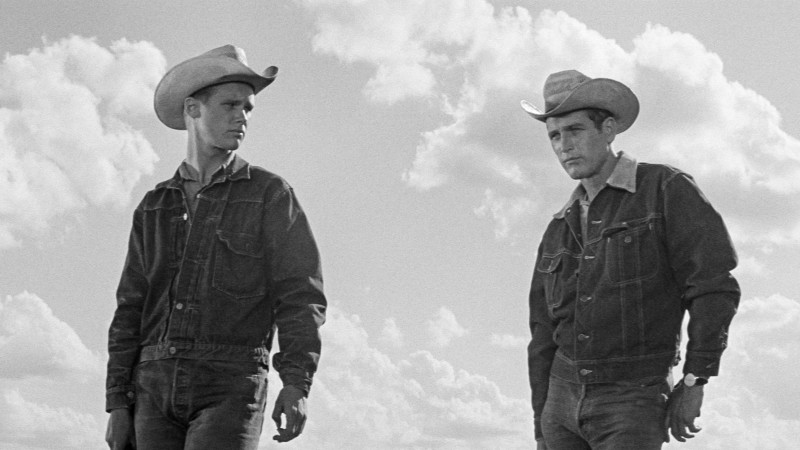
Hud: No Place for Heroes
A career-altering artistic breakthrough for director Martin Ritt, this dark tale of a family’s downfall daringly exposes the mythology of the western hero as empty and morally bankrupt.
Alice Doesn’t Live Here Anymore: At Home in the World
Made in close collaboration with its star, Ellen Burstyn, Martin Scorsese’s first film for a major studio is a warm, openhearted portrait of a woman who endeavors a drastic reshaping of her life.