The Silence of the Lambs

Adirector who knows his genres, Jonathan Demme has never been able to resist turning them inside out. Starting in the film industry as a publicist, Demme was soon hired by Roger Corman as a scriptwriter and then as a director. Corman’s rules for filmmaking—which mandate either the revelation of some bit of bare torso or some show of physical violence for every three pages of dialogue—are as good a lesson in the misogynist aspect of voyeurism as Laura Mulvey’s pioneer essay “Visual Pleasure and Narrative Cinema” (1975) and the flood of feminist film theory that followed it. Caged Heat (1974), Demme’s first directing effort for Corman, is a woman-in-prison flick that suggests that early on he was aware of the connection between genre bends and gender twists—the connection that is stunningly realized in The Silence of the Lambs.
As exhilarating as it is harrowing, The Silence of the Lambs is a slasher film in which the woman is hero rather than victim, pursuer rather than pursued. The film has two complex characters: the fledgling FBI agent Clarice Starling (Jodie Foster), and Dr. Hannibal Lecter (performed with cobralike relish by Anthony Hopkins). Starling has been chosen by her boss Jack Crawford (Scott Glenn) for a special task: to find a serial killer nicknamed “Buffalo Bill,” who is murdering women and doing something terrible with their skin.
Crawford believes that the deranged psychiatrist and psychopath Lecter, whose ferocious oral impulses find their release in language and, less acceptably, in human flesh, may know the killer’s identity. Since Crawford has helped to confine Lecter for life in a hospital for the criminally insane, he doubts that the doctor will have much interest in helping him. He decides to use Clarice as a lure, sending her off to Lecter armed with a fake survey questionnaire. If Lecter is intrigued by Clarice, he won’t be able to resist playing the omniscient analyst—leaking clues. And if Clarice is really lucky, Lecter might even tell her what to do.
Faithful to the plot and incident of Thomas Harris’ best seller, Demme shifts its tone and meaning. The film makes Clarice even more central—and more isolated—than she was in the novel. As Foster plays her, she’s remote in a way that signals something more complex than a novice’s attempt at a professional attitude. Demme shoots the scenes between Lecter and Clarice in extreme close-up, shot-countershot, with the actors looking directly into the camera. You can see the tension in Clarice’s face, her concentrated struggle not only to get the information she needs from Lecter, but also to avoid being overwhelmed by him—to maintain her separation from him.
And to get it right. And to do it all herself. When Lecter points out her limitations and failures, she feels ashamed and angry. But it’s because she hasn’t lived up to her own expectations, not because he thinks less of her.
In terms of the frightening Grimm’s fairy-tale world that Demme’s imagery suggests (and Lecter’s locutions zing home), Clarice’s mission is not to marry the prince but to rescue the maiden. On that reversal, her identity rests. It’s also what fascinates Lecter and wins him to her cause: unlike most heroes of either sex, she’s more moved by vulnerability than she is attracted to power.
Amazingly fluid, The Silence of the Lambs shifts back and forth from Gothic fantasy to police procedural drama. Demme knows how to map psyche and history onto landscape and objects. The film is packed with 300 years of relics of white America. Every time Lecter sends Clarice on a treasure hunt, she finds a flag or two tucked away with the rusty rifles, dressmakers’ dummies, and the odd severed head preserved in a jar. Detective stories and psychoanalysis both investigate traumas of the past. Here the two (Clarice’s search for Buffalo Bill and Lecter’s unorthodox analysis of Clarice) are mixed against a background of government buildings, chicken farms, and lonely airports where everyone is walking around looking bewildered—as if they’d just noticed that they’d lost everything.
Near the end of the film, the camera lingers for a moment on a medium shot of a child’s-size American flag leaning against a dusty army helmet and then cuts to a close-up of a sea-blue paper mobile with a butterfly design—a bit of Chinatown decoration or a trophy from Vietnam, Bill’s inheritance and his legacy. And this is why the final image is more disturbing than anything that has come before: the serial killer becomes an American gift to the world, a fragmentation bomb, ready to explode.
More: Essays
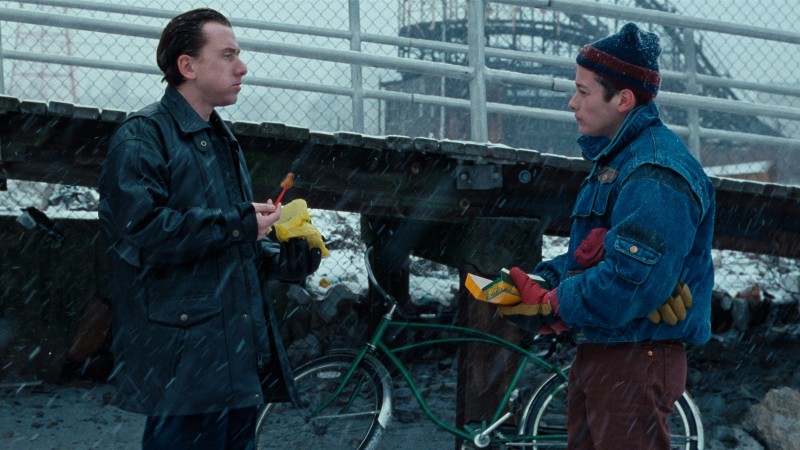
Little Odessa: He Ain’t Heavy, He’s My Brother
James Gray’s extraordinary debut feature is a painstakingly distilled tale of crime and family dysfunction, captured with a merciless gaze and a sharp attention to idiosyncratic detail.
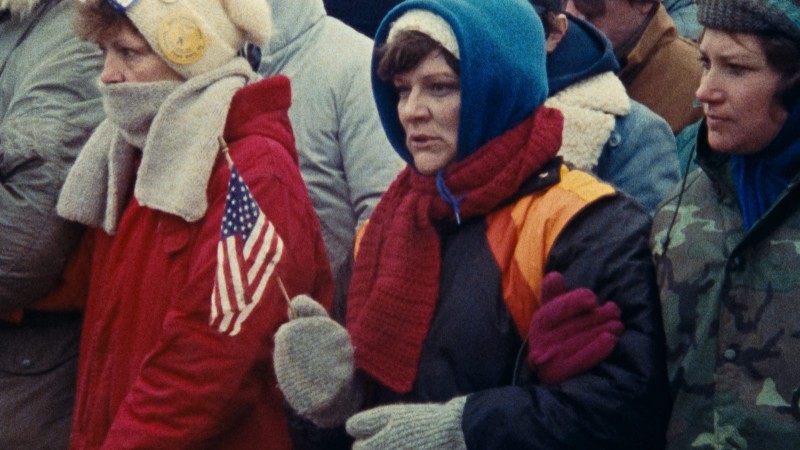
American Dream: The Time Is Right
In her second film, Oscar-winning documentarian Barbara Kopple captures the anguish and perils of disunity in the labor movement and the corrosion of union power during the Reagan era.
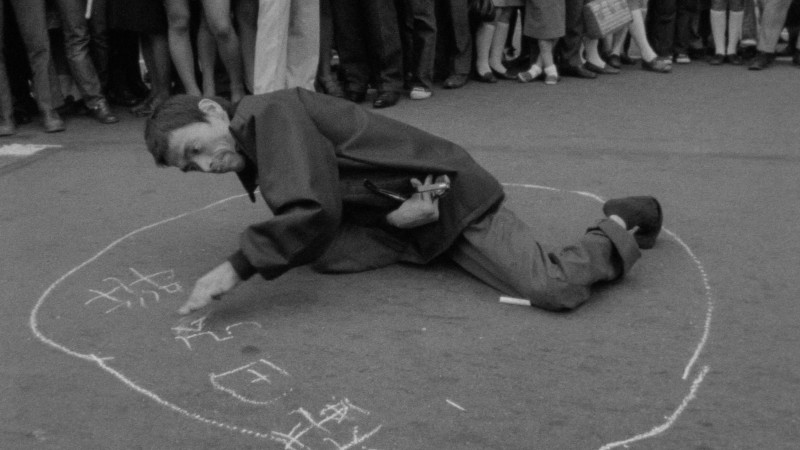
Five Radical Documentaries by Kazuo Hara and Sachiko Kobayashi: Restlessness Refusing Resolution
The pioneering husband-and-wife duo transformed the field of Japanese nonfiction cinema with their portraits of spectacular, edgy personalities and collectives under duress.
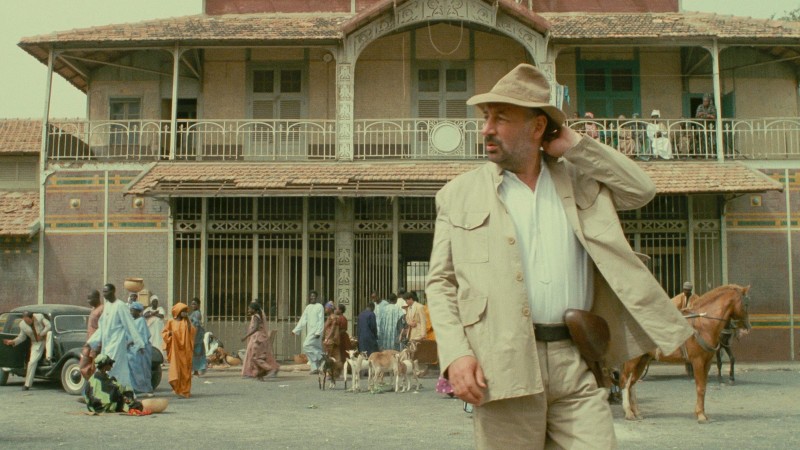
Coup de torchon: “All Crimes Are Collective”
Set in 1930s French West Africa, Bertrand Tavernier’s hard-to-classify adaptation of the Jim Thompson novel Pop. 1280 offers an apocalyptic vision of a society in which institutions have abdicated their moral authority.