Hard Boiled
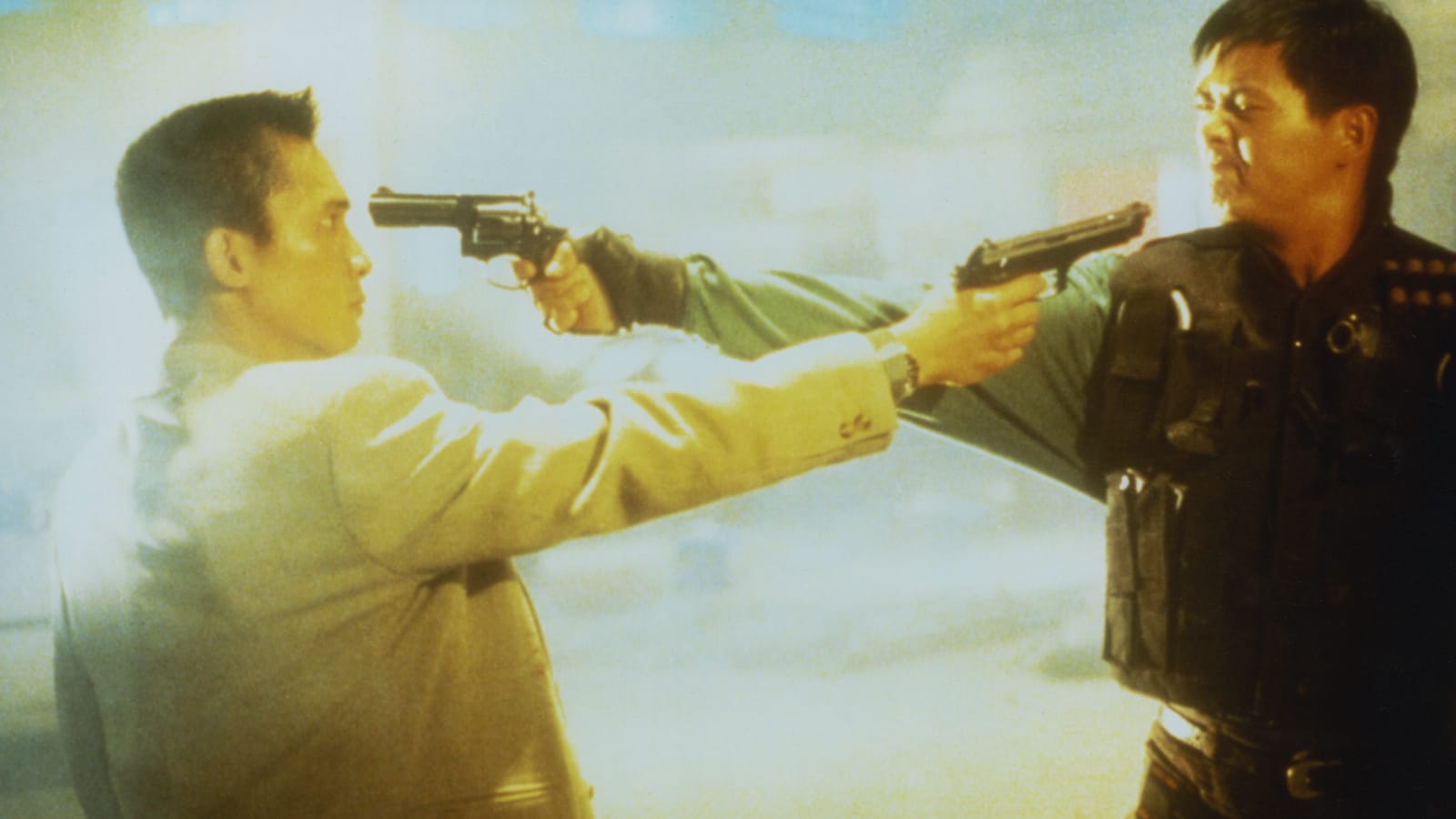
That Hard Boiled would be action director John Woo’s last film made in Hong Kong before his emigration to the U.S. in 1992 resonates throughout the picture. While he may shoot in Hong Kong again, Woo will never again make a film like this, conceived from the perspective of a man who perceives the support systems and institutions of his society changing radically and comes to the painful decision, like tens of thousands of Hong Kong citizens before him, to bail out rather than risk an uncertain future for his family.
Understanding something of the unsettled state of Hong Kong then—where the public mood with regard to the future after 1997 fluctuated between an unfounded giddy optimism and abject fear—is part of the key to unlocking the richness and complexity of the metaphors that Woo employs in Hard Boiled. So is realizing the difference between Hong Kong’s surface, an intensely law-abiding city where gun ownership is strictly prohibited, and its underworld, where fortunes are said to be made in arms sales, and where the gangster Triads infiltrate every industry, including the film industry, allegedly in league with powerful cities in mainland China.
While Woo’s work in films—including The Killer, Bullet in the Head, and A Better Tomorrow—is celebrated for its passion, Hard Boiled is relatively distanced emotionally. It is filled with images of departure and closure, of impending death, fear of the unknown, and regret for what is not to be. In terms of the bravura with which Woo stages the action, the film is unparalleled in its fiery invention and technical virtuosity, a fact which points out all the more that for the first time in one of his films the relationship between the central characters—the cop Tequila, and his compromised undercover counterpart Tony—is one of wariness and grudging respect rather than all-out trust. With their barely intersecting fates, Tequila and Tony know each other too little and too late for total bonding, and as passionate friendship is the way to redemption in a Woo film, the ending of Hard Boiled brings the bitter knowledge that there may finally be peace for his characters, but there is no redemption.
Tony, played with a sensitivity that is characteristic of the actor Tony Leung, but a steeliness that is new to him, is often isolated emblematically by Woo in a virtually empty frame. Cruising in an open convertible, shrouded in swirling fog, or sunk in a blue-tinged reverie alone with his origami cranes, he projects inner emptiness and frozen emotions, best symbolized by his whimsical dream to live at the South Pole. Tequila, on the other hand, is an impulsive hothead whom Chow Yun-fat plays with ready humor and an only slightly submerged simmering anger. That his heroic demeanor seems an all-too-human mix of genuine courage and macho foolhardiness is a credit to the subtlety of Chow’s interpretation.
Woo choreographs a hellish arsenal against his characters, and there is both beauty and exquisite Zenlike detachment in the way so much chaos is unleashed with limitless diabolical precision, seemingly for its own sake. Unlike The Killer, the mood conveyed through this excess is one of futility, even when Woo’s heroes are winning. Woo takes the conflicts far beyond the personal level, and Tequila and Tony each function in a world in which they are entirely expendable, also something new for a Woo film. Tequila rails against a system that would sacrifice him to preserve bureaucratic order, while Tony’s soul has already been trashed in the line of duty.
As 1997 approached, Hong Kong audiences seemed to crave images of violation. Action films became more raw and graphic, and several truly grotesque, slasher-derived sub-genres became popular. Woo moves with the spirit of the times, but his treatment of the theme of violation in Hard Boiled takes the elegantly metaphysical strategy of posing a series of lines to be crossed, each involving honor, loyalty or simple human decency. In his extended finale, a hospital under siege by legions of gangsters becomes a metaphor for Hong Kong itself. As the institution intended to nurture life is transformed into a deadly and perilous environment, for those trapped inside the choice is to remain and die or to escape and live. Revealing quite possibly his own state of mind at the time, Woo’s final image in the film is one of escape, but an escape that is weighted for the viewer with all the burden of memory.

More: Essays
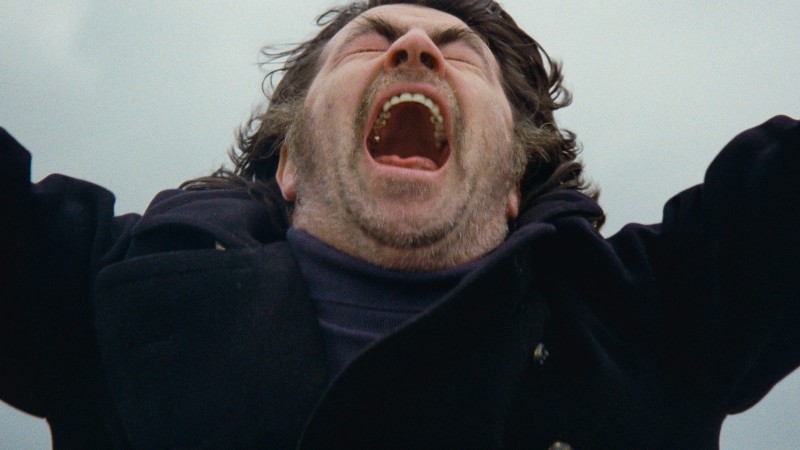
The Shout: Sound and Fury
Blending elements of psychological thriller, social satire, and psychedelic film, Jerzy Skolimowski’s Cannes-award-winning classic uses its audacious sound design to evoke the terror of English civilization.
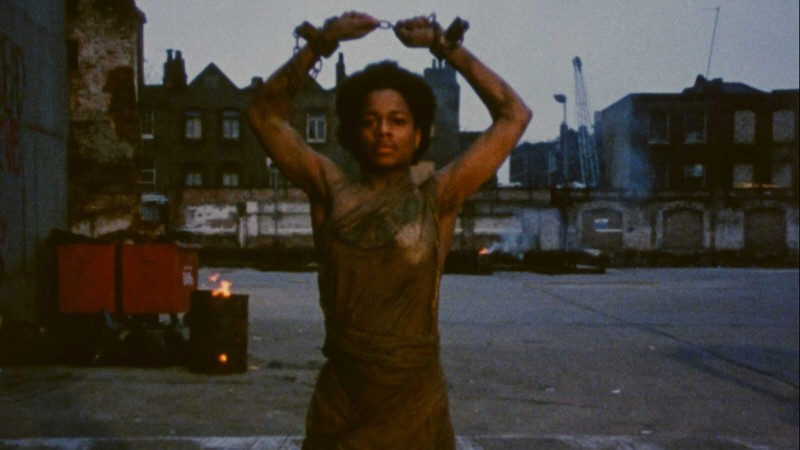
Welcome II the Terrordome: The Future Is Furious
A dystopian drama that draws on the influences of African mythology and hip-hop, Ngozi Onwurah’s debut feature uses a mix of speculative forms to expose anti-Blackness as a system that underpins the modern world.
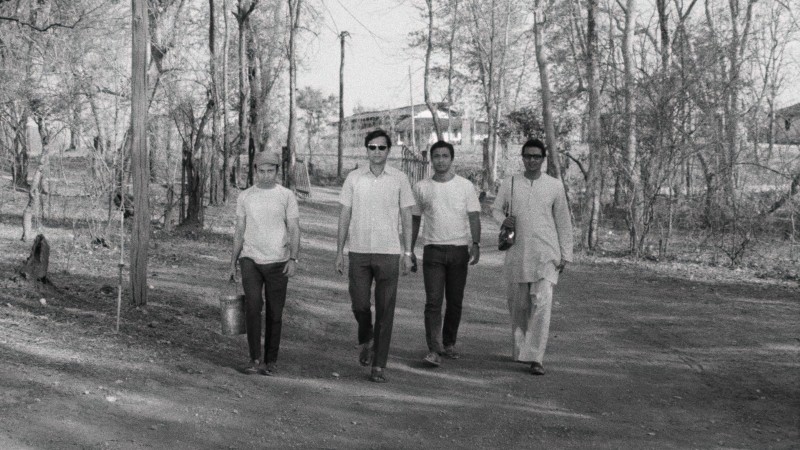
Days and Nights in the Forest: Into the Woods
In this tale of four privileged bachelors who embark on a trip to the Indian countryside, Satyajit Ray balances a biting critique of masculine fragility with splendid visual grace.
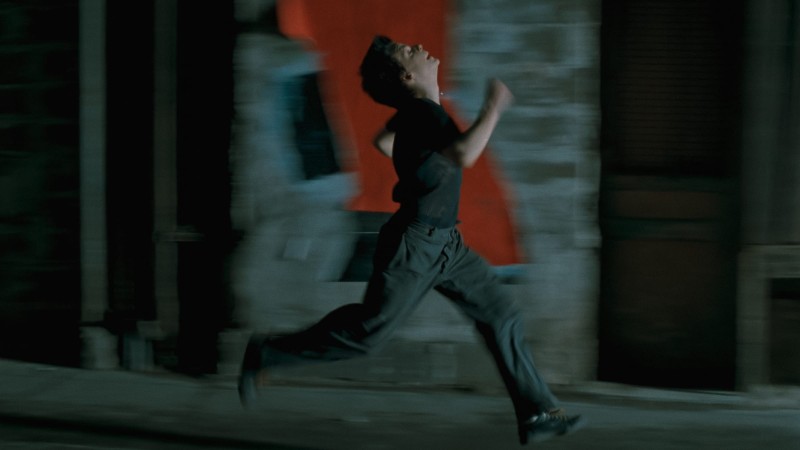
Three Films by Leos Carax: Vital Signs
With their mix of comedy, ecstasy, and aesthetic strangeness, the French auteur’s first three features grant us access to psychic states that we might not otherwise be able to enter.