French Cancan
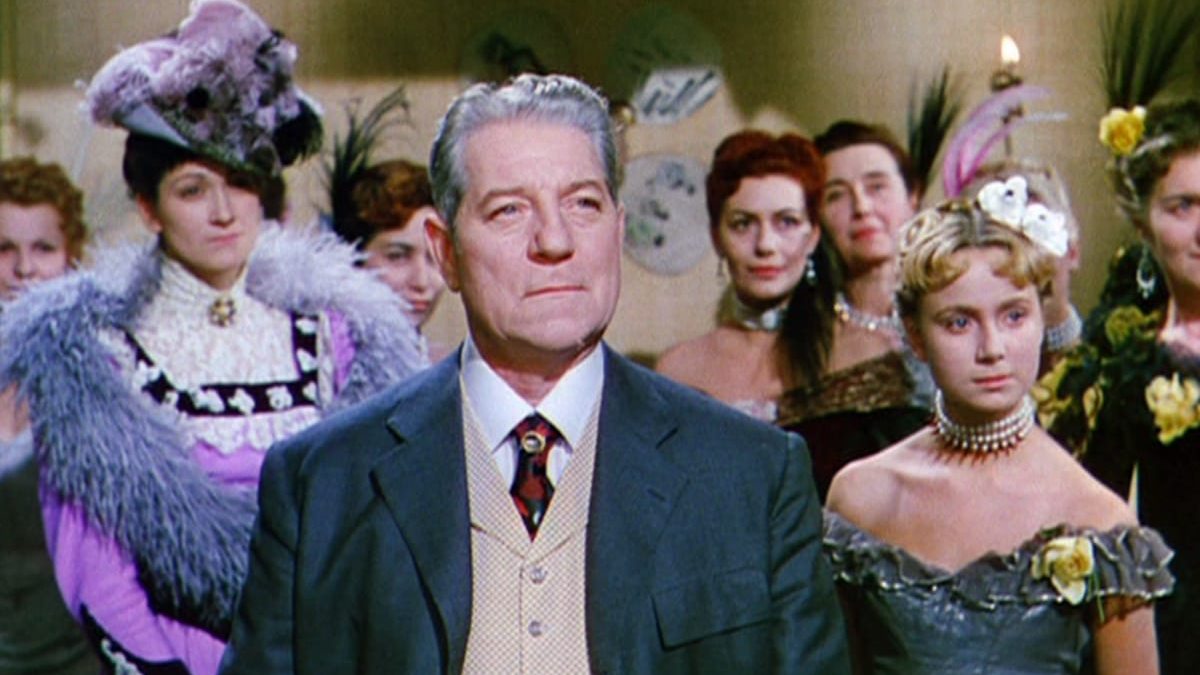
French Cancan, produced at the Francoeur Studios in Saint–Maurice, had its Paris premiere in May 1955 and was mostly successful as a fun musical with both the critics and the public. In later decades, the critics around the world hailed the magnitude of Jean Renoir’s achievement in employing and exalting the cancan as a metaphor for all artistic endeavors. Ultimately, French Cancan has turned out to be the happiest and most exuberant ripple in Renoir’s career as a river of personal expression.
In the Paris of the 1880s, the impresario Danglard (Jean Gabin) decides to revive an old working-class dance, which he christens “French cancan” to make it sound vaguely “foreign” and “naughty,” and to entice British and American tourists. He has troubles with his backers and their mistresses, culminating in a catastrophic catfight between an Egyptian belly dancer named La Belle Abbesse (Maria Félix) and a poor working girl-turned-cancan star Nini (Françoise Arnoul). Eventually, all the problems are solved, and French cancan is triumphantly launched at the newly unveiled Moulin Rouge.
Renoir wrote the screenplay, based on an idea of André-Paul Antoine, and there is a pervasive feeling of improvisation in most of the scenes. Renoir once remarked that he had spoken the screenplay more than he had written it. The film is one of the screen’s most extraordinary beautiful displays of late cinematic maturity. Renoir’s impressive personal testament on the collaborative arts is couched in a way to reflect the softening contours of his sensuous world, and the result is aesthetically parallel to such latter-day works as John Ford’s The Searchers (1956) and Luis Buñuel’s The Discreet Charm of the Bourgeoisie (1972). French Cancan is an artist’s tribute to art, with Gabin’s dedicated impresario serving as an alter ego for Renoir. Against the pastel-colored backgrounds of Auguste Renoir’s Paris, all the characters in the movie attempt to find some modus vivendi between art and life, but only the impresario knows that ultimately his creation (the cancan and its dancers) will engulf the audience, just as art engulfs life and then becomes part of living. Renoir hurls his Cancan at the viewer, tempting us with the consuming spectacle, which is not only a more stirring conception than John Huston’s art-gallery staging of the dance in Moulin Rouge (1952), but one more inherently kinetic and ineffably voluptuous.
Gabin the actor was a kind of alter ego for Renoir as well. “I like French Cancan,” Renoir wrote in My Life and My Films, “because it gave me another chance to work with Jean Gabin. It was a return to the past, to my companion in The Lower Depths (1936), Grand Illusion (1937), and La Bête humaine (1938), and I am grateful to the cinema for having given me this comradeship. I love Gabin and he loves me. But we do not know one another. He knows nothing of my private life and I know nothing of his. Our relationship is entirely professional, but I have a feeling that his tastes are pretty much the same as mine.”
As François Truffaut once noted, Renoir repeatedly avoided the banality of a romantic triangle by having three lovers competing for the hand of the beloved. In French Cancan, Françoise Arnoul’s Nini is involved with Jean Gabin’s Danglard, Giani Esposito’s Prince Alexandre, and Franco Pastorino’s Paulo, the baker and Nini’s first love. The three suitors represent three perplexing choices. Renoir’s European sensibility does not allow him to indulge in John Huston’s puritanical pessimism in Moulin Rouge about artists and models facing nothing but old age and death. Life and art are more complicated than that in French Cancan. “Everyone has his reasons,” complains Jean Renoir’s Octave in The Rules of the Game (1939), and everyone has his reasons in French Cancan. Danglard lives from one show to the next, and from one woman to the next. Nini finds that she cannot find fame and fidelity at the same time and in the same place and in the same person. Yet though the show must go on, life must go on, too, and the process of choice is not without pain and cruelty.
Although Renoir was a man of the left for most of his adult life, he never sacrificed ambiguity to ideology. He can caricature high society and the aristocracy, but with remarkably little malice. By the same token, he does not sentimentalize the poor. He remains a compassionate observer of the sheer strangeness and variety of existence. It would be an oversimplification to describe him as a humanist, and it would be a mistake to confuse his pantheistic fatalism with aimlessness and artlessness. Only repeated viewings of Renoir’s films uncover the inexorable logic and lucidity of his style. Still, of all his films, French Cancan is the one that bursts out again and again with lyrical explosions of color, vitality, and sensuality. There is unmistakably more to Renoir than meets the eye, but what an eye he has.

More: Essays
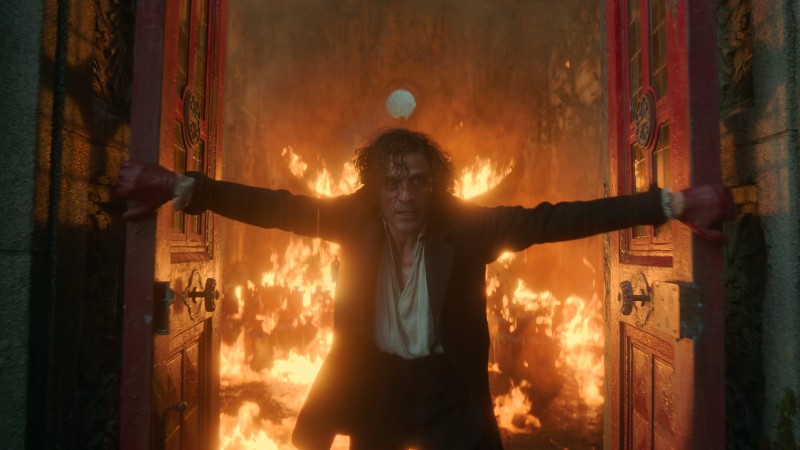
Guillermo del Toro’s Frankenstein
In one of his most personal films, the Oscar-winning director imbues Mary Shelley’s gothic tale with elements of family melodrama and traces of his own Catholic upbringing.
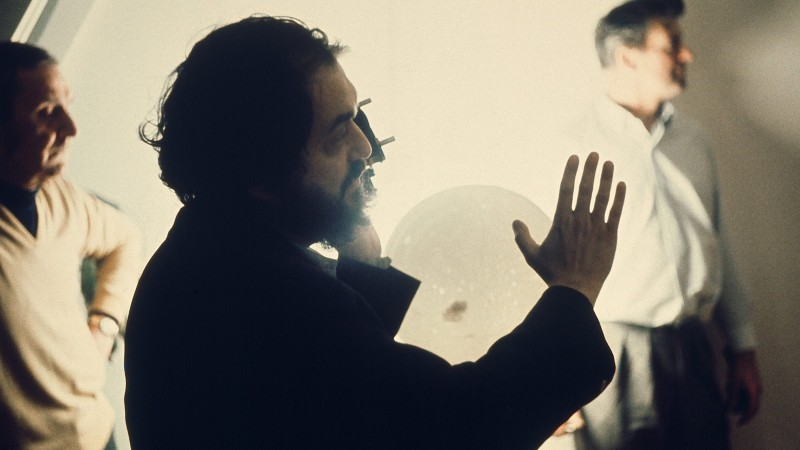
God Laughs: Stanley Kubrick’s Cinema
Throughout his enormously influential body of work, the great director explored the conflict between humankind’s obsession with control and our capacity for error and failure.
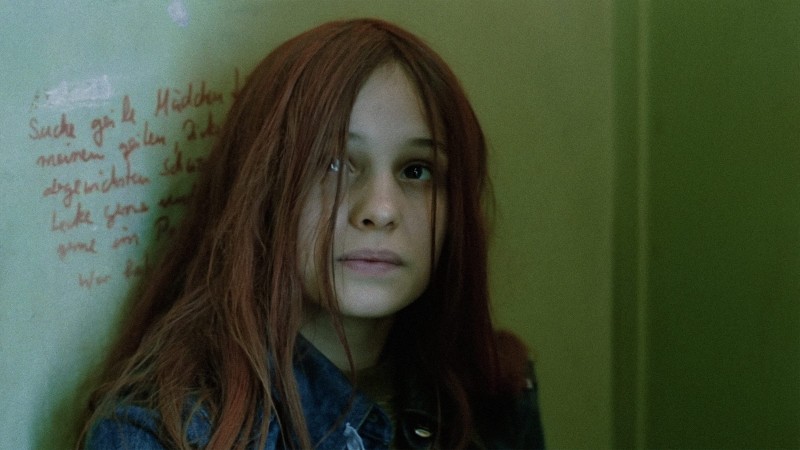
Christiane F.: Up Against the Wall
Uli Edel’s harrowing tale of youth rebellion is one of cinema’s greatest Berlin films, a visceral urban portrait that captures the city’s doom and decadence during the Cold War era.
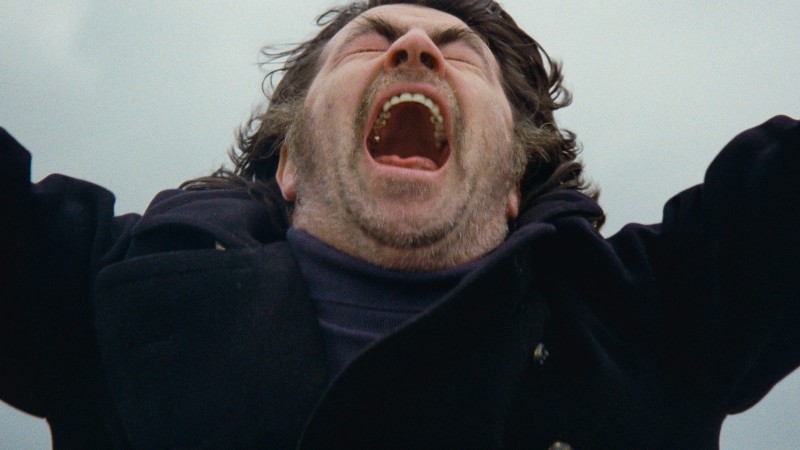
The Shout: Sound and Fury
Blending elements of psychological thriller, social satire, and psychedelic film, Jerzy Skolimowski’s Cannes-award-winning classic uses its audacious sound design to evoke the terror of English civilization.