Remembrance of Things Past: The Leopard
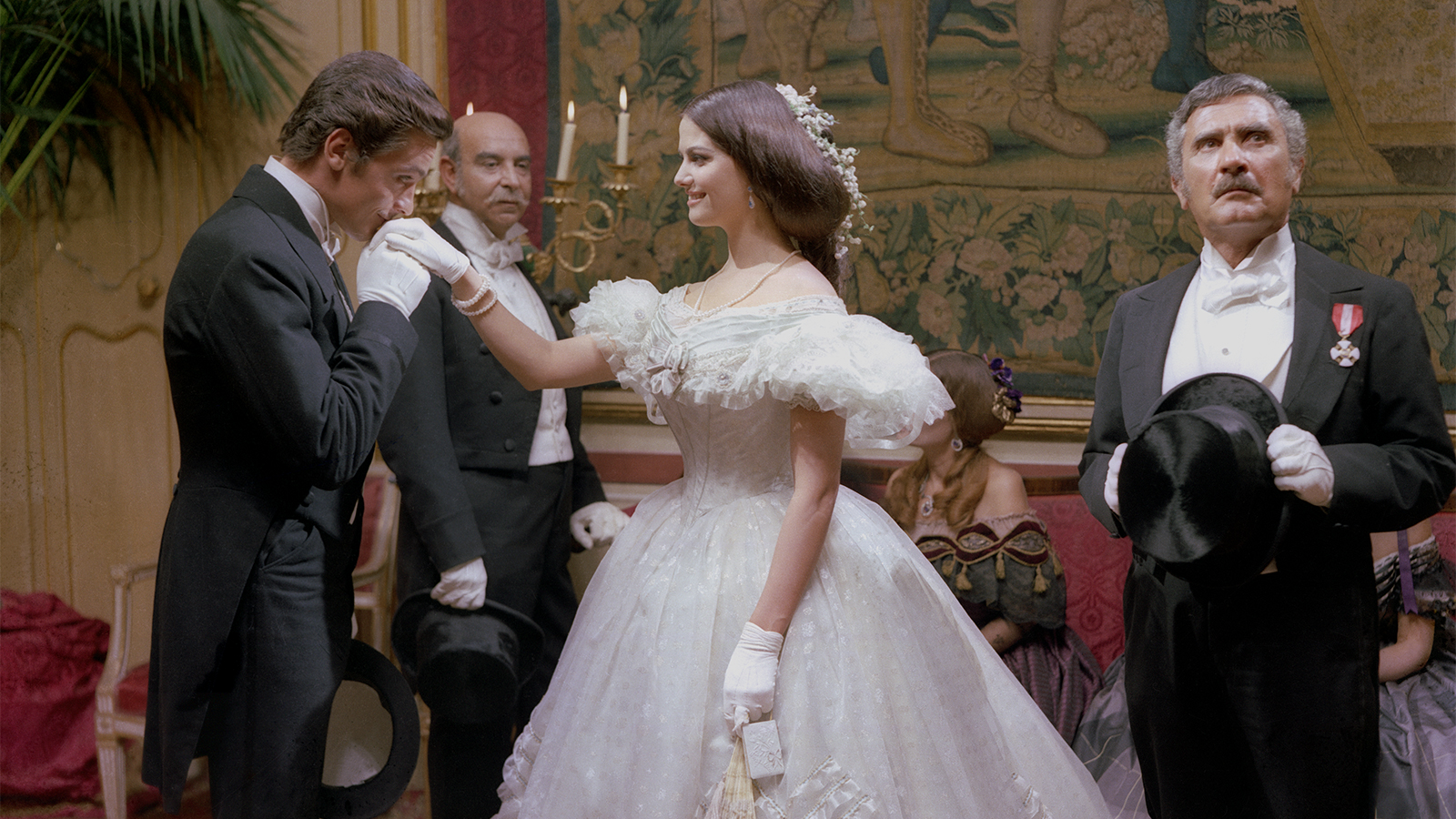
Giuseppe di Lampedusa’s novel The Leopard had a hard time finding a publisher but was well-known by the time Luchino Visconti began working on his film of the same name. The book appeared in Italy in 1958 and was subsequently translated into many languages—a German version can be seen lying around in Visconti’s section of the four-part film Boccaccio ’70, released in 1962 (the other episodes were directed by Vittorio De Sica, Federico Fellini, and Mario Monicelli). Gradually, the fortunes of the two works became entwined, so that they now seem commentaries on each other in different mediums, rather than the source for a film and the adaptation of a novel.
Many have remarked on the affinities between Lampedusa and Visconti, with their aristocratic interest in fading splendor and dying worlds, and there is no doubt that the film is intimately faithful to the spirit of the novel—even when it shifts time lines and details of dialogue, and inserts a whole battle sequence. A movie audience, Visconti said in an interview, needs to see Garibaldi’s men fighting the soldiers of the Bourbon government in the streets of Palermo, and to see Tancredi Falconeri (Alain Delon), the nephew of the prince of Salina (Burt Lancaster), fighting alongside the revolutionaries, in order to perceive what is at stake—“the disruptive power of the historical conjuncture and the real risk Tancredi is running” as the old order is overturned and a new Italy is born.
Both novel and film are ironic, elegiac, stately, and dedicated to a luxurious mourning of a lost past. But the loss and the past are different in each case, and the film is a good deal more political—more political than the novel and more political than it may look at first sight. The most magnificent moments in the book involve a movement that Visconti does not make, and that a film, perhaps, cannot make persuasively: the flash-forward in time, the long look at the future beyond the story currently being told. We learn, for example, that the days of the engagement of Tancredi to Angelica (Claudia Cardinale), the daughter of the rich and scheming upstart Don Calogero (Paolo Stoppa)—a sequence of games and kisses played out in the dusty and abandoned rooms of the prince’s seemingly endless house at Donnafugata—were the best days of their lives, because they were a time of unsatisfied, and therefore ever present, desire, to be matched by nothing in their later careers: “Those days were the preparation for their marriage, which, even erotically, was not a success; a preparation, however, in a way sufficient to itself, exquisite and brief; like those melodies that outlive the forgotten works they belong to.” The long view doesn’t destroy the short view, but it draws out its sheer fragility.
Visconti’s film memorably records this romance and lingers with the lovers in the old rooms of the vast and ancient house, but the director has nothing to say about their future failures: his eye is firmly on the present, on the allure of the couple, on Tancredi’s slightly too easy charm, on Angelica’s slightly too petulant beauty. The impecunious Tancredi, with the prince’s blessing, is marrying money; more than that, he is buying his way into a position of influence within the new Italy. In the novel, the prince thinks Tancredi’s behavior is a little “ignoble” but admires the young man’s grasp of historical reality and allows his affection for him to quiet his scruples. The film identifies less closely with the prince’s point of view—it is about him, so to speak, but not an endorsement of his thinking, and if he is its visual center, Tancredi is the focus of its most troubling questions. It is through the modulations of Tancredi’s position, through his charm and his ruthlessness, that we understand the subtle political register of the film.
The convergence and divergence of Lampedusa and Visconti are particularly interesting here. Lampedusa was a Sicilian aristocrat deeply skeptical about progress; Visconti was a northern aristocrat deeply dedicated to it. But Lampedusa was too thoughtful a conservative to believe he could simply cling to the past, and Visconti was too intelligent a radical to believe all changes were for the better.
Burt Lancaster brings to the role of the prince an extraordinary physical presence but also a remarkable sense of the difficulty of growing old and losing political prestige—his graceful waltz with Angelica in the film’s fabulous ball scene, tenderly photographed by Giuseppe Rotunno, is the last dance of a whole social order. In this interpretation of the prince, we see high style and perfect grace, but in the end, he is leaving this world and we are still living in it. Some critics have felt that the film is too much about the twentieth century, rather than the nineteenth—intimately, if indirectly, concerned with Italy’s relation to Europe as a whole in the early 1960s, with that later version of a conflict between a modernizing present and a vanishing past. Visconti himself, however, doesn’t make the distinction. He said that, throughout the making of the film, he asked himself whether the opportunistic Tancredi, if he had been born later, would have become a fascist. This is a question, not an answer; a fear, not an accusation. Tancredi’s charm and style are real, as is his deep affection for his uncle. But the question clearly haunts the whole film.
The query is posed most sharply through a sequence of cuts and juxtapositions, as befits a great movie. As the prince says good-bye to Chevelley (Leslie French), the representative of the parliamentary government of the united Italy, who has offered him a place in the newly constituted Senate—he has politely refused—he agrees that changes are coming but says they will be for the worse. “We were the leopards, the lions,” he says. “Those who will take our place will be jackals, hyenas.” Dismissive enough, but the prince goes on: “And all of us—leopards, lions, jackals, and sheep—we’ll go on thinking ourselves the salt of the earth.” Chevelley’s coach leaves, and the next shot shows a hot Sicilian countryside, with laborers vigorously digging. Over this image, we hear the rising sounds of an orchestra, and the next shot takes us to an elaborate ball in a palace in Palermo. The implication is that once the leopards and the jackals have started mingling, it will be hard to tell who is who. It’s clear that Sicily won’t change much, but the jackals will certainly do well for themselves. More importantly, two extraordinary worlds will have died: the old order, represented (at its best) by the prince, and revolutionary Italy, represented by the now wounded and sidelined Garibaldi. At the ball, we hear of Garibaldi’s defeat by the soldiers of the very government he helped put in place, and of the promised execution of several of his supporters at dawn. A good thing, too, Tancredi, the ex-revolutionary, says: “It’s true, the new kingdom needs law and order.” He is lying on a sofa as he says this, the image of elegance and freedom from care. In the last images of the film, dawn has come, the ball is over. On his way home, the prince kneels in the street as a priest hurries past, taking the sacraments to a dying man. In a coach, Tancredi, Angelica, and her father look tired and happy as they hear the sounds of the firing squad close by. The prince rises and walks slowly away from us.
“For things to remain the same, everything must change.” Spoken near the beginning of the film, the famous catchphrase simply suggests adaptation. For the prince and his class, a modified monarchy is better than a republic. As it echoes through the film, the phrase comes to mean something very different and gets close to the heart of Visconti’s criticism of modern Italy. It means that anything goes as long as we get to stay at the top of the political pile—whoever “we” are. This is not the prince’s world, but it is Tancredi’s. “You wouldn’t have spoken like that once,” one of the prince’s daughters says to Tancredi at the ball, when he talks so casually of the need for (and the cost of) law and order. “You’re wrong, my dear,” he answers. “I’ve always spoken like that.” And he has. He has changed his opinions and allegiances, but he has always spoken like a man who knows what’s necessary—for him and, as Visconti would say, for the thousands like him to be found in many times and many places.

More: Essays
West Indies: The Fugitive Slaves of Liberty: Torrents of Fire, Torrents of Blood
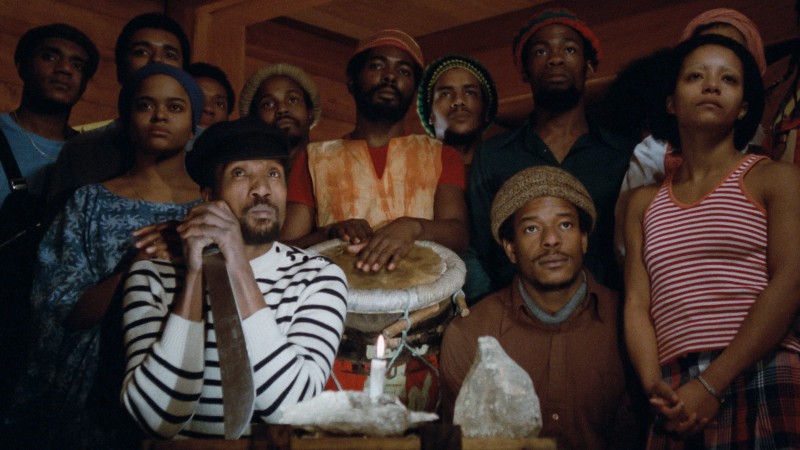
Unfolding in a blaze of vivacious color, Med Hondo’s musical masterpiece is a wildly ambitious exploration of the history of French colonial aggression, the enslavement of African peoples, and their subsequent liberation struggles.
Sentimental Value: Between Trauma and the Sublime
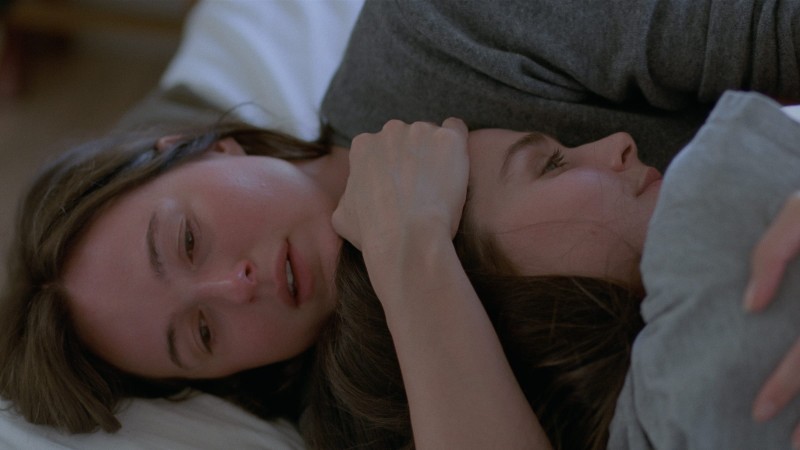
In this powerful drama about family and memory, Joachim Trier explores how the past lives on in us, shapes us, and partly determines who we are and how we feel.
Lenny: High-Wire Act
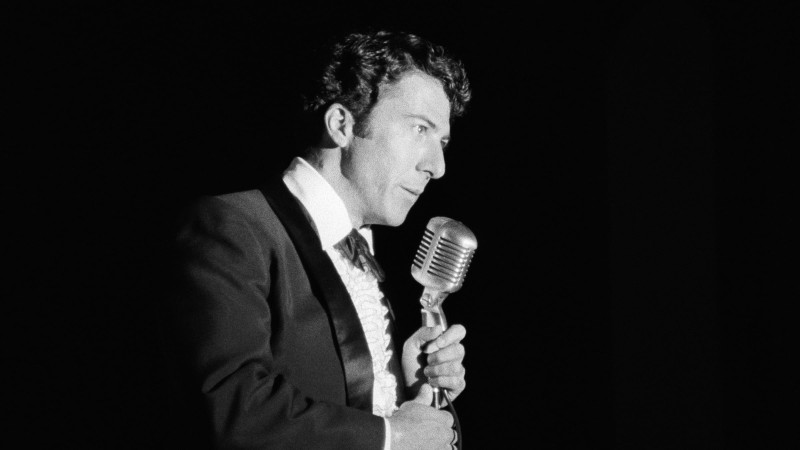
Featuring a quasi-documentary format that was innovative for its time, Bob Fosse’s complex portrait of stand-up comedian Lenny Bruce is a gesture of postmortem outreach from one prickly, jagged-edged artist to another.
Fresh Kill: Fluid Transmission
New-media pioneer Shu Lea Cheang’s astonishingly prescient dystopian vision takes place in a world where technology feels sticky and bodily, and where networks seep into food, water, and flesh.