The White Sheik

ORSON WELLES: Fellini is essentially a small-town boy who’s never really come to Rome. He’s still dreaming about it. And we should all be very grateful for those dreams. In a way, he’s still standing outside looking in through the gates. The force of La Dolce Vita comes from its provincial innocence. It’s so totally invented.
PETER BOGDANOVICH: Maybe the “small-town” aspect is why I like I Vitelloni most of all his films.
WELLES: After The White Sheik, it’s the best of all.
Welles’ preference for The White Sheik (1952), Federico Fellini’s first solo feature, over all the others is likely to raise a few eyebrows. Critically speaking, it’s one of the Italian maestro’s most neglected works. In his The Italian Cinema, Pierre Leprohon wrote that it “seems to have been a kind of liquidation of the past in preparation for the emergence of the Fellinian universe, a chance for the author to work off his hatred and rancors.”
Most critics haven’t been so harsh; a more common verdict is to see this as an apprentice work, a sketch of the Fellinian splendors to come. Yet I would argue that Welles’ privileging of The White Sheik is entirely defensible, for a number of reasons—not least of which is the provinciality that forms its central subject, which Fellini identifies with as well as satirizes. Indeed, the film might even be seen as a distillation of Fellini’s vision of innocence and corruption that preceded the more stylistically elaborated versions of it—a distillation so pointedly attentive to the shame as well as innocence of small-town hayseeds that it doesn’t need the relative lassitude of I Vitelloni, the sentimentality of La Strada, the melodrama of Nights of Cabiria, or the three-ring circus acts of La Dolce Vita, 8 1/2, and later works to carry its emotional conviction. But maybe one has to come from a small town—as Welles did—in order to appreciate this distinction.
The film’s story was written—in a more loosely structured form—by Michelangelo Antonioni when he was planning to direct it himself, as his own first feature. In the late ’40s, he’d already made a short documentary about the making of fumetti—photographed comic strips with romantic stories appearing in weekly magazines, which were quite popular in Italy at the time. But after illness prevented him from proceeding, he sold the story to Carlo Ponti, who turned it over to Fellini.
Arriving in Rome by train in the opening shot, Ivan Cavalli (Leopoldo Trieste), a stodgy bureaucrat, and his newlywed Wanda (Brunella Bovo), an avid fumetti reader, head for their hotel, where Ivan has the entire day mapped out: meeting his uncle—a Vatican VIP who’s arranged an audience with the Pope—and other relatives, and heading for St. Peter’s Square, followed by sightseeing and the opera. What he doesn’t realize is that Wanda—who has already sent three fan letters to Fernando Rivoli (Alberto Sordi), the fumetti star who plays the White Sheik, and received an amorous invitation to look him up if she comes to Rome—is bent on meeting her idol, and sneaks off to do so at her first opportunity.
Through a string of mishaps, Wanda winds up going off with the fumetti crew to a beach outside Rome and gets cast in the same shoot as Rivoli, who continues to woo her, while Ivan, hysterical about her absence, makes up various excuses to his relatives over the course of the same day.
An equal opportunity satirist, Fellini spends a lot of time with both characters, but it should be stressed that he also shows an equal amount of empathy with their separate delusions and humiliations. One might even say that the film’s greatness stems from the degree to which he recognizes and shares these two characters’ pain without ever losing sight of their naivité. As Wanda puts it at one grief-stricken moment, dictating a message for Ivan on the phone to a hapless hotel desk clerk, “Our real life is in our dreams, but sometimes dreams are a fatal abyss.”
Fellini is no less astute in gauging both the glamorous allure and the pathetic vulnerability of Rivoli. Sordi, barely known to the public at the time, was largely identified by Fellini as the man who dubbed the Italian voice of Oliver Hardy, and the comic braggadocio of Hardy informs Sordi’s overweight and henpecked Rivoli just as surely as the innocence of Stan Laurel is reflected in the behavior of both Ivan and Wanda. Trieste, another actor Fellini insisted on, is also used with explicit reference to silent comics—most notably Chaplin, in one sequence that shows him trying to become inconspicuous by marching behind a line of soldiers, but also Ben Turpin in some of his pop-eye expressions. And if one adds to this the influence of Harry Langdon on Masina—both here in and in the subsequent La Strada and Nights of Cabiria—the indebtedness of Fellini to silent slapstick becomes even more apparent. What he does with Ivan’s worries about losing his hat and Wanda’s insistence on smiling during a fumetti shoot—as well as his observations of a camel and a horse munching their lunch with the same gusto as the other members of the fumetti crew—relates to the same tradition, as well as to his background as a cartoonist. And best of all, the circus-like strains of Nino Rota are accompanying this farce, helping to define the essence of Fellini’s art in its first full-blown expression. There’s also a brief appearance of Giulietta Masina, Fellini’s wife, as a prostitute named Cabiria—who four years later, in Nights of Cabiria, would have a feature of her own—trying to cheer up Ivan with the aid of a fire eater, which virtually summarizes the Fellini to come. With all due respect to Leprohon, one need only place this film alongside the ridicule of a contemporary satire like Nurse Betty, which sports a similar theme, to see that there’s far too much celebration going on here, even in the midst of the characters’ devastation, to allow for hatred or rancor.
From I, Fellini (1995), by Charlotte Chandler. Reprinted by permission of the author.

More: Essays
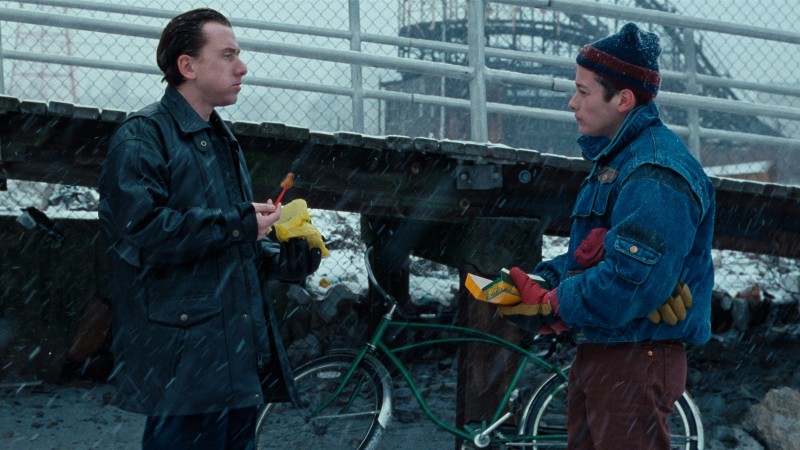
Little Odessa: He Ain’t Heavy, He’s My Brother
James Gray’s extraordinary debut feature is a painstakingly distilled tale of crime and family dysfunction, captured with a merciless gaze and a sharp attention to idiosyncratic detail.
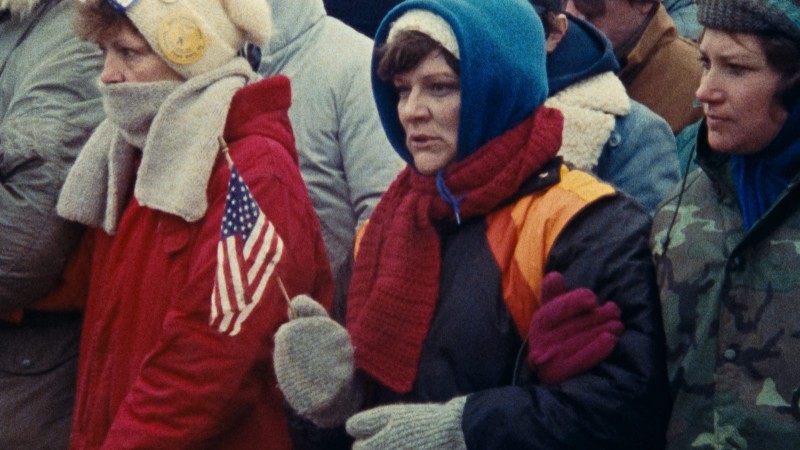
American Dream: The Time Is Right
In her second film, Oscar-winning documentarian Barbara Kopple captures the anguish and perils of disunity in the labor movement and the corrosion of union power during the Reagan era.
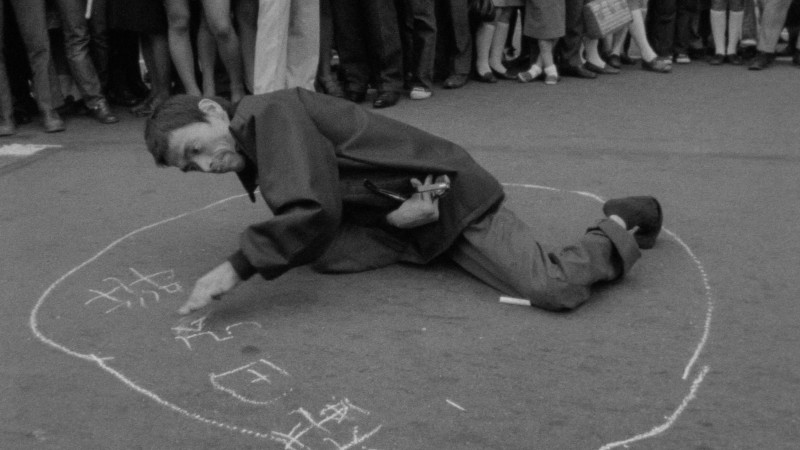
Five Radical Documentaries by Kazuo Hara and Sachiko Kobayashi: Restlessness Refusing Resolution
The pioneering husband-and-wife duo transformed the field of Japanese nonfiction cinema with their portraits of spectacular, edgy personalities and collectives under duress.
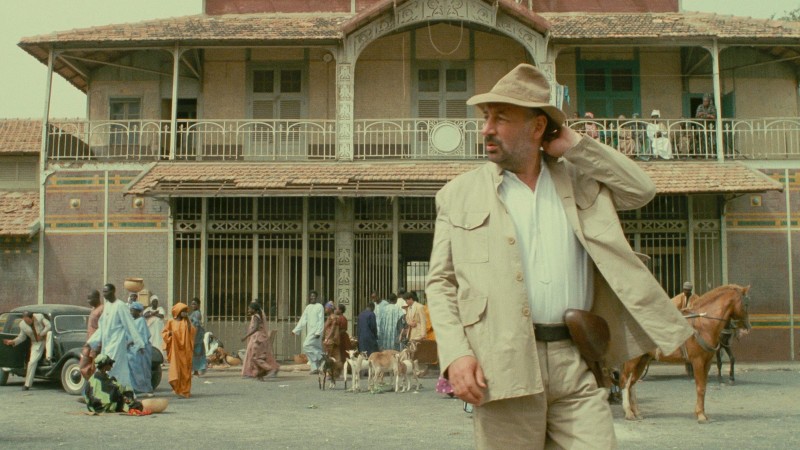
Coup de torchon: “All Crimes Are Collective”
Set in 1930s French West Africa, Bertrand Tavernier’s hard-to-classify adaptation of the Jim Thompson novel Pop. 1280 offers an apocalyptic vision of a society in which institutions have abdicated their moral authority.