Fear and Loathing in Las Vegas: A Pint of Raw Ether and Three Reels of Film

Hunter S. Thompson’s journalistic prose poem Fear and Loathing in Las Vegas used a lost weekend in Las Vegas as a metaphor for America’s season in hell. Dispatched by a national magazine to cover a cross-country motorcycle race, Thompson filed a postmortem on the sixties counterculture, while reporting on his brain as though it were the dark side of the moon.
As extravagantly subjective, linguistically rich, and outrageously bad-behaved as Fear and Loathing is, this lysergic tall tale, which was first published in Rolling Stone in late 1971, would seem to be problematic Hollywood material at best. But, having taken over the project from Alex Cox, Terry Gilliam returned from the desert bringing the multiplex nation a slapstick fever dream both funny and poignant, as unencumbered in its performances as it is uncompromising in its worldview.
Like a belated sequel to Easy Rider, Fear and Loathing opens with two guys in Hawaiian shirts and a red convertible bombing, born to be wild, toward Nevada’s neon Sodom. “We were somewhere around Barstow on the edge of the desert when the drugs began to take hold” is the line with which both book and movie begin (the gonzo equivalent of “Call me Ishmael”). The dope-addled search for America will be three days in Vegas, and a twilight arrival in Glitter Gulch occasions the definitive LSD sequence in Hollywood movies—a farrago of glacially delayed responses, free-floating incomprehension, inadvertent word repetitions, and minor visual distortions blossoming into full-fledged hallucinations. Gilliam gleefully stages Thompson’s panicky experience of the hotel cocktail lounge—“We’re right in the middle of a fucking reptile zoo! And somebody’s giving booze to these goddamn things!”—adding to the comedy by flipping in and out of his hero’s drastically expanded consciousness.
Bill Murray made an embarrassing stab at playing Thompson in Art Linson’s 1980 Where the Buffalo Roam, but Johnny Depp, here given the Thompson alias Raoul Duke, has the attitude as well as the look—receding hairline, sporty pith helmet, orange aviator shades, jaunty cigarette holder. His is the detached cool of a nineteenth-century explorer or a 1920s bon vivant. Depp, no less than Thompson, is a southern gentleman—and his stoned pratfalls and coke-snort double takes notwithstanding, he’s also an exemplary straight man. As his volatile sidekick, Dr. Gonzo, Benicio Del Toro—no less ambitiously unpredictable in his career choices than Depp—is given ample room to pulverize the screen.
Depp proves himself a master of moving as though someone has just pulled the plug on his power source, but the movie’s edge is provided by Del Toro, who gained forty pounds for the part and honed a paranoid glare sharper than the hunting knife he regularly brandishes. From the moment he begins braying “One Toke over the Line” to the scene he plays opposite hard-boiled waitress Ellen Barkin in an exaggeratedly realistic North Las Vegas diner, Del Toro is a force of nature. Depp thinks, Del Toro acts: it’s he who gets to puke out a car window at a parallel vehicle filled with uptight squares, who gets to woo catatonic runaway Christina Ricci, and gets to woof TV reporter Cameron Diaz in a scene of claustrophobic elevator terror. (In another of the film’s cameos, a nearly unrecognizable Tobey Maguire appears as the stupefied hippie hitchhiker picked up and traumatized by Duke and Gonzo.)
Gilliam is an inspired conductor of manic behavior. The Fisher King (1991) showed him to be the only director in history to handle Robin Williams’s personality at full throttle; Brad Pitt gave a career performance as a borderline lunatic in 12 Monkeys (1995). But nothing equals the jabbering gesticulations of Depp and Del Toro’s stoned minuet. The sequence in which they dose themselves with ether and surrender all motor skills to enter Bazooko Circus is a grunt-and-lurch ballet choreographed for Jovian gravity. This small classic of physical comedy is so deftly played and excruciatingly funny, you may reasonably fear that the movie has peaked too soon. Indeed, the trip turns a lot scarier once the action retreats to the pair’s dark and increasingly trashed hotel suite.
Heavy as it can be, Fear and Loathing is also lighter than one might expect. The mise-en-scène is busy without seeming hysterical. Generous in its use of voice-over, the movie gets maximum mileage from Thompson’s prose. It not only has the guts to dramatize the writer’s two-page flashback to San Francisco, 1965, but also includes his rumination on the moment’s drug-induced sense of generational manifest destiny. Scored to Buffalo Springfield’s mournful “Expecting to Fly,” this evolutionary failure is even visualized: Depp wrapped in his microphone cord and sporting a Halloween lizard tail, immersed in the primeval ooze of what once was a hotel suite.
Despite its world-famous title, and for all Gilliam’s judiciously applied special effects, Fear and Loathing was deeply unfashionable when it was released—opposite the big-budget remake of Godzilla—in the spring of 1998. Oblivious to the nineties Rat Pack revival, Gilliam is unrelentingly hostile to the swinging, grown-up entertainment of the era. “This was Bob Hope’s turf. Frank Sinatra’s. Spiro Agnew’s,” Depp is heard to mutter as he and Del Toro attempt to crash Debbie Reynolds’s floor show, and get bounced for heckling as she breaks into “Sgt. Pepper’s Lonely Hearts Club Band.” (Nevertheless, the Vegas that Thompson travestied has long since been replaced by the current, family-friendly model and is itself now the subject of some nostalgia.)
Given that the sixties remain the most maligned and oversold decade of the American century, Fear and Loathing in Las Vegas is clearly not for everyone. (“If you got it then, you’ll get it now” is how Newsday critic John Anderson began his review.) At once prestigious literary adaptation and slapstick buddy flick, this is something like Fellini Cheech and Chong—this is a lowbrow art film, an egghead monster movie, a gross-out trip to the lost continent of Mu, a hilarious paean to reckless indulgence, and perhaps the most widely released midnight movie ever made.
This essay is from the Criterion Collection’s 2003 release of Fear and Loathing in Las Vegas; an earlier version of the piece appeared in the Village Voice.

More: Essays
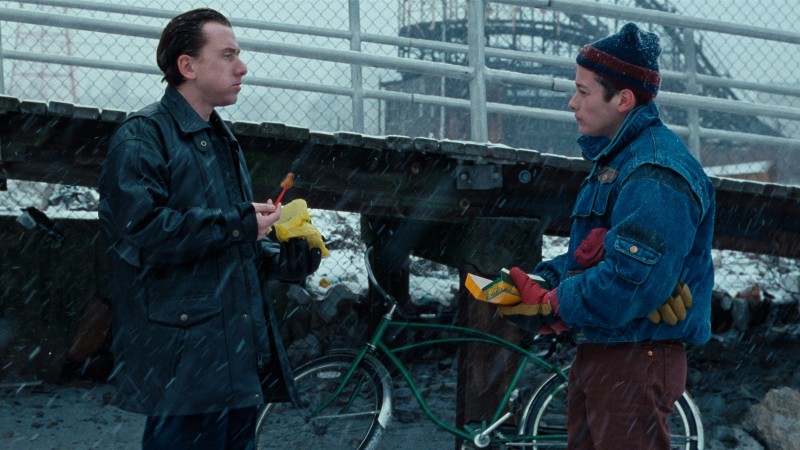
Little Odessa: He Ain’t Heavy, He’s My Brother
James Gray’s extraordinary debut feature is a painstakingly distilled tale of crime and family dysfunction, captured with a merciless gaze and a sharp attention to idiosyncratic detail.
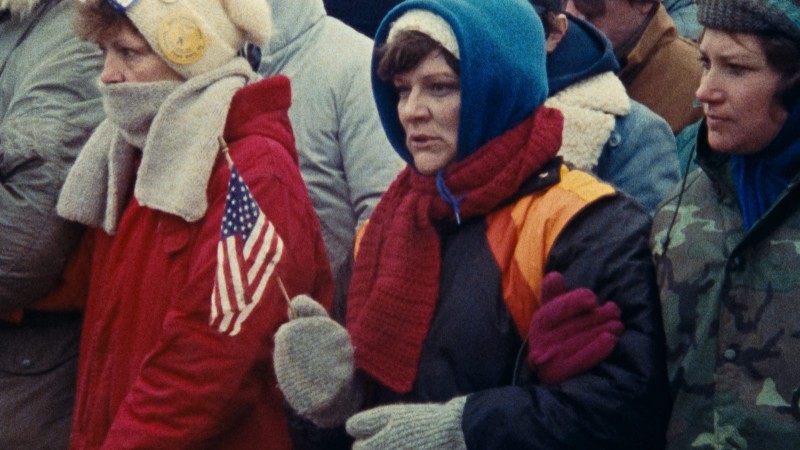
American Dream: The Time Is Right
In her second film, Oscar-winning documentarian Barbara Kopple captures the anguish and perils of disunity in the labor movement and the corrosion of union power during the Reagan era.
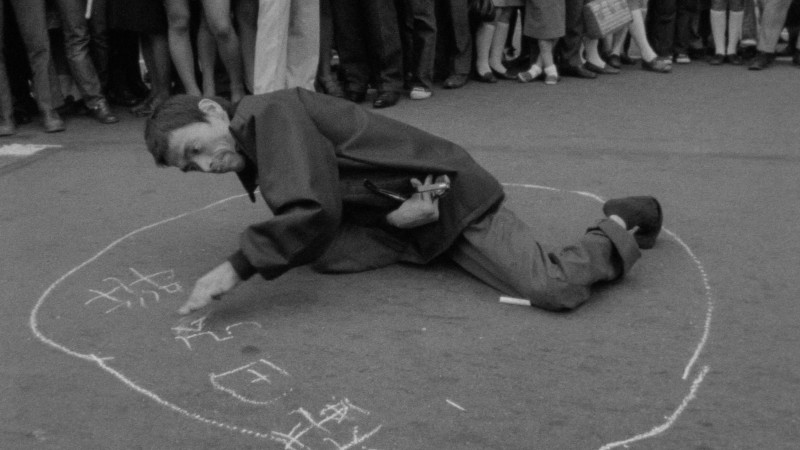
Five Radical Documentaries by Kazuo Hara and Sachiko Kobayashi: Restlessness Refusing Resolution
The pioneering husband-and-wife duo transformed the field of Japanese nonfiction cinema with their portraits of spectacular, edgy personalities and collectives under duress.
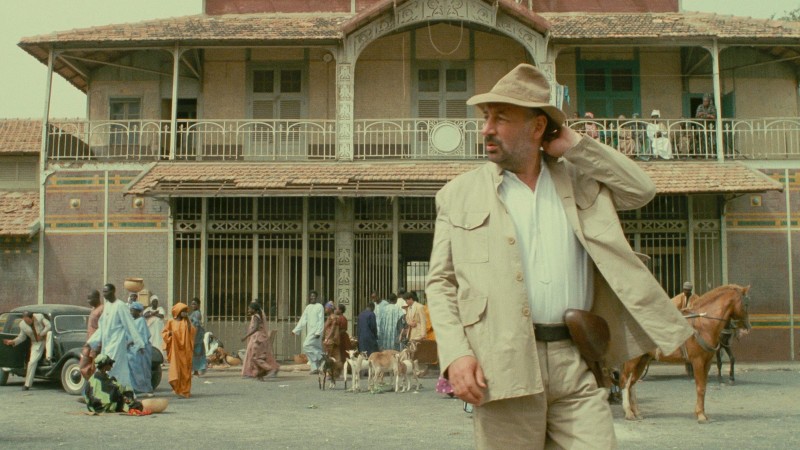
Coup de torchon: “All Crimes Are Collective”
Set in 1930s French West Africa, Bertrand Tavernier’s hard-to-classify adaptation of the Jim Thompson novel Pop. 1280 offers an apocalyptic vision of a society in which institutions have abdicated their moral authority.