The Meeting of the ’Twain: Monterey and the Great California Divide
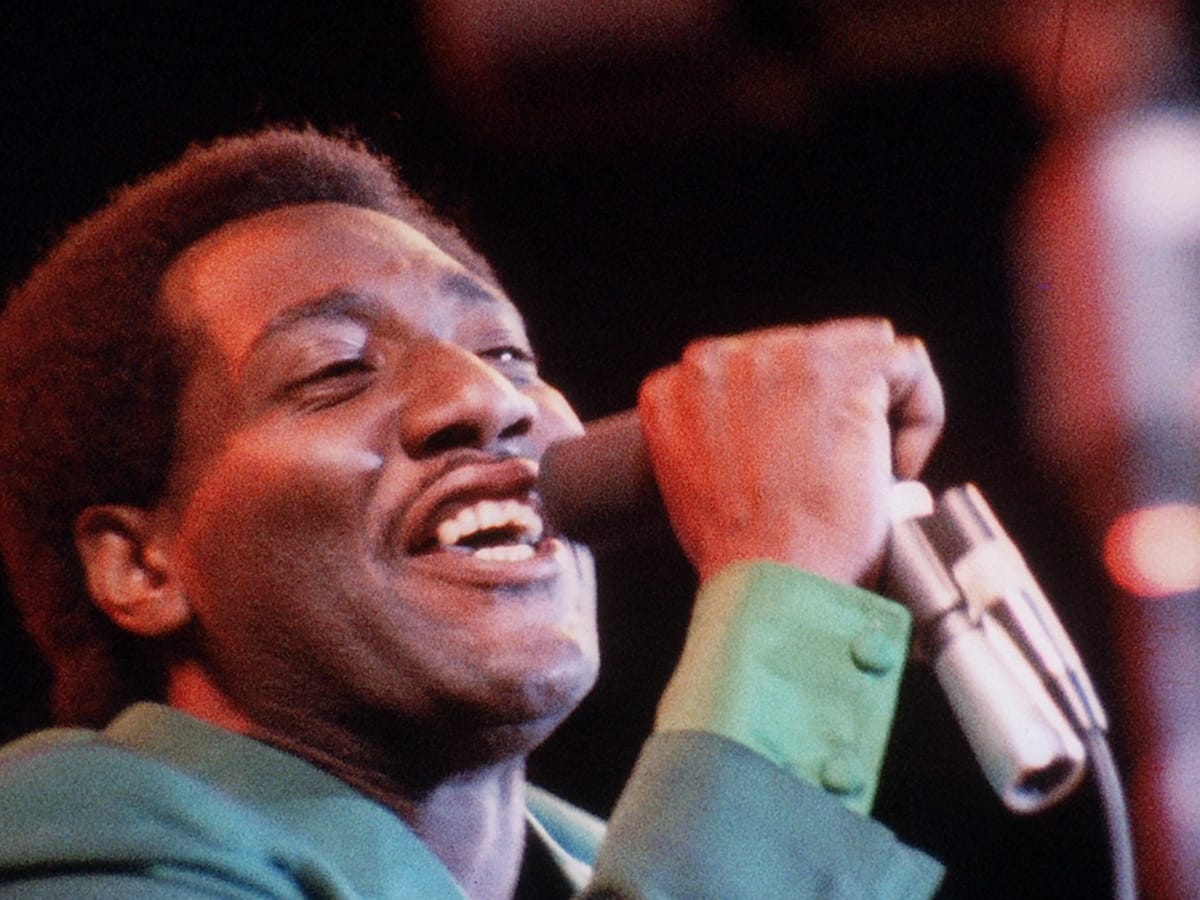
"TRAVELING UP the Coast from the ruins of the Sunset Strip to the Haight is a Dante-esque ascent,” New Yorker Richard Goldstein could write of a journey from southern to northern California in 1967. For Goldstein, pop music critic of the Village Voice at the time, the 400 miles between Los Angeles and San Francisco marked the difference between “a neon wasteland” and “the most important underground in the nation.”
Reading them thirty-five years on, Goldstein’s words seem harshly peremptory in their dismissal of L.A.—1967, after all, brought seminal releases by Love, The Doors, The Mothers of Invention, and other SoCal acts—but they nonetheless underscore the background to that year’s International Pop Festival in Monterey. For 1967 was the year when a great divide opened between “pop” and “rock,” and when the burgeoning S.F. hippie subculture began to usurp the chirpier L.A. world of surf music and Sonny and Cher. Goldstein was just one of many commentators who could see that the action was (temporarily, anyway) shifting away from L.A. to the small, “alternative” community of the Bay Area.
Far from the industry centers of L.A., London, and New York, ’Frisco was a place where diverse cultural streams had threaded together to produce a thrilling, multi-mediated music scene. It was a place where folk music, campus politics, Beat poetry, and lysergic acid had spontaneously combusted, throwing up a uniquely American form of acid rock that dissolved the barrier between audiences and bands like The Grateful Dead, Jefferson Airplane, and Big Brother and the Holding Company.
Little wonder that these bands regarded Los Angeles with scorn. Even San Francisco Chronicle jazz critic Ralph J. Gleason, the elder statesman who would play a vital intermediary role during the Festival’s planning, thought Southern Californian bands were “fostered and nurtured by L.A. music hype,” whereas “what’s going on here is natural and real.” It helped that San Francisco’s live venues—the Fillmore, the Avalon Ballroom, and others—were almost as famous as the groups who played there.
*
FEW THINGS symbolized the gulf between “plastic Hollywood” and “organic San Francisco” better than Scott McKenzie’s “San Francisco (Be Sure to Wear Flowers in Your Hair).” The man behind this top-five hit—a record entirely conceived, written, and recorded in L.A., and hated by all hip San Franciscans—was Lou Adler, the tall, über-cool mogul who’d signed The Mamas and the Papas, Barry McGuire, and others to his Dunhill label.
It was no coincidence, therefore, that Adler was a prime mover in the brainstorming behind Monterey—instrumental in what was later described by the Festival’s press officer, Derek Taylor, as a “classic Hollywood palace coup,” wresting control of the Festival away from L.A.-based paper fortune heir Alan Pariser. Adler and The Mamas and the Papas’ John Phillips quickly set about transforming Monterey Pop into a seismic event starring as many of their superstar friends and contacts as they could cram into one long weekend. Yet Adler knew the key to Monterey lay with the altogether hipper San Francisco faction. And therein lay the problems.
“Of all the shifty schemes and scaly exploitations of the hour, [this] is the most nefarious,” noted Grateful Dead manager Rock Scully, while Jefferson Airplane’s Paul Kantner griped that Monterey “was totally ruined by Los Angeles interests.” Country Joe McDonald opined that “the Southern Californian and Los Angeles entertainment entered into the scene with a ‘Wear a Flower in Your Hair’ attitude,” calling Monterey “a total ethical sellout of everything that we’d dreamed of.” (With admirable revisionism, he later confessed that the “sellout” was “something we desperately needed because we were totally isolated.”)
“The San Francisco groups had a very bad taste in their mouths about L.A. commercialism,” Adler said decades later. “And it’s true that we were a business-minded industry. It wasn’t a hobby. They called it slick, and I’d have to agree with them. We couldn’t find the link. Every time John and I went up there, it was a fight—almost a physical fight on occasions. And that was right up to the opening day of the Festival, with the Dead—the Ungrateful Dead, as we called them—threatening to do an alternative festival.”
Fortunately, from Lou Adler’s viewpoint, there were enough peacekeepers around to bring the warring camps together. One was Gleason, who’d lived through many Monterey Jazz Festivals and would soon help the young Jann Wenner launch Rolling Stone. Another was Fillmore promoter Bill Graham, whose entire modus operandi had always been about keeping one foot in hippiedom and the other in bottom–line business nous. Still another was Derek Taylor, who’d been The Beatles’ press officer, and who was universally loved by Monterey’s organizers and bands alike.
Most crucial, arguably, was David Crosby, whose constant commuting between Laurel Canyon and Haight-Ashbury provided an important bridge between L.A. and S.F. “Crosby was the main cultural luminary to me,” Jackson Browne, then an emerging troubadour, said in 1993. “He had this legendary VW bus with a Porsche engine in it, and that summed him up—a hippie with power!”
At the Festival, “the Cros” was the busiest scenester of the weekend, hobnobbing with everyone from an edgy Paul Kantner to a diaphanous Brian Jones. Of all the L.A. stars, he was the one who’d responded the quickest to what was happening in the Bay Area, not least because he’d been friendly with future members of the Dead, the Airplane, and Quicksilver since the early ’60s.
*
WHAT San Francisco Chronicle critic Joel Selvin referred to in Monterey Pop (1992) as the “tenuous accord” between Los Angeles and San Francisco was one of the factors that made Monterey so fascinating, creating as it did “an underlying current of tension that ran from the Festival’s earliest planning stages right up to its final moments.”
Yet if it’s true that, in the words of Gene Sculatti and Davin Seay in San Franciscan Nights (1985), Monterey Pop was on one level simply a “combination trade show and shopping spree” for the majors—the dress circle was packed with bigwigs like Columbia’s Clive Davis, Reprise’s Mo Ostin, and Atlantic’s Jerry Wexler—it was also an organic manifestation of the new rock-as-art consciousness. Sound of the City author Charlie Gillett was right to suggest that the Festival—an expression of “the new world of adult pop,” as he termed it—served the same function for twentysomething hippies as Alan Freed’s Moondog Coronation balls had done in Cleveland back in the ’50s.
“Monterey was the nexus,” noted Jann Wenner, there in his capacity as a reporter for Ramparts but five months away from launching Rolling Stone. “It sprang from what The Beatles began, and from it sprang what followed.”

More: Essays
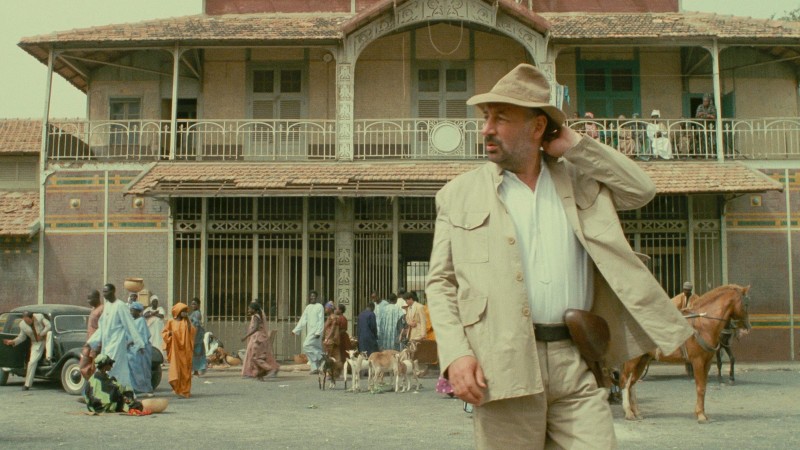
Coup de torchon: “All Crimes Are Collective”
Set in 1930s French West Africa, Bertrand Tavernier’s hard-to-classify adaptation of the Jim Thompson novel Pop. 1280 offers an apocalyptic vision of a society in which institutions have abdicated their moral authority.
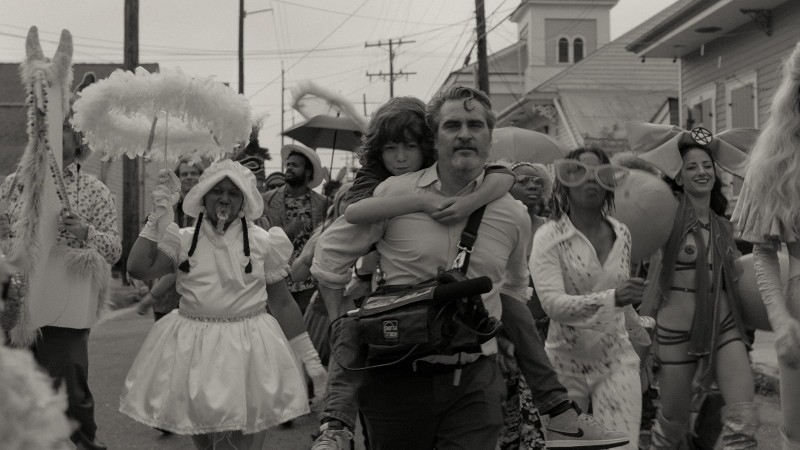
The Films of Mike Mills: A Human Space
In his fiction features Beginners, 20th Century Women, and C’mon C’mon, the acclaimed director casts a sensitive gaze on the rich psychodynamics of human relationships and the hidden interconnections of our unconscious motivations.
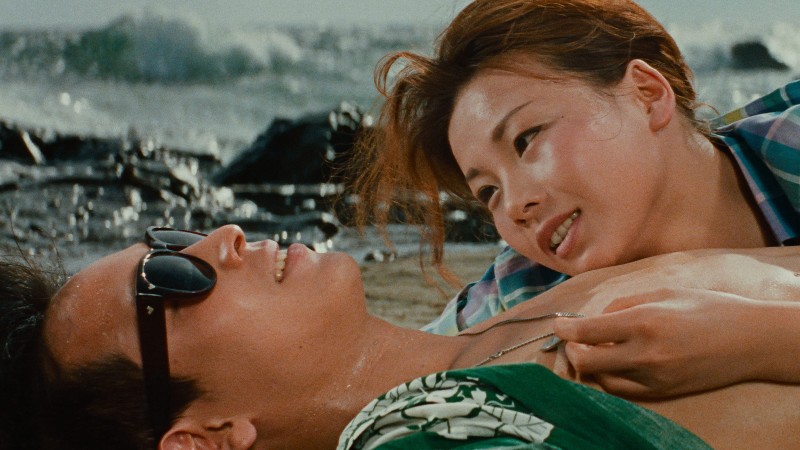
Cruel Story of Youth: A Blank Generation
In his second feature film, Nagisa Oshima explores the alienation of young Japanese people and their doomed attempts to assert themselves in a corrupt and increasingly conservative society.
Hud: No Place for Heroes
A career-altering artistic breakthrough for director Martin Ritt, this dark tale of a family’s downfall daringly exposes the mythology of the western hero as empty and morally bankrupt.