Underrepresented, Women Triumph in Venice
Share
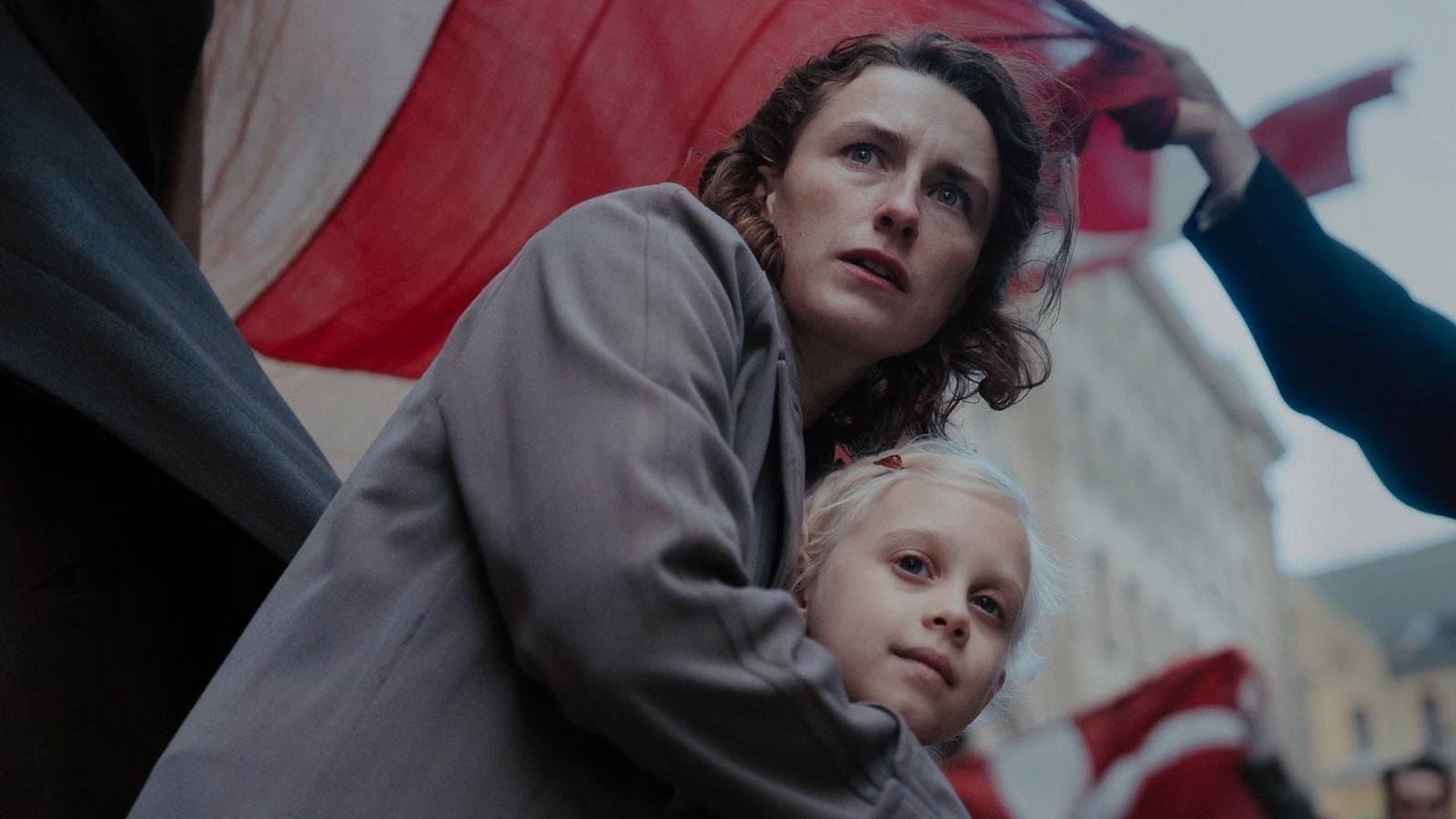
“I actually didn’t see Woman Unknown,” quipped jury president Maggie Gyllenhaal at a press conference following Saturday night’s presentation of the awards at the eighty-third Venice International Film Festival. “I just was like, ‘It’s made by a woman and so, Golden Lion!’”
Launching the always-teeming fall festival season, Venice opened nearly two weeks ago with another press conference in which Gyllenhaal was asked to address the paucity of women filmmakers in the main competition lineup. Only one of the twenty-one contenders, May el-Toukhy’s Woman Unknown, was directed solely by a woman, while NAZA, a late addition, was codirected by Rachel Szor and Yuval Abraham. “There’s a systemic problem,” said Gyllenhaal. “It’s harder for women to get films financed.”
On Saturday, Gyllenhaal noted that she naturally “anticipated” being asked whether she and her fellow jury members—filmmakers Kaouther Ben Hania, Xavier Giannoli, Shahrbanoo Sadat, and Johnnie To; composer Daniel Blumberg; and theorist Francesco Casetti—had given the festival’s top prize, the Golden Lion, to Woman Unknown because May el-Toukhy is a woman. “I just want to celebrate a beautifully made movie that I felt was like a laser beam just for the well-made movie that it is,” she said.
El-Toukhy broke through in 2019 with Queen of Hearts, which was remade in 2023 by Catherine Breillat as Last Summer, and she has told the Hollywood Reporter’s Lily Ford that she worked “sixteen hours a day for more than a year” to make Woman Unknown. “I’ve spent all my savings. I’ve used every part of me to make this film and all the resources, all the muscle power I have.”
Her story is set in Copenhagen in the immediate aftermath of the Second World War, when Danish women accused of consorting with Nazi occupiers—“often regardless of evidence or circumstance,” as Hannah Strong notes in Little White Lies—were dragged out onto the street by the Resistance to be publicly shamed, their hair shorn, their clothes shredded, their naked bodies smeared with swastikas. “This is an angry, despairing film,” writes Sophie Monks Kaufman at IndieWire. “The spectacle of a supposedly freedom-fighting group, not so much over-correcting in the wake of collective trauma, but weaponizing that very trauma to unleash hell on a vulnerable group evokes Haneke-level bleakness in its assessment of human nature.”
Mathilde Arcel, who won the Coppa Volti for Best Actress, stars in her first feature as Marie, a housemaid and nanny engaged to her employer (Carsten Bjornlund), a widowed clothing manufacturer. Marie “carries herself as if permanently bound in a corset,” writes Beatrice Loayza in Variety, “breath held, mouth tight, her eyes shifty as if dreading the next reprimand. It makes sense given her workplace’s exacting standards, in which place settings are arranged according to centimeter-precise measurements and stony head maid Esther (Marina Bouras) is always watching.”
The screws are tightened when an old classmate (Thorbjorn Hedegaard) threatens to reveal a secret from Marie’s past. “Shot by Jasper Spanning,” writes Jonathan Romney for Film Comment, “this is a rigorous, intensely claustrophobic film, and Arcel’s performance is terrific—at first inscrutable, then agonizingly intense as Marie’s inner conflicts lead her to the point of explosion.” Woman Unknown screens tomorrow, Thursday, and Sunday in Toronto and next month in London.
Jury Prizes
Lee Chang-dong’s Possible Love, which explores the tense and complex dynamics between two married couples, won the Grand Jury Prize and the FIPRESCI Prize. We took a first look at early reviews last week, and we’ll likely hear a lot more about Lee’s first feature since Burning (2018), especially when it screens at the New York Film Festival. For now, though, let’s simply note that Jessica Kiang, who has turned in an outstanding review for Variety, expands on her enthusiasm—engagingly and at length—in a conversation with Nicolas Rapold on The Last Thing I Saw.
The Special Jury Prize went to NAZA, whose title references an Israeli military acronym for the number of civilian casualties expected with each strike against a single target in the country’s ongoing campaign against Hamas in Gaza. “At one point,” notes Xan Brooks in the Guardian, a producer of the film, “approval was given to kill 500 NAZA for one Hamas member.”
Introducing his interview with Israeli filmmakers Yuval Abraham and Rachel Szor—who codirected the Oscar-winning No Other Land (2024) with Palestinian filmmakers Basel Adra and Hamdan Ballal and are now being accused of treason by Israel’s culture minister, who is threatening to strip the filmmakers of their citizenship—the Hollywood Reporter’s Scott Roxborough calls NAZA “one of the most shocking and controversial documentaries of the year. It may also prove to be one of the most indispensable.”
“The film’s setup is disarmingly simple,” writes Vulture’s Bilge Ebiri. On rooftops in Tel Aviv, Abraham talks with twenty-four Israeli intelligence officers. It’s night, so they can’t be seen, and their voices are altered to safeguard their anonymity. The interviewees explain how they use AI to determine targets and then send out drones to complete the job.
“They admit to knowingly wiping out entire neighborhoods, fully aware of the catastrophic human toll,” writes Ebiri. “These were not outliers, or accidents, or isolated incidents. The murders were, again, part of a system. ‘Do you think it’s a genocide?’ Abraham asks one of his subjects. ‘Yes, absolutely,’ is the response.”
Director, Screenplay, and More
The Silver Lion for Best Director went to Ilya Khrzhanovsky, who has spent twenty years working on a project inspired the life and times of quantum physicist Lev Landau, spawning plenty of controversy as well as two features, a television series, and an installation in Paris—so far. More features and series are planned, but the latest iteration, entitled simply Dau, presents itself as a sort of summing-up.
“Weighing in at just over 200 minutes,” writes Variety’s Guy Lodge, “and spanning four decades in the life of a physicist involved in the Soviet atom-bomb project, the film certainly announces itself as a grave and major work. But beneath the impressive, sometimes seizure-threatening sound and fury of its formal construction, Dau feels dramatically and rhetorically thin: It plays as an avant-garde counterpart to such American films as Oppenheimer and The Brutalist (whose Oscar-winning DP, Lol Crawley, is one of three credited here), which likewise portrayed the social and ideological turmoil of a historical era through the portrait of a single tortured man.”
Stéphane Brizé, Coralie Amédéo, and Olivier Gorce won the award for Best Screenplay. Directed by Brizé, A Good Little Soldier stars Alba Rohrwacher as “a woman swimming in the turbulent waters of middle management, trying to both appease her superiors and deal with problematic employees who can’t seem to get along,” as Jordan Minter describes her in the Hollywood Reporter. “If the somewhat sardonic tone of A Good Little Soldier, as well as its focus on a female protagonist struggling to maintain her place in the hierarchy while also being a good mom, is something of a departure for the French auteur, this is very much a Brizé movie through and through. In other words, the film is tense, realistic, and compellingly performed . . . but also a bit schematic and didactic.”
John Malkovich, who costars in Martin McDonagh’s Wild Horse Nine with Sam Rockwell, won the Coppa Volpi for Best Actor. The year is 1973, and the CIA has sent a bickering pair of agents to Easter Island on a mission that has something to do with the destabilization of Chile’s democracy not long before a military coup will overthrow Salvador Allende and his governing coalition. Malkovich is “having fun here, and his pleasure becomes our delight,” writes Time’s Stephanie Zacharek.
The Marcello Mastroianni Award for Best Young Actor or Actress went to Malou Khebizi for her turn in Cédric Kahn’s A Place to Heal, which the Guardian’s Peter Bradshaw calls “a docu-realist study” of a psychiatric facility for teens aged between fifteen and eighteen. In this “powerful and committed” film, writes Bradshaw, Khebizi plays Lucia, “a defiantly sexualized wild child with a clear issue of abuse in her background, permanently at war with her mum, involved in chaotic abuse for which the term ‘sex work’ is not entirely accurate.”
Orizzonti
In Diane in the Loop, the winner of the award for Best Film in the Orizzonti program spotlighting up-and-coming talent, twenty-eight-year-old Diane (Ninon Borsei) discovers that her mother (Sandrine Black) was raped a few years before she was born. And she’s out for revenge. The film’s producers are Jean-Pierre and Luc Dardenne, and as Matt Zoller Seitz writes at RogerEbert.com, “writer-directors Anne Sirot and Raphaël Balboni not only honor the masters but also infuse the tale with dry humor and a playful air of mystery that is uncharacteristic of them, which makes the movie bearable when it goes dark.”
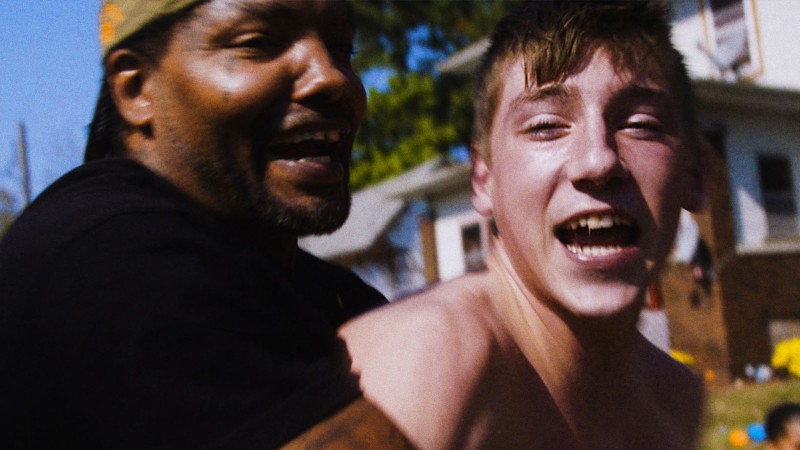
Jacqueline Lentzou (Moon, 66 Questions) won the award for Best Director for her second feature, A Day in the Life of Jo: Chapter Phaedra. Fifteen-year-old Jo (Evita Andriopoulou) is dealing with a series of everyday frustrations as well as a crush on a new friend, Phaedra (Anastasia Gouliamou), when nightfall brings “a devastating narrative left-turn,” as Hannah Strong puts it. The film’s “final moments are among its most affecting, carefully, quietly showing the void left by a senseless loss.”
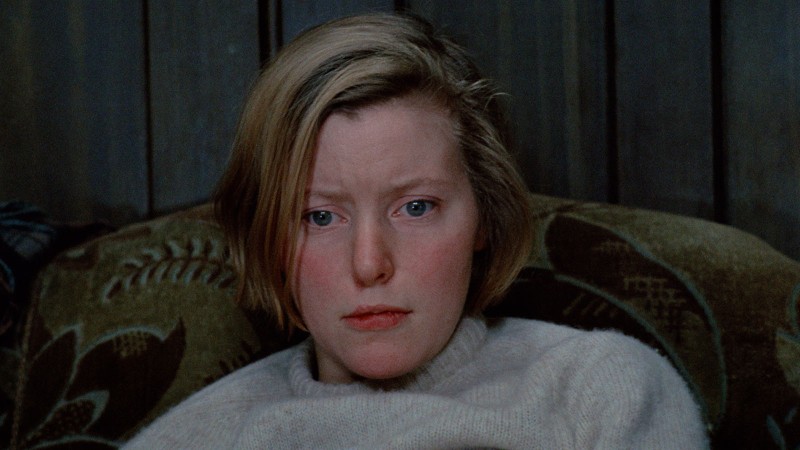
Jury president Valérie Donzelli; our own president, Peter Becker; and fellow jurors Elizabeth Lo, David Pablos, and Barbara Ronchi presented a Special Orizzonti Jury Prize to House of the Wind,which also won the Luigi De Laurentiis Award for the best first feature in any competitive program at the festival. Writer-director Auguste Bernard Kouemo Yanghu dedicates the film to his mother, Josette Kwanya, who turned in her starring role before passing away in 2024. House of the Wind is “a compelling study of old age, solitude, and solidarity between generations against the backdrop of contemporary economic challenges in the director’s native Cameroon,” writes Jonathan Romney for Screen.
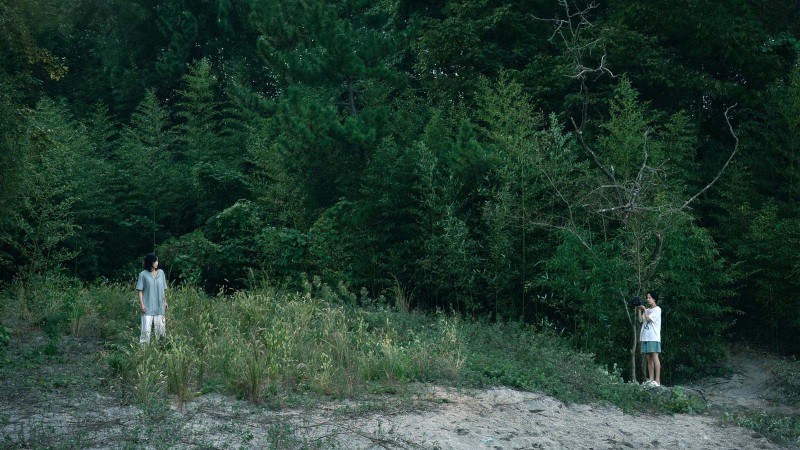
Director Tommaso Landucci and cowriter Damiano Femfert won the award for Best Screenplay for Children of the Monkey, starring Riccardo Scamarcio, who won the Best Actor award, and Lidiya Liberman as a couple who devote their lives to caring for their disabled son. “This is a heart-wrenching but effective examination of a number of complex themes, carefully woven together into a lively, poetic depiction of the challenges that come with parenthood,” writes Matthew Joseph Jenner for the International Cinephile Society.
Giornate and Critics’ Week
Giornate degli Autori, the sidebar founded in 2004 and modeled on the Directors’ Fortnight in Cannes, showcases ten films each year, and this year’s GdA Director’s Award went to María Aparicio for Sometimes Sadness, Sometimes Rebellion. Eva Bianco plays a woman passing through Madrid when she’s approached by an Argentine historian (Roger Koza) at the Reina Sofía Museum.
The jury headed by filmmaker Carla Simón issued a statement: “We left the cinema deeply moved, by a sadness and a spirit of rebellion that do not oppose one another, but coexist as two faces of the same disorientation.”
The winner of the Grand Prize at the forty-first Settimana Internazionale della Critica, the independent parallel section organized by the National Union of Italian Film Critics, is Tommaso Usberti’s Before the War. Piero Usberti, the director’s brother, stars as the young and proudly macho Guido, whose worldview is upended when he finds himself falling for Sonia, a Kosovar immigrant to Guido’s small town in northern Italy.
Jurors Chloé Barreau, Júlia Berkes, and Caterina Mazzucato praised Before the War as a film that “relies as much on silence as on words, where sound and music become a battlefield in their own right to explore urgently contemporary themes: toxic masculinity, impossible desire and the individual’s profound loneliness.”
Don’t miss out on your Daily briefing! Subscribe to the RSS feed.