Le notti bianche

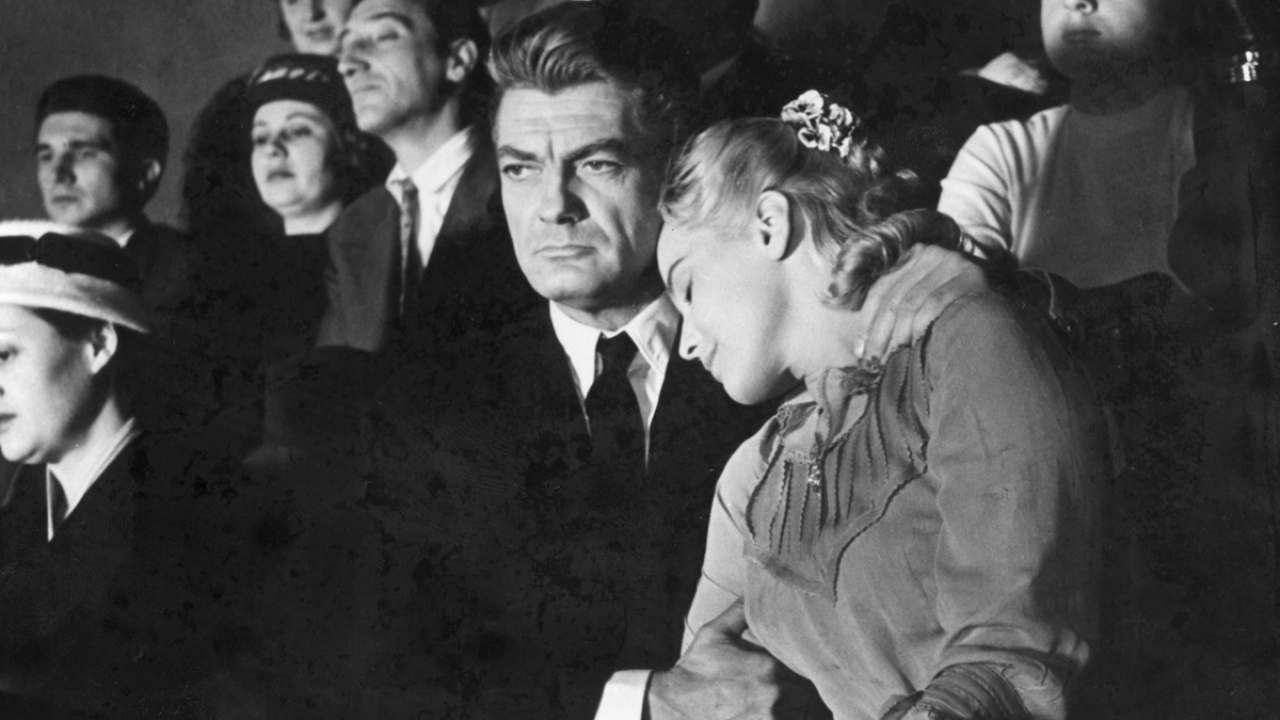
Marcello Mastroianni, as a lonely city transplant, and Maria Schell, as a sheltered girl haunted by a lover’s promise, meet by chance on a canal bridge and begin a tentative romance that quickly entangles them in a web of longing and self-delusion. Luchino Visconti’s Le notti bianche, an exquisite adaptation of Dostoyevsky’s “White Nights,” translates this romantic, shattering tale of two restless souls into a ravishing black-and-white dream.
SPECIAL EDITION FEATURES
- Restored high-definition digital transfer, supervised by cinematographer Giuseppe Rotunno
- Interviews with screenwriter Suso Cecchi D’Amico, film critics Laura Delli Colli and Lino Miccichè, cinematographer Giuseppe Rotunno, and costume designer Piero Tosi
- Audio recording of Dostoyevsky’s “White Nights,” also downloadable as an MP3
- Rare screen-test footage of Mastroianni and Schell
- Original theatrical trailer
- PLUS: An essay by film scholar Geoffrey Nowell-Smith
Cover by Lucien S. Y. Yang
SPECIAL EDITION FEATURES
- Restored high-definition digital transfer, supervised by cinematographer Giuseppe Rotunno
- Interviews with screenwriter Suso Cecchi D’Amico, film critics Laura Delli Colli and Lino Miccichè, cinematographer Giuseppe Rotunno, and costume designer Piero Tosi
- Audio recording of Dostoyevsky’s “White Nights,” also downloadable as an MP3
- Rare screen-test footage of Mastroianni and Schell
- Original theatrical trailer
- PLUS: An essay by film scholar Geoffrey Nowell-Smith
Cover by Lucien S. Y. Yang
Cast
- Marcello Mastroianni
- Mario
- Maria Schell
- Natalia
- Jean Marais
- Lodger
- Clara Calamai
- Prostitute
Credits
- Director
- Luchino Visconti
- Producer
- Franco Cristaldi
- Screenplay
- Suso Cecchi D’Amico
- Cinematography
- Luchino Visconti
- From the story by
- Fyodor Dostoyevsky
- Cinematography
- Giuseppe Rotunno
- Editing
- Mario Serandrei
- Music
- Nino Rota
- Art direction
- Mario Chiari
- Set designer
- Enzo Eusepi


1/3

2/3

3/3