The Milky Way

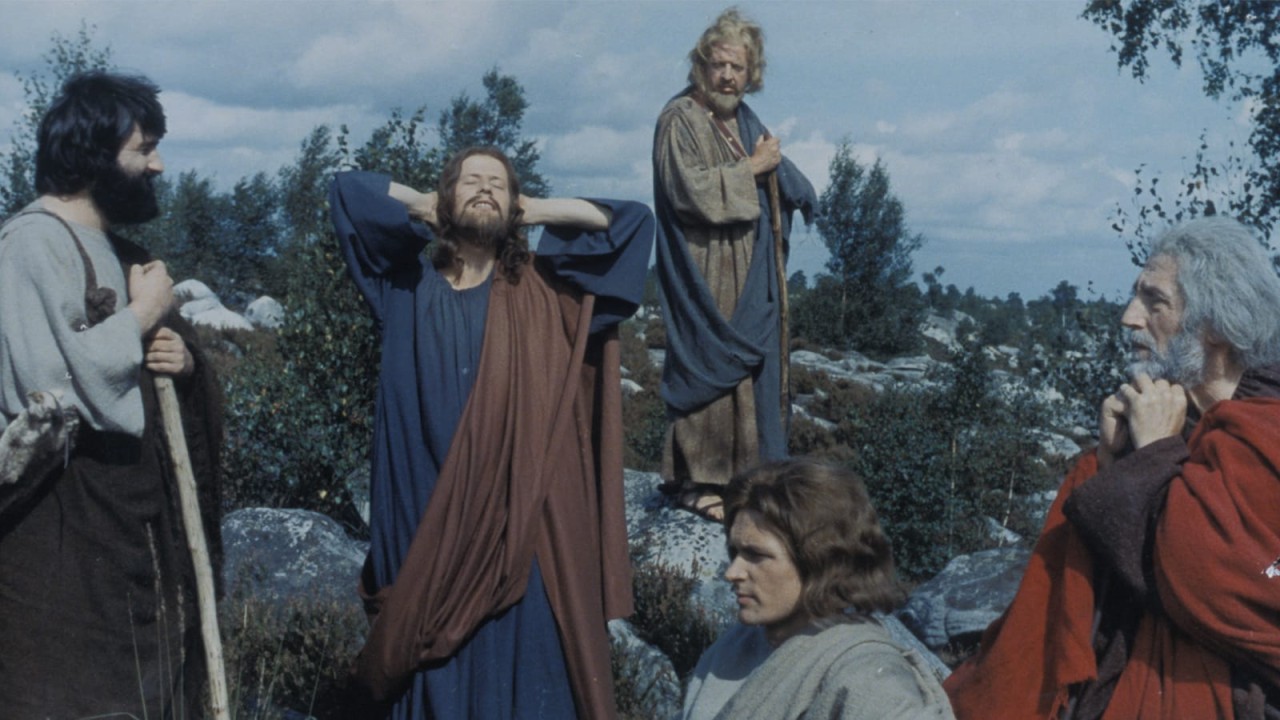
The first of what Luis Buñuel later proclaimed a trilogy (along with The Discreet Charm of the Bourgeoisie and The Phantom of Liberty) about "the search for truth," The Milky Way (La voie lactee) daringly deconstructs contemporary and traditional views on Catholicism with ribald, rambunctious surreality. Two French beggars, present-day pilgrims en route to Spain's holy city of Santiago de Compostela, serve as Buñuel's narrators for an anticlerical history of heresy, told with absurdity and filled with images that rank among Buñuel's most memorable (stigmatic children, crucified nuns) and hilarious (Jesus considering a good shave). A diabolically entertaining look at the mysteries of fanaticism, The Milky Way remains a hotly debated work from cinema's greatest skeptic.
SPECIAL EDITION FEATURES
- Restored high-definition digital transfer
- Introduction by screenwriter Jean-Claude Carrière
- Interview with film scholar Ian Christie
- Luis Bunuel: Atheist Thanks to God, a documentary featuring several of Buñuel's close friends and collaborators
- Original theatrical trailer
- PLUS: Essays by Carlos Fuentes and Mark Polizzotti, and an interview with Luis Buñuel
Cover by Gonzalo Garcia Barcha
SPECIAL EDITION FEATURES
- Restored high-definition digital transfer
- Introduction by screenwriter Jean-Claude Carrière
- Interview with film scholar Ian Christie
- Luis Bunuel: Atheist Thanks to God, a documentary featuring several of Buñuel's close friends and collaborators
- Original theatrical trailer
- PLUS: Essays by Carlos Fuentes and Mark Polizzotti, and an interview with Luis Buñuel
Cover by Gonzalo Garcia Barcha
Cast
- Paul Frankeur
- Pierre
- Laurent Terzieff
- Jean
- Bernard Verley
- Jesus
- Edith Scob
- The Virgin Mary
- Muni
- Mother Superior
- Julien Bertheau
- Richard- "maitre d'hotel"
- François Maistre
- French priest
- Alain Cuny
- Man with cape
- Michel Piccoli
- Marquis de Sade
- Pierre Clémenti
- The devil
- Jean Piat
- The Jansenist
- Delphine Seyrig
- The prostitute
- Jean-Claude Carrière
- Priscillian
Credits
- Director
- Luis Buñuel
- Screenplay
- Luis Buñuel
- Screenplay
- Jean-Claude Carrière
- Producer
- Serge Silberman
- Cinematography
- Christian Matras
- Editing
- Louisette Hautecoeur
- Production design
- Pierre Guffroy
- Costume design
- Jacqueline Guvot