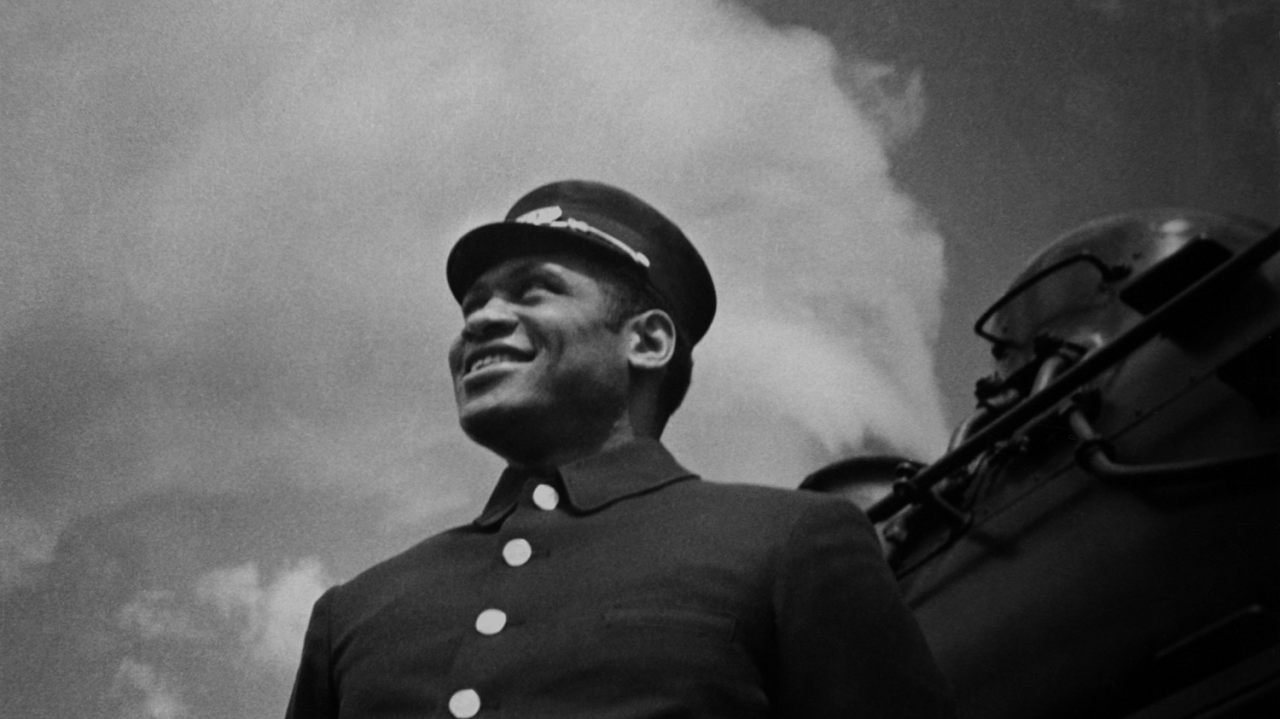
Native Land

By the start of World War II, Paul Robeson had given up his lucrative mainstream work to participate in more socially progressive film and stage productions. Robeson committed his support to Paul Strand and Leo Hurwitz's political semidocumentary Native Land. With Robeson's narration and songs, this beautifully shot and edited film exposes violations of Americans' civil liberties and is a call to action for exploited workers around the country. Scarcely shown since its debut, Native Land represents Robeson's shift from narrative cinema to the leftist documentaries that would define the final chapter of his controversial film career.
Special Features
- Digital transfers of The Proud Valley and Native Land created from the best surviving elements
- "The Story of Native Land," a video interview with cinematographer Tom Hurwitz, son of Frontier Films cofounder and Native Land codirector Leo Hurwitz
- 1958 Pacifica Radio interview with Paul Robeson (Courtesy of Pacifica Radio Archives)
- English subtitles for the deaf and hard of hearing
Available In
Collector's Set

Special Features
- Digital transfers of The Proud Valley and Native Land created from the best surviving elements
- "The Story of Native Land," a video interview with cinematographer Tom Hurwitz, son of Frontier Films cofounder and Native Land codirector Leo Hurwitz
- 1958 Pacifica Radio interview with Paul Robeson (Courtesy of Pacifica Radio Archives)
- English subtitles for the deaf and hard of hearing
Cast
- Paul Robeson
- Narrator
- Fred Johnson
- Farmer
- Mary George
- Farmer's wife
- John Rennick
- Farmer's son
- Amelia Romano
- Maid
- Housely Stevens
- White sharecropper
- Louis Grant
- Black sharecropper
- James Hanney
- Union president
- Howard DaSylva
- Stool pigeon
- Art Smith
- Harry Carlyle
- Richard Bishop
- Spy executive
- Vaughn King
- Wife of union president
- Charles Jordan
- Contact man
- Robert Strauss
- Grocer
- Dolores Cornell
- Little girl
- John Marlieb
- Thug
- Rev. Charles Webber
- Minister
- Clancy Cooper
- Funeral speaker
Credits
- Director
- Leo Hurwitz
- Cinematography
- Paul Strand
- Editing
- Leo Hurwitz
- Assistant directors
- Alfred Saxe
- Assistant directors
- William Watts
- Music
- Marc Blitzstein
- Commentary
- David Wolff
- Script
- David Wolff
- Script
- Leo Hurwitz
- Script
- Paul Strand
- Orchestra conducted by
- Lehman Engel
- Sound editing
- Robert Stebbins
- Sound editing
- Ralph Avseev
- Production manager
- George Jacobson
- Stills
- Times Wide World International News
- Animation
- Ted Eshbaugh Studios
- Director
- Paul Strand
- Editing
- Paul Strand


1/1