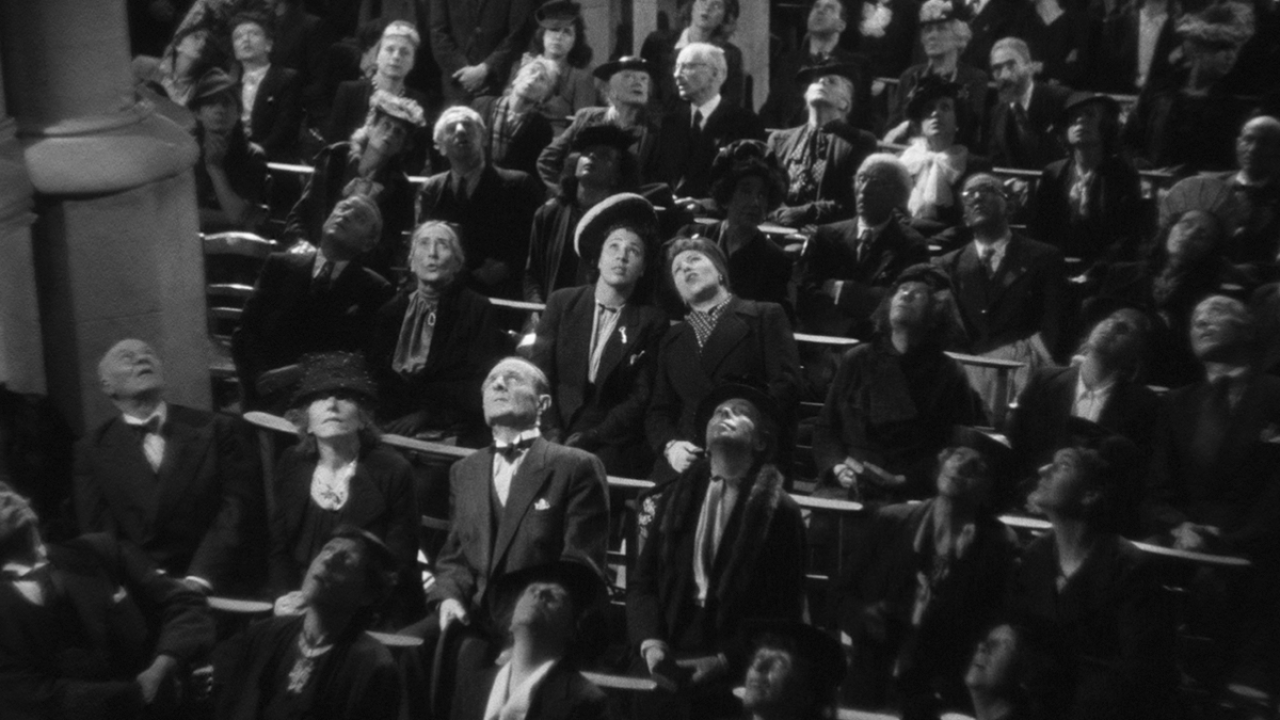
Le Corbeau

A mysterious writer of poison-pen letters, known only as Le Corbeau (the Raven), plagues a French provincial town, exposing the collective suspicion and rancor seething beneath the community’s calm surface. Made during the Nazi occupation of France, Henri-Georges Clouzot’s Le Corbeau was attacked by the right-wing Vichy regime, the left-wing Resistance press, and the Catholic Church, and was banned after the liberation. But some—including Jean Cocteau and Jean-Paul Sartre—recognized the powerful subtext of Clouzot’s anti-informant, anti-Gestapo fable, and worked to rehabilitate his directorial reputation after the war. Le Corbeau brilliantly captures the paranoid pettiness and self-loathing that turn an occupied French town into a twentieth-century Salem.
Special Features
- New 4K restoration, with uncompressed monaural soundtrack on the Blu-ray
- Interview with filmmaker Bertrand Tavernier
- Excerpts from The Story of French Cinema by Those Who Made It: Grand Illusions 1939–1942, a 1975 documentary featuring director Henri-Georges Clouzot
- Trailer
- PLUS: An essay by film scholar Alan Williams
New cover by Jic Clubb
Special Features
- New 4K restoration, with uncompressed monaural soundtrack on the Blu-ray
- Interview with filmmaker Bertrand Tavernier
- Excerpts from The Story of French Cinema by Those Who Made It: Grand Illusions 1939–1942, a 1975 documentary featuring director Henri-Georges Clouzot
- Trailer
- PLUS: An essay by film scholar Alan Williams
New cover by Jic Clubb
Cast
- Pierre Fresnay
- Dr. Rémy Germain
- Ginette Leclerc
- Denise Saillens
- Micheline Francey
- Laura Vorzet
- Pierre Larquey
- Dr. Michel Vorzet
- Héléna Manson
- Nurse Marie Corbin
- Liliane Maigné
- Rolande Saillens
- Noël Roquevert
- School Director Saillens
- Sylvie
- Mother
Credits
- Director
- Henri-Georges Clouzot
- Director of photography
- Nicolas Hayer
- Production designer
- André Andrejew
- Screenplay by
- Louis Chavance
- Adaptation and dialogue by
- Henri-Georges Clouzot
- Adaptation and dialogue by
- Louis Chavance
- Music
- Tony Aubin


Trailer for Le Corbeau