Orpheus

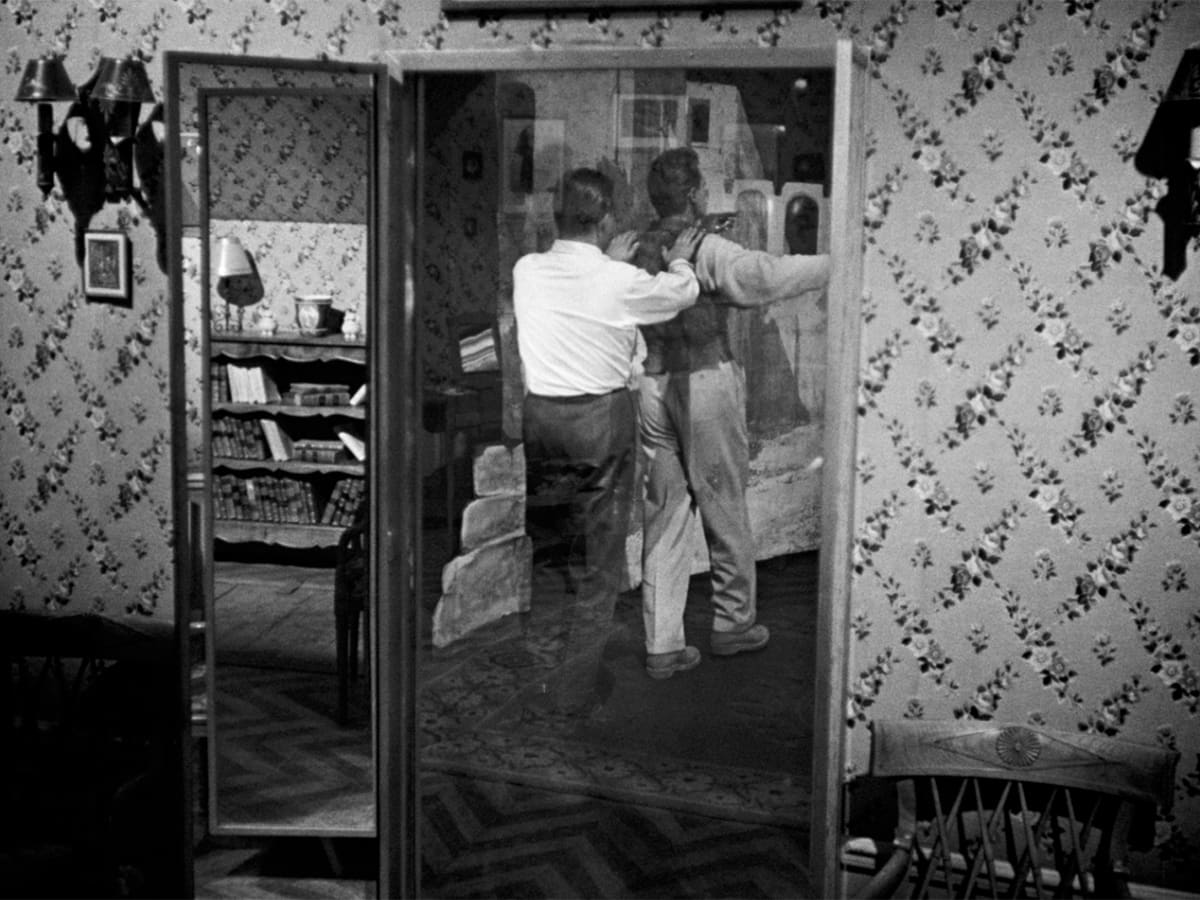
Jean Cocteau’s update of the Orpheus myth depicts a famous poet (Jean Marais), scorned by the Left Bank youth, and his love for both his wife, Eurydice (Marie Déa), and a mysterious princess (Maria Casarès). Seeking inspiration, the poet follows the princess from the world of the living to the land of the dead, through Cocteau’s famous mirrored portal. Orpheus’s peerless visual poetry and dreamlike storytelling represent the legendary Cocteau at the height of his powers.
BLU-RAY SPECIAL EDITION FEATURES
- Restored digital transfer, with uncompressed monaural soundtrack
- Audio commentary featuring French-film scholar James S. Williams
- Jean Cocteau: Autobiography of an Unknown (1984), a feature-length documentary
- Jean Cocteau and His Tricks (2008), a video interview with assistant director Claude Pinoteau
- 40 Minutes with Jean Cocteau (1957), an interview with the director
- In Search of Jazz (1956), an interview with Cocteau on the use of jazz in the film
- La villa Santo-Sospir (1951), a 16 mm color film by Cocteau
- Gallery of images by French-film portrait photographer Roger Corbeau
- Raw newsreel footage from 1950 of the Saint-Cyr military academy ruins, a location used in the film
- Theatrical trailer
- PLUS: A new essay by author Mark Polizzotti and an essay on La villa Santo-Sospir by Williams; and an excerpted article by Cocteau on the film
New cover by Fred Davis
Collector's Sets
Collector's Set

BLU-RAY SPECIAL EDITION FEATURES
- Restored digital transfer, with uncompressed monaural soundtrack
- Audio commentary featuring French-film scholar James S. Williams
- Jean Cocteau: Autobiography of an Unknown (1984), a feature-length documentary
- Jean Cocteau and His Tricks (2008), a video interview with assistant director Claude Pinoteau
- 40 Minutes with Jean Cocteau (1957), an interview with the director
- In Search of Jazz (1956), an interview with Cocteau on the use of jazz in the film
- La villa Santo-Sospir (1951), a 16 mm color film by Cocteau
- Gallery of images by French-film portrait photographer Roger Corbeau
- Raw newsreel footage from 1950 of the Saint-Cyr military academy ruins, a location used in the film
- Theatrical trailer
- PLUS: A new essay by author Mark Polizzotti and an essay on La villa Santo-Sospir by Williams; and an excerpted article by Cocteau on the film
New cover by Fred Davis
Cast
- Jean Marais
- Orpheus
- François Périer
- Heurtebise
- María Casares
- The princess
- Marie Déa
- Eurydice
- Henri Crémieux
- The man
- Juliette Gréco
- Aglaonice
- Roger Blin
- Writer
- Edouard Dermithe
- Cégeste
- Pierre Bertin
- The inspector
- Jacques Varennes
- First judge
- Jean-Pierre Melville
- Hotel manager
Credits
- Director
- Jean Cocteau
- Written and directed by
- Jean Cocteau
- Producer
- André Paulvé
- Production manager
- Émile Darbon
- Editing
- Jacqueline Sadoul
- Sound
- Calvet
- Makeup
- A. Marcus
- Costumes
- Marcel Escoffier
- Sets
- Jean d'Eaubonne
- Cinematography
- Nicolas Hayer
- Music
- Georges Auric


1/5

2/5

3/5

4/5
5/5


_medium.jpg)


