Umberto D.

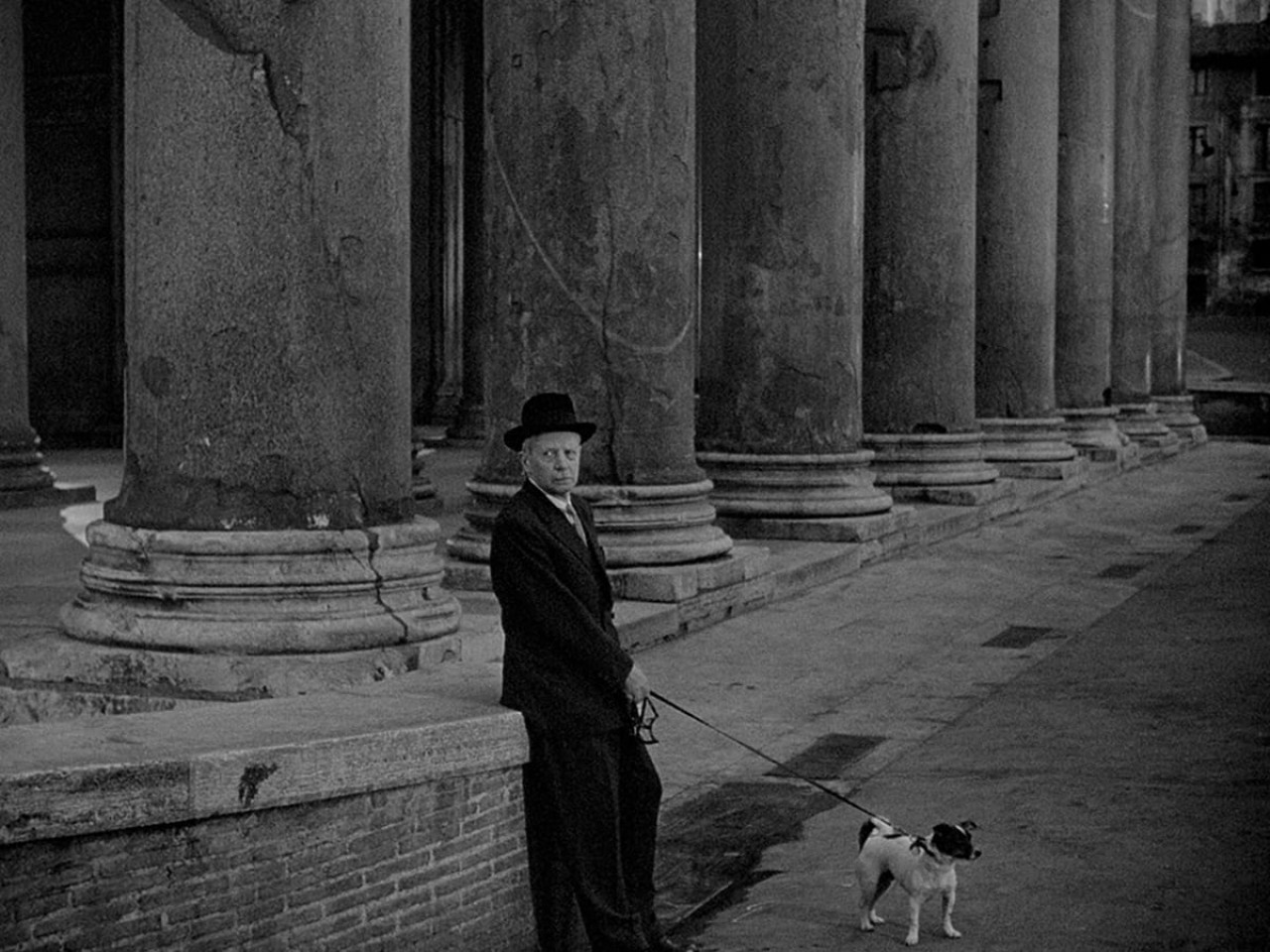
This neorealist masterpiece by Vittorio De Sica follows an elderly pensioner as he strives to make ends meet during Italy’s postwar economic recovery. Alone except for his dog, Flike, Umberto struggles to maintain his dignity in a city where human kindness seems to have been swallowed up by the forces of modernization. His simple quest to satisfy his basic needs—food, shelter, companionship—makes for one of the most heartbreaking stories ever filmed, and an essential classic of world cinema.
Special Features
- New high-definition digital restoration, with uncompressed monaural soundtrack
- That’s Life: Vittorio De Sica, a documentary about the director’s career, made for Italian television in 2001
- Interview with actress Maria Pia Casilio from 2003
- Trailer
- New English subtitle translation
- PLUS: An essay by critic Stuart Klawans and a recollection by De Sica
Cover by Sarah Habibi
Collector's Sets
Collector's Set

Special Features
- New high-definition digital restoration, with uncompressed monaural soundtrack
- That’s Life: Vittorio De Sica, a documentary about the director’s career, made for Italian television in 2001
- Interview with actress Maria Pia Casilio from 2003
- Trailer
- New English subtitle translation
- PLUS: An essay by critic Stuart Klawans and a recollection by De Sica
Cover by Sarah Habibi
Cast
- Carlo Battisti
- Umberto Domenico Ferrari
- Maria Pia Casilio
- Maria
- Lina Gennari
- Landlady
- Memmo Carotenuto
- Man in hospital
- Napoleone
- Flike, Umberto's dog
Credits
- Director
- Vittorio De Sica
- Screenplay
- Cesare Zavattini
- Screenplay
- Vittorio De Sica
- From an original story by
- Cesare Zavattini
- Produced by
- Giuseppe Amato
- Produced by
- Vittorio De Sica
- Produced by
- Angelo Rizzoli Jr.
- Sound
- Ennio Sensi
- Cinematography
- Aldo Graziati
- Editing
- Eraldo Da Roma
- Production design
- Virgilio Marchi
- Assistant directors
- Luisa Alessandri
- Assistant directors
- Franco Montemurro
- Music
- Alessandro Cicognini


1/3

2/3

3/3