Ugetsu
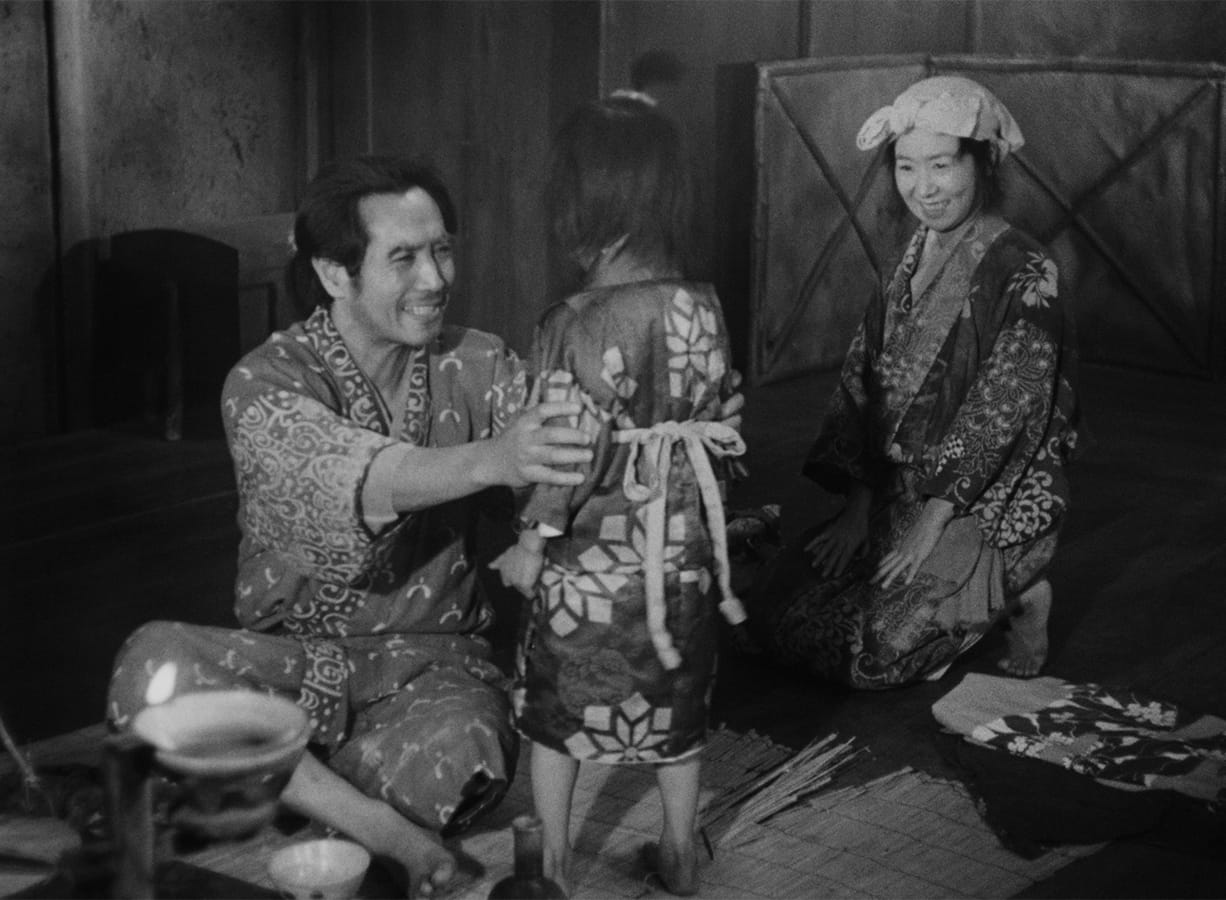
Two masterful postwar films awakened audiences worldwide to the rich heritage of Japanese cinema: Kurosawa’s Rashomon (1951) and Mizoguchi’s Ugetsu (1953). Mizoguchi stepped into the international limelight with his 78th film, which won the Silver Lion at the 1953 Venice Film Festival, along with the Italian Critics Award. At home, the prestigious film journal Kinema Jumpo rated it the third best picture of the year.
The screenplay of Ugetsu draws on literary sources from East and West. It uses two of the nine tales in Akirari Ueda’s best-known work, Tales of Moonlight and Rain (Ugetsu Monogatari, 1776). One is titled The House in the Thicket (Asaji ga Yado); the other, The Lust of the White Serpent (Jasei no in). Another source is a story titled Décoré!, by the nineteenth-century master of the French conte, Guy de Maupassant.
Veteran scriptwriters Matsutaro Kawaguchi and Yoshikata Yoda wove all three stories into a single tale that is driven by a theme dear to Mizoguchi: a woman pitted against a money-oriented, male-dominated world. Set in 16th-century Japan, a period of bloody civil war, Ugetsu focuses on common people swept up in a flood tide of social upheaval. Mizoguchi wrote in a letter to Yoda: “Whether war originates in the ruler’s personal motives, or in some public concern, how violence, disguised as war, oppresses and torments the populace, both physically and spiritually! . . . I want to emphasize this as the main theme of the film.”
Like Mizoguchi’s other films, Ugetsu uses woman’s fate to reveal the human cost of oppression. Thanks to her husband’s grotesque ambition, Ohama suffers rape and degradation as a prostitute. For Miyagi, family solidarity is everything, yet she is betrayed by her husband’s greed and inconstancy. She becomes a refugee mother in wartime, then a casualty of its violence. Both women, however, forgive their husbands, and help effect their redemption through fidelity and self-sacrifice. Ohama and Miyagi are just two of many sublime female sufferers in the Mizoguchi canon. Others can be found in The Life of Oharu (1952) and The Story of the Last Chrysanthemum (1939).
Mizoguchi is revered for his subtle use of expressive devices embedded in Japanese cultural traditions. In the opening shot of Ugetsu, panning across a field creates the effect of unfolding an emakimono, or medieval Japanese scroll painting. The most famous proof of Mizoguchi’s visual mastery is the lake scene— beginning with a long shot that exquisitely blends boat and hovering mist. Ohama sings monotonously while a drum beats somewhere in the distance. These sounds add deft, suggestive touches to the scene in a way reminiscent of the supernatural moods created by Japanese suiboku-ga, monochromatic painting in India ink. A more violent effect is created when Ohama is raped by a gang of roving samurai. Her desperate, disheveled figure merges with the gloomy surroundings, evoking emotions further drawn by the chanting Noh chorus. Credit for these rich images must also go to cinematographer Kazuo Miyagawa, who worked on six other Mizoguchi films, including the last, Street of Shame (1956).
The influence of Noh drama on Mizoguchi also may be seen in the sinister Princess Wakasa, whose face is made up to resemble the most impassive and neutral Noh masks. Theater and religion come together in the final scene, whose pan of the village recalls the opening shot of the film. By then, the viewer is prepared for the broader symbolism of Ugetsu, animating the concept of mujo—the evanescence of all earthly things—so deeply rooted in Buddhism and so often a theme of Noh dramas.
Its perfect integration of thematic and aesthetic concerns marks Ugetsu as Mizoguchi’s finest achievement—closely seconded by The Crucified Lovers of 1954. Mizoguchi lived just three years after the release of Ugetsu, yet his work helped define the 1950s as the golden decade of postwar Japanese cinema.
More: Essays
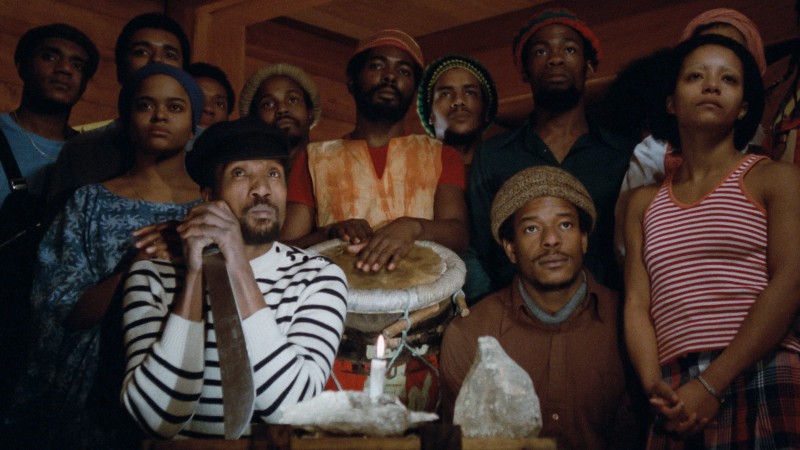
West Indies: The Fugitive Slaves of Liberty: Torrents of Fire, Torrents of Blood
Unfolding in a blaze of vivacious color, Med Hondo’s musical masterpiece is a wildly ambitious exploration of the history of French colonial aggression, the enslavement of African peoples, and their subsequent liberation struggles.

Sentimental Value: Between Trauma and the Sublime
In this powerful drama about family and memory, Joachim Trier explores how the past lives on in us, shapes us, and partly determines who we are and how we feel.
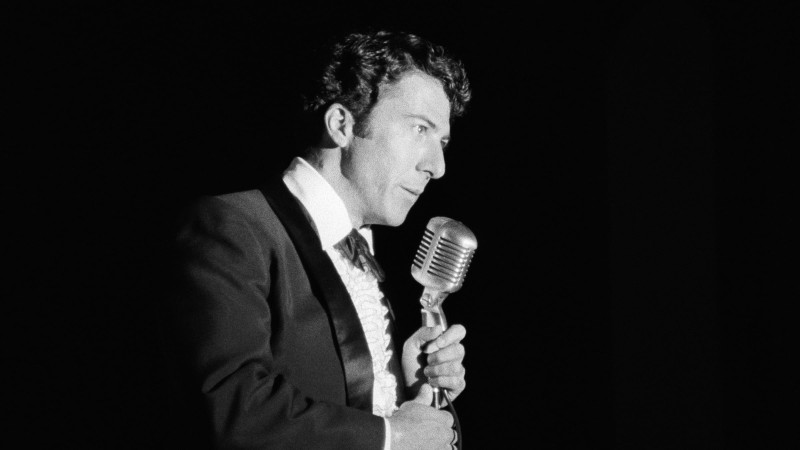
Lenny: High-Wire Act
Featuring a quasi-documentary format that was innovative for its time, Bob Fosse’s complex portrait of stand-up comedian Lenny Bruce is a gesture of postmortem outreach from one prickly, jagged-edged artist to another.
Fresh Kill: Fluid Transmission
New-media pioneer Shu Lea Cheang’s astonishingly prescient dystopian vision takes place in a world where technology feels sticky and bodily, and where networks seep into food, water, and flesh.