The King of Kings
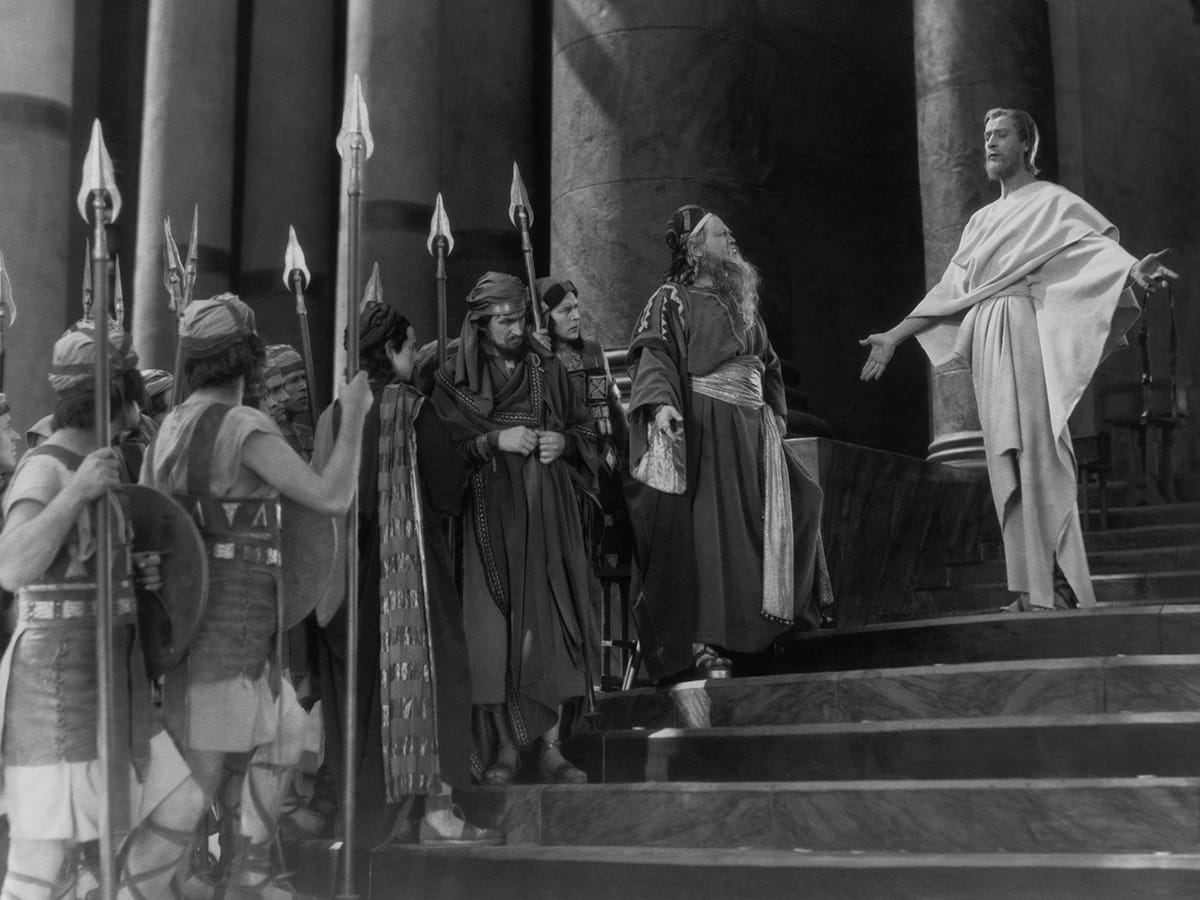
Hollywood Boulevard was mobbed on the evening of May 18, 1927, as Cecil B. DeMille’s The King of Kings premiered, the christening feature of Sid Grauman’s sumptuous new Chinese Theater. 100,000 people, the largest crowd ever to greet any kind of theatrical opening, were there either gawking at celebrities or hoping to buy an extra ticket—which cost, in today’s money, between $75 and $200. Inside, an army of ushers outfitted in Chinese robes escorted the wealthy and well-connected to their seats. D.W. Griffith began the ceremonies by declaring DeMille the greatest producer of all time, followed by paeans heaped upon him by Mary Pickford and movie czar Will Hays. The audience even had to endure a half-hour prologue, “Glories of the Scripture,” before the curtain went up on DeMille’s latest spectacle.
The King of Kings turned out to be the silent screen’s most elaborate realization of “the greatest story ever told.” Variety founder Sime Silverman began his review, “Tremendous is The King of Kings—tremendous in its lesson, in the daring of its picturization for a commercial theater and tremendous in its biggest scene, The Crucifixion of Christ.” The film cost at least $1,265,000 (inflated by press agents to $2,300,000), with sets and crowd scenes rivaling D.W. Griffith’s Intolerance in scale and ornateness. The monumental devastation unleashed by Christ’s crucifixion dwarfs even the cataclysmic Holy Grail finale of Indiana Jones and the Last Crusade. Raw material and non-union labor gave more bang for the buck in 1927, and DeMille, who produced the film independently, had found a wealthy Wall Street angel with strong religious convictions.
Because the Son of God is divine rather than ordinary, H.B. Warner as Jesus generally avoided emotional expressiveness in his performance. Christ’s charisma is evoked through the power of cinema—a mesmerizing repertoire of special effects, lighting and editing—rather than through compelling acting. Whether Christ walks on water or reattaches a severed ear, Warner exudes a kind of sacred boredom. Most often, he moves through darkened space radiating a divine glow by means of an ill-defined halo. At such moments, the film becomes a somewhat cloying combination of Oriental kitsch and sanctimonious storytelling. Yet there are other moments when DeMille’s talents shine forth, as with his intercutting of Judas’ suicide and Christ’s crucifixion, which remains emotionally powerful even today.
The New Testament sequel to DeMille’s earlier The Ten Commandments (1923) was as controversial in its day as Martin Scorsese’s The Last Temptation of Christ was in 1988. Although DeMille made his film under the pious supervision of clergy, he managed to titillate audiences with the same heady mixture of sex and moralism that had made The Cheat (1915), Why Change Your Wife (1920) and fifty other earlier films so successful. The King of Kings opens with a lengthy and lavish orgy, originally filmed in two-strip Technicolor, hosted by Mary Magdalen (Jacqueline Logan). The courtesan’s favorite, Judas Iscariot (Joseph Schildkraut), is missing—apparently seduced away by a lowly carpenter. Despite this humiliating rejection, she goes to find Judas in a chariot drawn by a trio of zebras, the gift of a Nubian king. She finds her lover, a ‘20’s version of the young Richard Gere, but fails to win him back. Rather, under Christ’s tonic gaze, the Seven Deadly Sins flee her body, and she is effectively purified and reborn.
Theatrical representations of Christ have often been controversial. In the nineteenth century, it was virtually impossible for an actor to perform the role of Christ on the American stage. James O’Neill (Eugene O’Neill’s father) once tried in San Francisco during the Lenten season of 1879 and was thrown in jail. However, the projected image with its dematerializing beam of light somehow eliminated the threat of sacrilege. The Passion Play of Oberammergau (1898), a faked recreation of the Bavarian drama, actually had been praised by clergy. The makers of The King of Kings, nevertheless, remained actively concerned about the charge of blasphemy. DeMille arranged for representatives of every major religion to offer their blessings on the first day of filming. The production’s Jesuit advisor offered sunrise services for the crew each morning, and H.B. Warner was veiled and transported in a closed car between dressing room and set. Nonetheless, there were doubts about DeMille’s tastefulness. Mordaunt Hall of the New York Times complained that not enough had been left to the imagination: “The presence of Jesus on the screen creates a feeling akin to resentment, largely because Mr. DeMille has insisted on having his camera too close to the player.” (In the 1925 version of Ben-Hur, one saw only Christ’s hand.)
In the sound era, DeMille cut the picture from approximately 155 to 112 minutes (the original version no longer exists) and added a synchronized music track. It was shown on television, and in the mid-1950s the elderly director liked to boast that more than 800,000,000 people had seen it. Ultimately, it was superseded by a Cinemascope, stereophonic synch-sound version directed by Nicholas Ray (The King of Kings, 1961), but it was DeMille’s breakthrough film that made Jesus Christ a movie star.

More: Essays

Sentimental Value: Between Trauma and the Sublime
In this powerful drama about family and memory, Joachim Trier explores how the past lives on in us, shapes us, and partly determines who we are and how we feel.
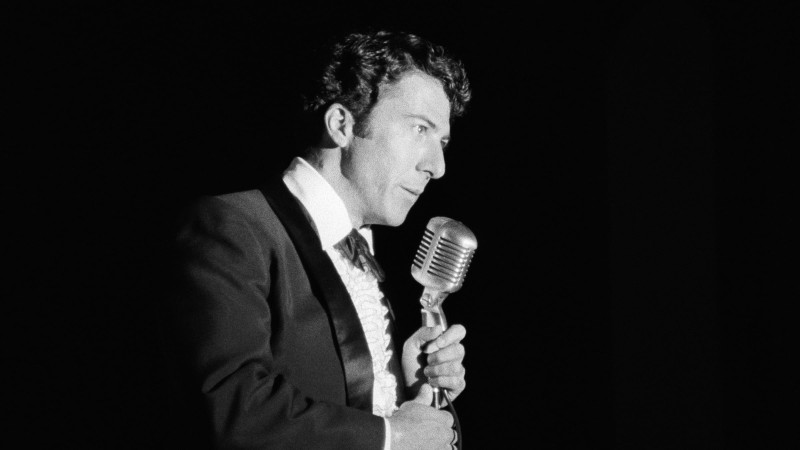
Lenny: High-Wire Act
Featuring a quasi-documentary format that was innovative for its time, Bob Fosse’s complex portrait of stand-up comedian Lenny Bruce is a gesture of postmortem outreach from one prickly, jagged-edged artist to another.

Fresh Kill: Fluid Transmission
New-media pioneer Shu Lea Cheang’s astonishingly prescient dystopian vision takes place in a world where technology feels sticky and bodily, and where networks seep into food, water, and flesh.
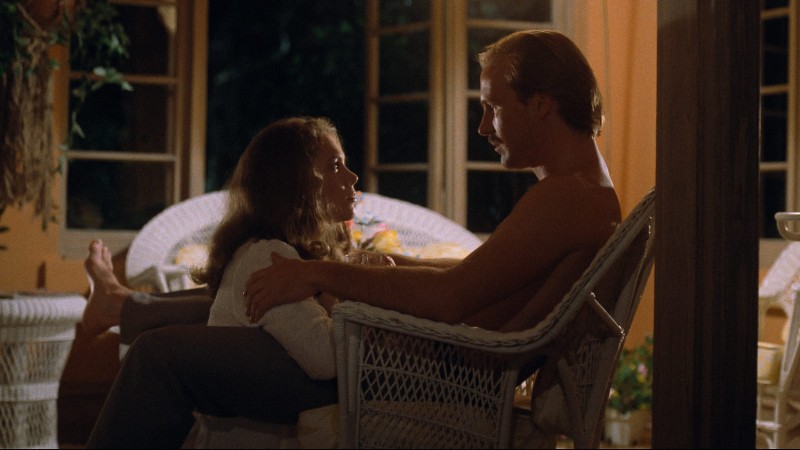
Body Heat: The Trap You Set for Yourself
In his stylish and provocative directorial debut, Lawrence Kasdan uses the vehicle of a sex-and-murder plot to explore the film’s historical moment, which gave rise to the greed and amorality of the Reagan era.