The Horse's Mouth

Sir Alec Guinness is probably best known to current audiences as the venerable Jedi Knight Obi-Wan Kenobi in George Lucas’s blockbuster Star Wars trilogy and as John Le Carre’s implacable spy-master, George Smiley, in the popular TV adaptations of Tinker, Tailor, Soldier, Spy and Smiley’s People. But for those with longer memories, Guinness, the self-professed “master of anonymity,” has been dazzling movie-goers for over thirty years as one of the most amazing actor-chameleons ever to grace the screen.
Guinness had toiled successfully on the stage for more than a decade before making his screen debut in the first of two superb David Lean films taken from Charles Dickens’s Great Expectations, as the affable Herbert Pocket (a role Guinness had played in his own stage adaptation of the book in 1939). The cheerful young actor’s raffish performance, however, did little to prepare the world for his subsequent, controversial enactment of a heavily Semitic Fagin in Lean’s Oliver Twist. Buried under extravagant make-up (modeled after the original Cruikshank drawings), Guinness is a silky, raspy-voiced seductive paterfamilias to his den of little thieves and his vivid depiction drew so many protests from pressure groups in this country that the film’s release (it was made in 1948) was delayed three years (and after seven minutes of supposedly offensive material was deleted).
If his Fagin caught the public’s attention, it was the series of quirky, eccentric and intrinsically English Ealing Comedies he made (so named for the studio that produced them) that secured his reputation as that rare commodity, the character actor as star. Beginning with Kind Hearts and Coronets, in which he portrayed the eight members of the aristocratic d’Ascoyne family standing between Dennis Price and his inheritance, through The Lavender Hill Mob (for which he received his first Academy Award nomination as Best Actor), The Man in the White Suit, The Ladykillers and others, Guinness became a quality brand name to discriminating art-house attendees in the United States.
It was his work in a very different kind of film from that which he’d previously been associated that catapulted Guinness to the front rank of international stardom. Again working for David Lean, Guinness played the misguided martinet, Colonel Nicholson (a part Charles Laughton turned down), in The Bridge on the River Kwai. The film was a huge critical and popular success and for his work as Nicholson, a man whose strict adherence to a personal code of honor leads to disaster; Guinness won world-wide recognition (Life magazine called him “Alec the Great” and Time had him on its cover the week of the Oscar ceremonies), and awards from most of the critical groups culminating in the Oscar itself for Best Actor. (The award was delivered to him on the set of one of his next efforts, The Horse’s Mouth.)
Guinness used his new-found prominence and clout to initiate a long-cherished amibition, to bring Joyce Cary’s most famous novel, The Horse’s Mouth, to the screen. The film is an obvious labor of love. Guinness, up to that time a dabbler at writing, chose to script the film himself (an act which ultimately won him another Academy Award nomination, this time in the bestadapted screenplay category). It’s easy to see why Guinness was attracted to The Horse’s Mouth. The main character is painter Gully Jimson and in the words of Pauline Kael, “he’s a fabulous creation: the modern artist as a scruffy, dirty little bum.” He’s all that and more. Jimson is based on the life and flamboyant bad behavior of Cary’s friend, poet Dylan Thomas. For Jimson, the higher calling of the muse supercedes any notions of social niceties and politesse. He’s a disreputable deadbeat and scrounger who will use every wile in pursuit of his noble goal: to find a canvas grand enough for his planned magnum opus. This is a mural he deems his “three great projects for the Nation: The Fall of Man, The Raising of Lazarus, and The Last Judgment.” When he finally lays eyes on a properly suitable wall, he’s a man obsessed. There’s only one hitch: it’s in the lavishly appointed flat of Lord and Lady Alabaster. The subsequent comic high point of the film is Gulley’s commandeering of the apartment, when, through a convoluted series of events, he is left alone while the Alabasters depart for a six-week trip to Jamaica. Gulley rapidly sets about converting the blank space into his chef d’oeuvre (though his mania for feet gets in the way of the religious imagery) and the living quarters into a smoke-filled artist’s garret. The sequence ends with one of the all-time great sight gags (one that Blake Edwards liked so much he appropriated it for S.O.B.). Gulley may be down but not out. He finds an even more incongruous setting on which to lavish his talent. (Gulley’s artistic inspiration is William Blake. A Blakean tyger makes a cameo appearance on Gulley’s wall and Blake quotes pepper the dialogue. The actual paintings within the film are by John Bratby, then a leading figure in the British Kitchen-Sink School of Art.) Gulley’s comic odyssey takes him from prison to the Tate Museum and finally off to parts unknown via the Thames and his peregrinations are slyly accompanied by Prokofieff’s jaunty “Lieutenant Kije” Suite.
Part of the success of The Horse’s Mouth is the engaging light touch brought to it by director Ronald Neame, who Guinness had known from his involvement on the Dickens film. (Neame had produced and co-scripted Great Expectations and produced Oliver Twist.) Prior to those films, Neame had made his name as a superior cinematographer (Major Barbara, In Which We Serve, Blithe Spirit), an apprenticeship which led him to take his own seat in the director’s chair. (One of his early efforts in that capacity had been another Guinness comedy, The Promoter, based on The Card by Arnold Bennett.)
But the real kudos belong to Guinness. To see The Horse’s Mouth is to admire Guinness’s consummate skill.

More: Essays
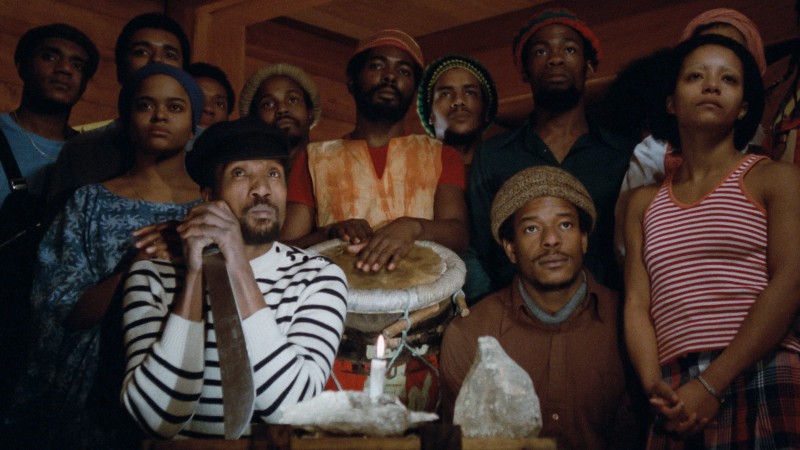
West Indies: The Fugitive Slaves of Liberty: Torrents of Fire, Torrents of Blood
Unfolding in a blaze of vivacious color, Med Hondo’s musical masterpiece is a wildly ambitious exploration of the history of French colonial aggression, the enslavement of African peoples, and their subsequent liberation struggles.

Sentimental Value: Between Trauma and the Sublime
In this powerful drama about family and memory, Joachim Trier explores how the past lives on in us, shapes us, and partly determines who we are and how we feel.
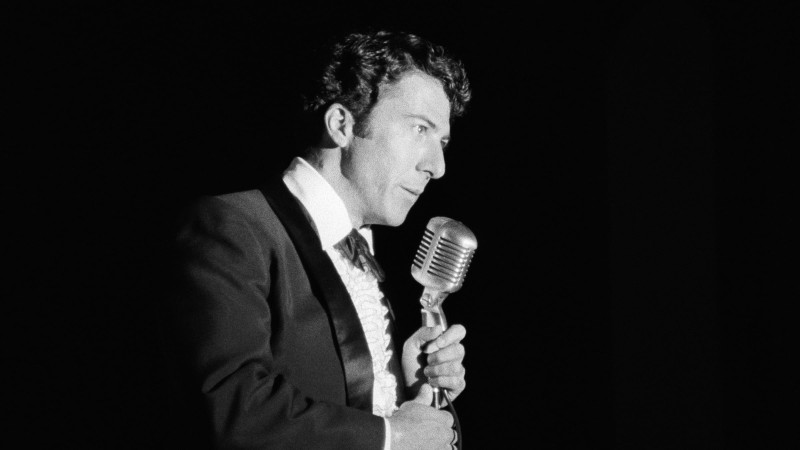
Lenny: High-Wire Act
Featuring a quasi-documentary format that was innovative for its time, Bob Fosse’s complex portrait of stand-up comedian Lenny Bruce is a gesture of postmortem outreach from one prickly, jagged-edged artist to another.
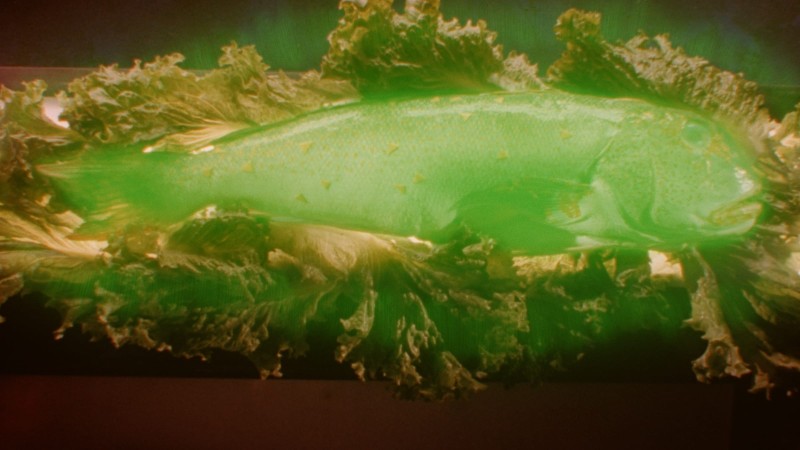
Fresh Kill: Fluid Transmission
New-media pioneer Shu Lea Cheang’s astonishingly prescient dystopian vision takes place in a world where technology feels sticky and bodily, and where networks seep into food, water, and flesh.