Elena and Her Men
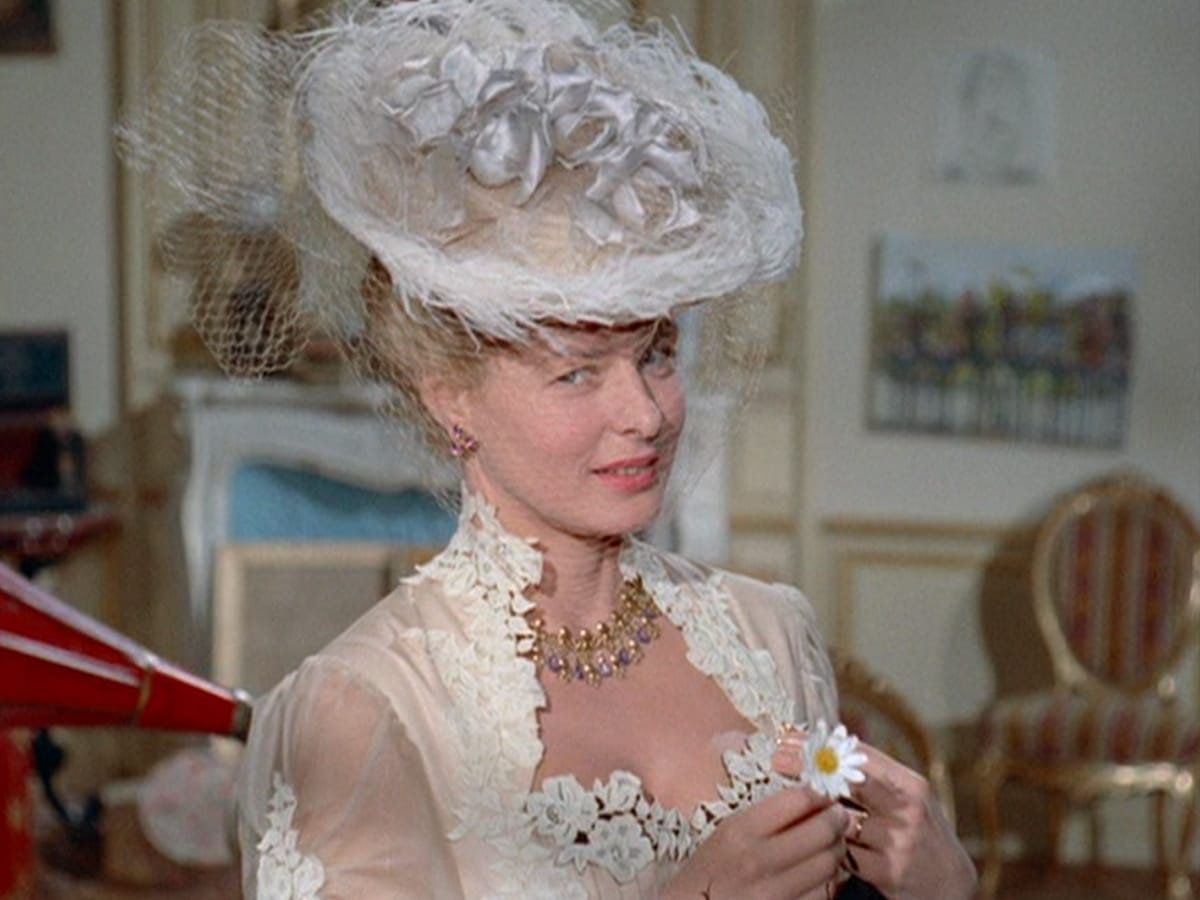
Elena and Her Men (Elena et les homes, 1956) has been rather thoughtlessly dismissed as minor Renoir and was not much appreciated upon its release, either by the public or by critics (excepting the enthusiasm of Jean-Luc Godard). The film deserves better, much better, especially when seen in context as the third part of this trilogy with The Golden Coach (1953) and French Cancan (1955), or in the larger context of numerous American and European films of the 1950s and their shared preoccupation with theater and performance (An American in Paris [1951], Moulin Rouge [1952], Lola Montès [1955], Les Grandes manoeuvres [1955], etc.).
Somewhat obliquely, Elena and Her Men takes as its subject matter the failed grasp for power by General Georges Boulanger (thinly disguised as the character of General Rollan, played by Jean Marais). Boulanger’s greatest moment of popular acclaim was after his review of the troops at Longchamps on July 14, 1886, which is where Elena begins. Boulanger found popular support as the public figure most likely to avenge the ignominy of France’s defeat in the Franco-Prussian war. However, Boulanger’s truly powerful backers were Royalists and Bonapartists who hoped to use his popularity to bring down the Republic. When Boulanger was elected to a Paris seat in the Chamber of Deputies in January 1889 (alluded to in the film), his supporters urged him to lead a coup d’état. Boulanger let the moment pass, preferring instead to go into exile with his mistress. He committed suicide in Brussels in September 1891 on her grave. (In the film, Rollan is sent with his mistress to a happier end in the south of France).
But such serious matters might seem to weigh too heavily in a film which is airy and light-hearted (in important measure because of Ingrid Bergman’s translucent performance as Elena). As critics have remarked and Renoir himself has acknowledged, Elena and Her Men mirrors—in its mise en scène of rooms and hallways, its madcap pursuits and changes of costume, its character types and broad strokes—Renoir’s more famous 1939 film, The Rules of the Game. Both begin with virtually identical disclaimers about any intended social criticism in favor of “pure” entertainment. Even some of the same actors reappear, so that it becomes difficult to overlook the obvious correspondence of themes, settings, plot devices, and situations.
Both films set up an initial tension between the private and public spheres as personal feelings collide with national interests. In Elena, this tension is first of all between Elena’s private, domestic, and feminine interior, in which we see her seated at the piano; and the public, masculine world of Rollan, with its martial music and delirious crowds. However, we quickly learn that Elena aims at public influence, while the General is distracted by affairs of the heart. Both Rules and Elena can be thought of as women’s films, as films built around a woman (who in both cases, as actor and character, happens to be an outsider to French culture and society). What this means is that both are films in which a woman tries to take control—of the narrative, of her life—to exercise power, even, but who is ultimately deceived by men. Like Christine in Rules, Elena attempts to become the subject of the narrative instead of its more conventional object. In The Rules of the Game, the deception of the heroine ends in tragedy; in Elena and Her Men a moonlit farce ends in a brothel! Elena and Her Men is The Rules of the Game in a different key.
Despite its surface shimmer, therefore, Elena and Her Men is a very cynical film. After all, its heroine is prepared to prostitute herself—that is to say—to go against the grain of romanticized womanhood (Ingrid Bergman as a prostitute!), only to be prevented from doing so by being returned to a socially approved, sentimental role as a “true” lover. However, because the film concludes with its lovers, Henri (Mel Ferrer) and Elena, impersonating General Rollan and his mistress at the brothel window before the crowd below (returning at its close to the tension between the private and the public), the point is made that a woman can only find (provisional) power within representation, on a stage, playing a part. At the end of the film, as coup d’état dissolves into coup de théâtre, the suggestion is that all effective power is actually a function of performance.
Perhaps that is why it would be rash to consider the conclusion of Elena and Her Men, in which all differences are erased under the spell of love, as other than cynical about the truth of historical representation (people will believe anything, someone’s interests are always being served), about the relation between political means and ends, or about the possibility of film (or art in general) to effect social and political change. “Méfiez-vous de Paris” (“Be wary of Paris”), says the street-singer’s refrain throughout a film in which Paris has been built on a sound stage.

More: Essays
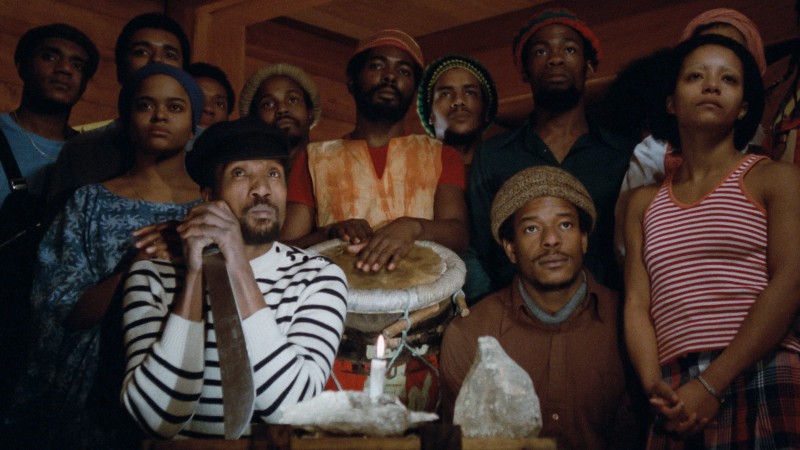
West Indies: The Fugitive Slaves of Liberty: Torrents of Fire, Torrents of Blood
Unfolding in a blaze of vivacious color, Med Hondo’s musical masterpiece is a wildly ambitious exploration of the history of French colonial aggression, the enslavement of African peoples, and their subsequent liberation struggles.

Sentimental Value: Between Trauma and the Sublime
In this powerful drama about family and memory, Joachim Trier explores how the past lives on in us, shapes us, and partly determines who we are and how we feel.
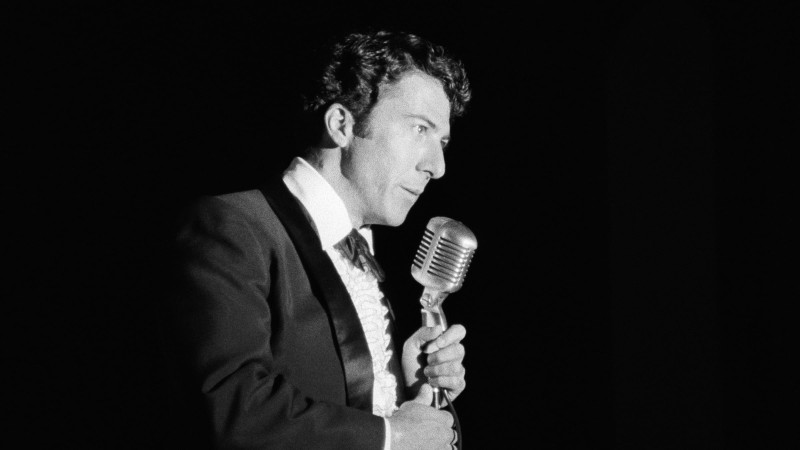
Lenny: High-Wire Act
Featuring a quasi-documentary format that was innovative for its time, Bob Fosse’s complex portrait of stand-up comedian Lenny Bruce is a gesture of postmortem outreach from one prickly, jagged-edged artist to another.

Fresh Kill: Fluid Transmission
New-media pioneer Shu Lea Cheang’s astonishingly prescient dystopian vision takes place in a world where technology feels sticky and bodily, and where networks seep into food, water, and flesh.