The Third Man: The One and Only
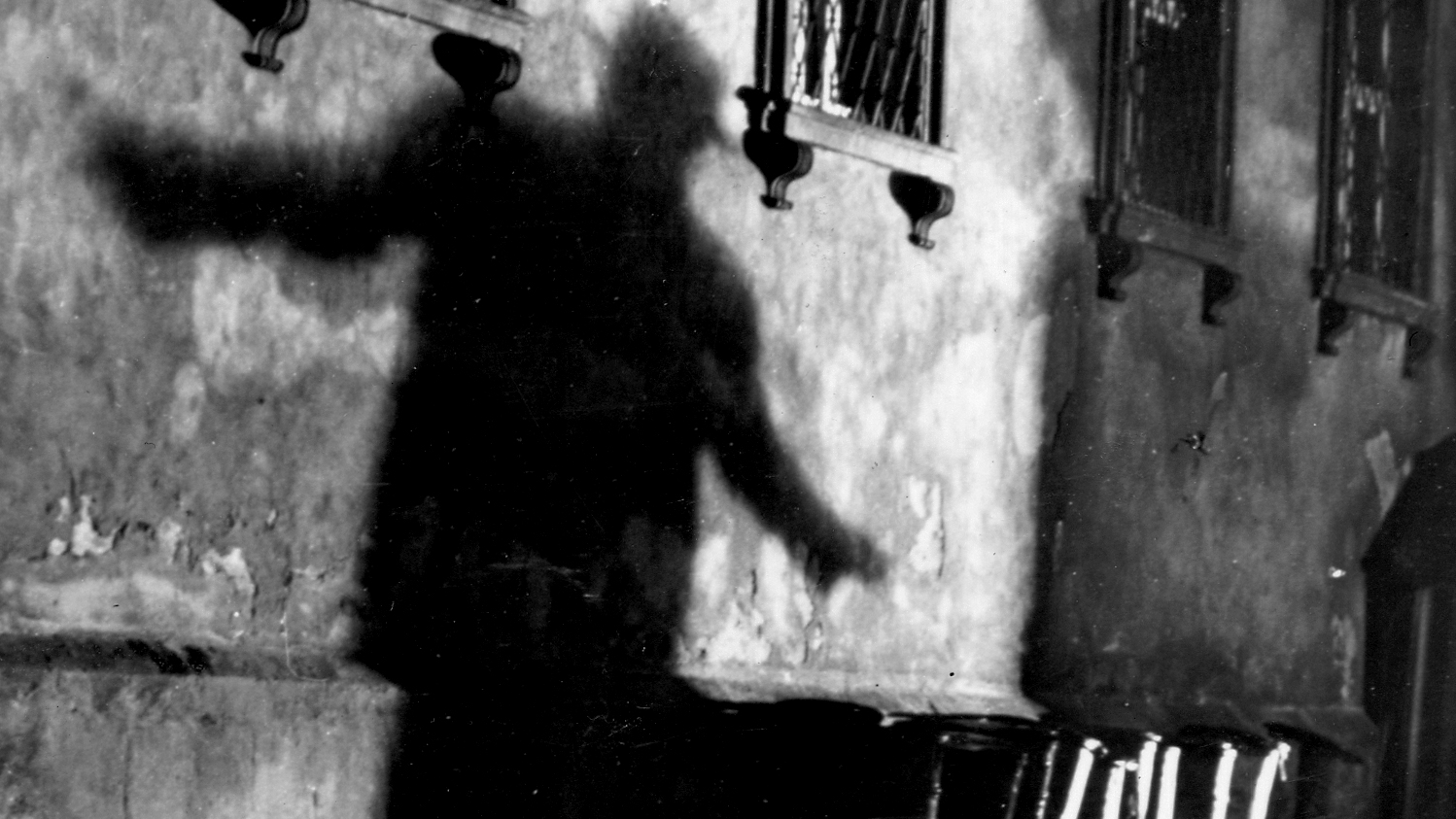
The Third Man (1949) is one of that handful of motion pictures (Rashomon, Casablanca, The Searchers) that have become archetypes—not merely a movie that would go on to influence myriad other movies but a construct that would lodge itself deep in the unconscious of an enormous number of people, including people who’ve never even seen the picture. The first time you see it, your experience is dotted with tiny shocks of recognition—lines and scenes and moments whose echoes have already made their way to you from intermediary sources. If you have already seen it, even a dozen or more times, the experience is like hearing a favorite piece of music—you can, as it were, sing along.
It had its origin in a sort of Ultimate Fiction Challenge gambit. “I had paid my last farewell to Harry a week ago, when his coffin was lowered into the frozen February ground, so that it was with incredulity that I saw him pass by, without a sign of recognition, among the host of strangers in the Strand,” Graham Greene had written, without any idea how he would resolve the conundrum. Thus the picture seems to have been destined from the first to be a dizzying mechanical contraption, like a pinball machine.
Holly Martins (Joseph Cotten) rolls along the alleys, down the holes, up the ladders, apparently a plaything of circumstance, but one who seems to land more often than not on his feet. Oddly, World War II and its fallout seem to have had this same effect on a number of cinematic protagonists: Joel McCrea’s Johnny Jones in Alfred Hitchcock’s Foreign Correspondent (1940) and Ray Milland’s Stephen Neale in Fritz Lang’s The Ministry of Fear (1944) both follow this capricious course of constant motion and surprise, and only the latter was also written by Greene.
Although both Greene and director Carol Reed were British, and the film was partly subsidized by the British government, The Third Man’s viewpoint seems particularly American, a fact that is only partly explained by the presence of Cotten and Orson Welles. Vienna after the war represents the ruins of Europe. It is filled, of course, with literal ruins, but the variously sinuous and palatial architecture of its more viable buildings seems ruined by irrelevance, like so many monuments to Ozymandias. Likewise, most of the Europeans on display are music-hall types—memorably played by a troupe of Austrian and German character actors—who conform magnificently to the mingled fears and derision of the untraveled American. The American is straightforward, the European circumambient, and their courses alternate between collision and side step, almost as if secondary cultural characteristics constituted a natural law.
Welles is, of course, the ghost in the machine here, for all that his actual screen time is brief. His character is alluded to in every scene, as well as the title, and he wrote the single most memorable speech in the script (Italy and the Borgias, Switzerland and cuckoo clocks). Furthermore, his exchanges with Cotten, a frequent player in his own movies, bear Welles’s characteristic rhythmic stamp: undertone overlapping with overtone, lines stepping on lines in a continual roundelay of alternating currents. So it is that uninformed film buffs have sometimes suspected that he had a hand in the direction as well—all that chiaroscuro, the tilted compositions, the breathless moving-camera adventures.
In this they underestimate Carol Reed, a director far too little known in the United States, who made superb pictures both before (Odd Man Out, The Fallen Idol) and after (Outcast of the Islands, Our Man in Havana) this one. Reed was sufficiently flexible to provide a significant challenge to the auteur theory. The Third Man is true to his best form, engineering a tight drama with sharply drawn characters, in a setting so delineated it might also be counted as one of the cast. It is anomalous in having received a great deal of attention worldwide, becoming in effect a “big” movie; when he purposely set about making big movies later in his career, the quality and distinctiveness fell off precipitously.
The Third Man presents such a nonstop visual experience that it is easy to miss what a small, seat-of-the-pants picture it essentially was. Consider, for example, that Anton Karas, without whose score the movie would be substantially different, was found on location, playing in a restaurant. That sort of chance discovery, in the course of production, of a fundamental element of a film would have been difficult if not unthinkable in Hollywood even then. The Third Man is in fact a brilliant succession of dice throws, a borderline counterintuitive combination of disparate elements that somehow come together as if they had been destined to do so. It is a singular object, a fluke, a well-oiled machine, a time-capsule item, a novelty hit. There has never been another movie quite like it.

More: Essays

Sentimental Value: Between Trauma and the Sublime
In this powerful drama about family and memory, Joachim Trier explores how the past lives on in us, shapes us, and partly determines who we are and how we feel.
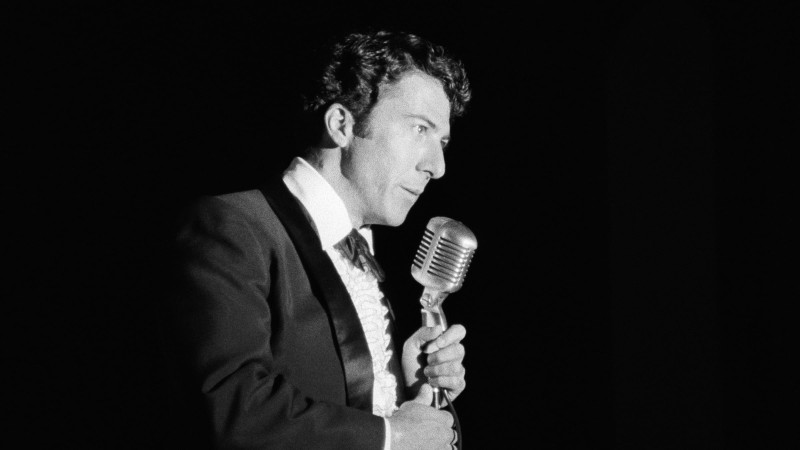
Lenny: High-Wire Act
Featuring a quasi-documentary format that was innovative for its time, Bob Fosse’s complex portrait of stand-up comedian Lenny Bruce is a gesture of postmortem outreach from one prickly, jagged-edged artist to another.
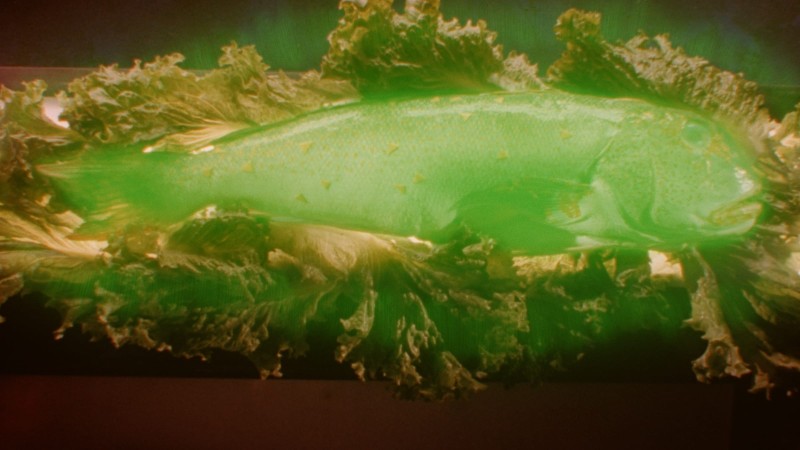
Fresh Kill: Fluid Transmission
New-media pioneer Shu Lea Cheang’s astonishingly prescient dystopian vision takes place in a world where technology feels sticky and bodily, and where networks seep into food, water, and flesh.
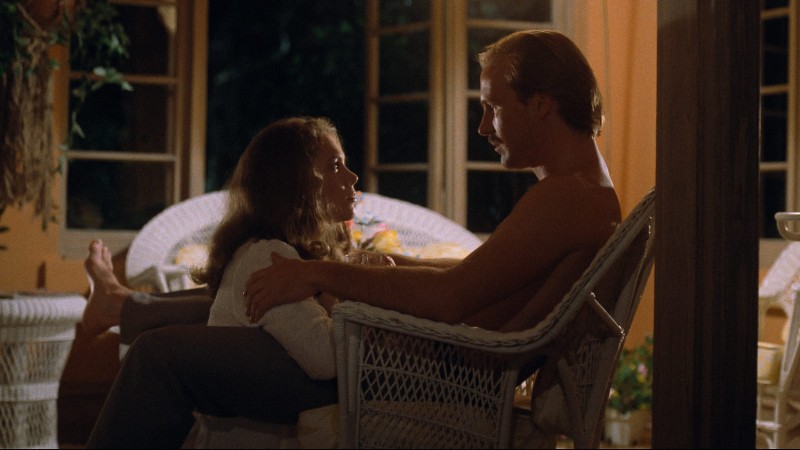
Body Heat: The Trap You Set for Yourself
In his stylish and provocative directorial debut, Lawrence Kasdan uses the vehicle of a sex-and-murder plot to explore the film’s historical moment, which gave rise to the greed and amorality of the Reagan era.