Stray Dog: Kurosawa Comes of Age
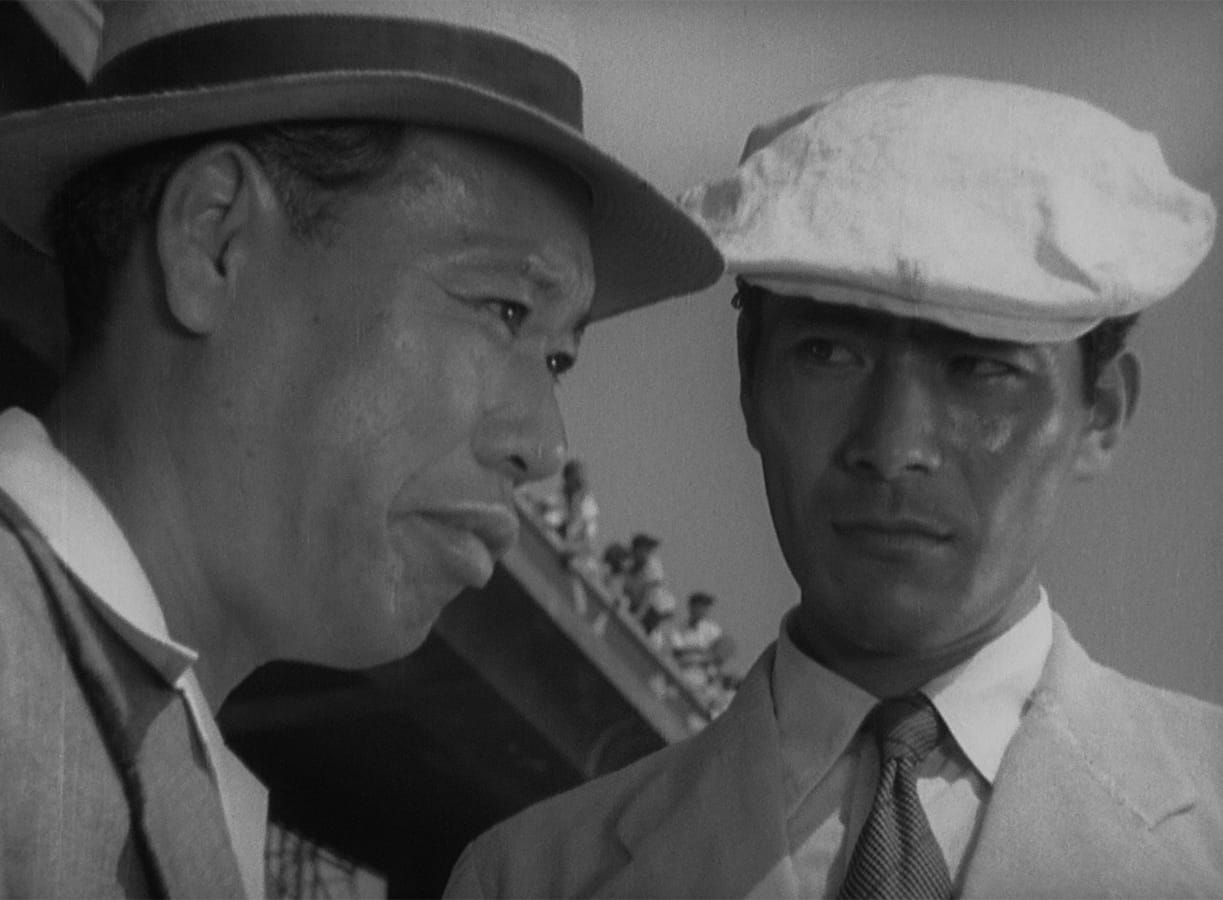
Stray Dog (1949), the ninth film directed by Akira Kurosawa, is a detective story that’s also meant to function as a commentary on the desperate social conditions of postwar Japan: a kind of neorealist cop movie. The filmmaker wrote his screenplay first in the form of a novel, because his model was the French mystery novelist Georges Simenon—creator of the worldly, humane Inspector Jules Maigret, whose ability to crack tough cases depended more on social and psychological acumen than on any Holmesian puzzle-solving genius. (The Maigret figure in Stray Dog is a wise, middle-aged police detective named Sato, played by Kurosawa regular Takashi Shimura.) In the sixties, Kurosawa told Donald Richie: “I wanted to make a film in the manner of Simenon, but I failed. Everybody likes the picture, but I don’t.”
Kurosawa was right, in a way, about his failure to imitate Simenon. Stray Dog isn’t as tidy or compact as a Maigret novel, but for the best possible reason: it’s the work of a more generous and more complex artist. Kurosawa’s film has a richness—an abundant and almost unruly curiosity about the extremes of human behavior—that the French writer’s slender, shapely books never demonstrated. It’s obvious in the movie that at this point in Kurosawa’s career (just a year before his international breakthrough, Rashomon) he was outgrowing his influences, and that, whether he knew it or not, he was destined to become more than a reliable genre craftsman, a petit-maître like Simenon. Stray Dog isn’t an ideally efficient detective thriller; the excitement it provides is deeper and more satisfying than simple suspense.
In the picture’s swift opening scenes, we learn that a young Tokyo cop, Murakami (Toshiro Mifune), has had his gun stolen on a hot, crowded bus. This is, of course, humiliating, and Murakami sets out to recover the weapon, going undercover (for a while) in the city’s lower depths and encountering an astonishing array of hustlers and petty crooks—all of them like stray dogs, foraging for subsistence in the postwar ruins. Murakami poses as a down-and-out veteran, which turns out to be an uncomfortably thin disguise: he is a veteran of the recent war, and as he wanders through the ravaged city, in an elaborate montage sequence, we sense that he’s experiencing a life he might have led—that these mean streets are, for him, a collective image of the road not taken.
That sequence, which incorporates a fair amount of documentary footage shot by Kurosawa’s assistant Ishiro Honda (later famous as the director of Godzilla and Rodan), is much longer than it needs to be, but it’s the key passage in Stray Dog because it sets in motion the film’s real story: Murakami’s growing identification with the man who now possesses his gun. The detective soon discovers, to his horror, that his stolen pistol is being used for violent crimes—for robberies and even murder. And when he and Sato, working together, narrow the search to a likely suspect, the object of their pursuit proves to be someone very much like Murakami himself: a veteran, about the same age, who returned from the front with nothing to show for his service but bad memories. In essence, Stray Dog is the story of a young detective chasing his own shadow. It’s a highly stylized coming-of-age narrative—a moral tale disguised as a thriller.
Some failure. By the time Kurosawa wrote his autobiography, published in the early 1980s, he seemed to have warmed up a bit to Stray Dog. He admitted, at least, that “no shooting ever went as smoothly,” and that “the excellent pace of the shooting and the good feeling of the crew working together can be sensed in the completed film.” This is undoubtedly the wisdom of age—perhaps even the belated understanding that by failing to be Simenon he had actually succeeded at the more difficult and rewarding task of becoming himself. Stray Dog is, I think, Kurosawa’s first masterpiece. And that’s the excitement you feel when you watch the movie today: it’s the thrill of seeing a great filmmaker come of age.
This piece originally appeared in the Criterion Collection’s 2004 edition of Stray Dog.
More: Essays

Sentimental Value: Between Trauma and the Sublime
In this powerful drama about family and memory, Joachim Trier explores how the past lives on in us, shapes us, and partly determines who we are and how we feel.
Lenny: High-Wire Act
Featuring a quasi-documentary format that was innovative for its time, Bob Fosse’s complex portrait of stand-up comedian Lenny Bruce is a gesture of postmortem outreach from one prickly, jagged-edged artist to another.
Fresh Kill: Fluid Transmission
New-media pioneer Shu Lea Cheang’s astonishingly prescient dystopian vision takes place in a world where technology feels sticky and bodily, and where networks seep into food, water, and flesh.
Body Heat: The Trap You Set for Yourself
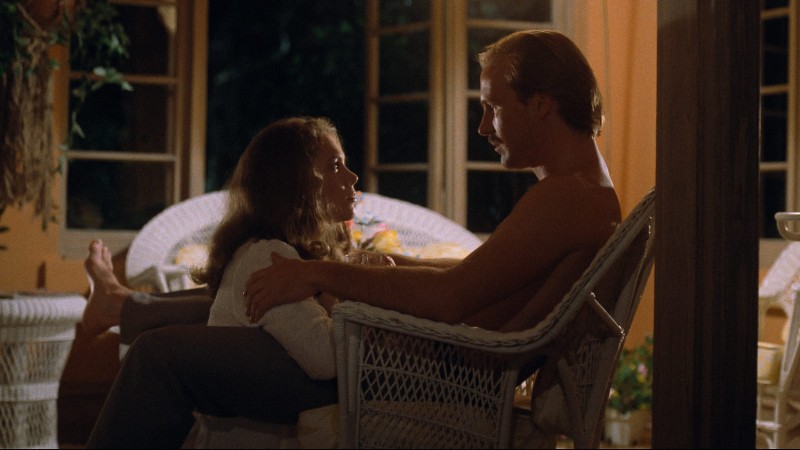
In his stylish and provocative directorial debut, Lawrence Kasdan uses the vehicle of a sex-and-murder plot to explore the film’s historical moment, which gave rise to the greed and amorality of the Reagan era.