Man Bites Dog: Cinema of Entrapment

"Why am I watching this?”
The question comes up whenever an otherwise reasonable person watches a sordid character do horrible things. You want to look away, but you can’t, or won’t. Maybe you do look away for a time—but then you look back.
That, in a nutshell, is the experience of watching Man Bites Dog, a faux cinema verité about a film crew documenting a mass murderer’s rampage. The magnetic star of the show, Ben, is a rueful psycho. He’s also an amateur philosopher (all the better to justify his crimes) and fancies himself a sophisticate—he plays chamber music with his girlfriend, he composes poetry, he complains about the aesthetic ugliness of public housing. There’s a bit of Dostoevsky’s loquacious ax murderer Raskolnikov in this strange, bright young man. Abstract, intellectual curiosity is his fuel; it’s what he has instead of a conscience.
Ben’s mix of charming awkwardness, intellectual pretension, and fathomless sadism suggests not a real-life serial killer but a fantastic fictional equivalent—a blood-spattered cousin of the James Bond baddie, whose wickedness has a playful edge of showmanship. Ben is the personification of spectacle. We’re a captive audience, seduced by his charisma, just like the documentarians who act as our eyes and ears. (One is reminded of the notion that comedy equals tragedy plus distance; Man Bites Dog’s verité conceit calls attention to the actual physical distance between the filmmakers and Ben’s victims. We “get” closer without being closer—a defining characteristic of cinema generally, and nonfiction film in particular.)
The film crew tails along, recording every significant and insignificant moment in Ben’s life. Presumably their goal is to gain insight into evil, but what they’re really doing is blurring the line between spectator and participant. That line dissolves entirely when the crew runs out of money and accepts Ben as a patron. He’s transformed from a depraved nonfiction film subject into a kind of director-producer-writer-star. Rather than merely inviting the filmmakers to witness the narrative of his life, Ben finds a way to make them participate in its construction.
Whether you chose to view Ben as simply another murderous movie character or as a perverse metaphor for documentary subjects in general, his manipulations definitely question central premises of documentary filmmaking: that a camera can record “truth”; that the presence of a lens and a crew full of observers won’t distort reality, and that a journalist’s obligation to be “objective” trumps the natural human impulse to intervene in a bad situation. When Ben and the crew examine footage of his attack on a policeman at a Steenbeck editing table, it seems a direct reference to Gimme Shelter’s depiction of Mick Jagger watching (as editor Charlotte Zwerin, on-camera, operates a Steenbeck) the film of the Hell’s Angels stabbing Meredith Hunter. This allusion serves as a pointed reminder of Pauline Kael’s famous criticism of Gimme Shelter: its makers failed to acknowledge that the Altamont concert was created specifically for the film. Are Ben’s filmmaker pals merely recording the atrocities of a flesh-and-blood demon, or does their presence urge him toward increasingly gruesome acts? (The escalation of the killer’s violence suggests that when a camera comes between storytellers and their story, the boundary between documentary and exploitation can’t help but spring leaks.) The filmmakers become ensnared in a double-bind: If they allow events to unfold “naturally” without getting in the way, they are complicit in murder; if they do interfere, they are breaking the rules of verité.
Like all good satire, Man Bites Dog literalizes and magnifies what might otherwise seem like an abstract rhetorical problem. The ludicrous exaggeration insures our response—of course the crew should interfere with Ben’s crimes. But if a filmmaker has an obligation to intervene when one person is trying to kill another, is there an obligation to keep a subject from stealing, from drug dealing, from prostituting? Where is the line drawn?
Man Bites Dog anticipates so-called “reality TV,” which places real people in situations contrived to resemble bad movie plots—only instead of the unquestioning voyeurism encouraged by those programs, this film’s objective is to bully the viewer into guilty self-reflection. It’s a strategy that draws on a tradition of cinematic explorations of spectatorship and violence, from Peeping Tom and A Clockwork Orange to Network and Taxi Driver. But Man Bites Dog alone is effective as a (pre-emptive) critique of the reality television movement. It doesn’t simply condemn the desire to watch; it first provides its own audience with enough distance to enjoy a seductive spectacle. If we begin by laughing at Ben’s sharp wit, we’re soon laughing in a desperate bid to reinstate an emotional arm’s length. The humor brings us closer and our defensive laughter helps us pull away.
Unlike American media satires, which tend to leave viewers bruised from constant nudging of the ribs—see Oliver Stone’s psychedelic, crushingly obvious media satire Natural Born Killers, which literally superimposes the film’s issues over the skin of the characters—Man Bites Dog never loses its verité edge or its workaday feel. This maintenance of realism is a remarkable stylistic feat. (Adding to the illusion of authenticity is that the three filmmakers, Remy Belvaux, Andre Bonzel and Benoit Poelvoorde, also played the central roles using their own first names). The normality, even banality, of its imagery, and its fairly strict adherence to documentary techniques, ensures that audiences will believe its inherently ridiculous storyline—and perhaps leave feeling vaguely ashamed at what a good time they had.
When Man Bites Dog was first released, many critics complained that one of the film’s central points—that those who watch violence without resisting it are, in a sense, complicit—was too simplistic, too glib, too obvious. It’s true that we already know violence is bad, and that if we watch a lot of it, we build up a level of tolerance that can only be transcended with an original and fresh act of savagery. But Man Bites Dog, with its hyperreal, almost cartoonish litany of outrages, expands on that point in a significant, almost subliminal way: slowly, subtly tricking the viewer into sticking around, then implicating the viewer and the filmmakers as the story unfolds. By the time Man Bites Dog ends, you may wish you’d stopped watching. But you didn’t.

More: Essays

West Indies: The Fugitive Slaves of Liberty: Torrents of Fire, Torrents of Blood
Unfolding in a blaze of vivacious color, Med Hondo’s musical masterpiece is a wildly ambitious exploration of the history of French colonial aggression, the enslavement of African peoples, and their subsequent liberation struggles.

Sentimental Value: Between Trauma and the Sublime
In this powerful drama about family and memory, Joachim Trier explores how the past lives on in us, shapes us, and partly determines who we are and how we feel.
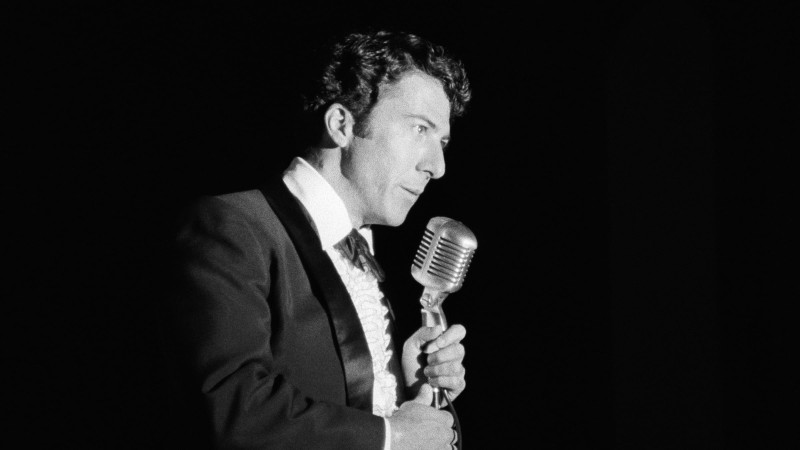
Lenny: High-Wire Act
Featuring a quasi-documentary format that was innovative for its time, Bob Fosse’s complex portrait of stand-up comedian Lenny Bruce is a gesture of postmortem outreach from one prickly, jagged-edged artist to another.

Fresh Kill: Fluid Transmission
New-media pioneer Shu Lea Cheang’s astonishingly prescient dystopian vision takes place in a world where technology feels sticky and bodily, and where networks seep into food, water, and flesh.