Under the Roofs of Paris

As was the case with many other movies of the early sound era, the “All Talking! All Singing!” label slapped across the posters for Under the Roofs of Paris in 1930 constituted false advertising. The reality is actually much more interesting. Films of the period, in which the use of sound was severely limited by technical restrictions, tend to come off as curiosities, silent pictures with an intermittent sonic gimmick. René Clair, then best known for his little Dada gem Entr’acte (1924), decided to use those limitations to his advantage. He wasn’t happy with the coming of sound, which he thought could only undermine the complex visual language constructed by the silent cinema over three decades. But the fact that sound could not then be continuous or layered made it possible to use it pointedly.
This Clair did by avoiding synchronization. You almost never see and hear something simultaneously, with the exception of the songs and the dialogue—and there is precious little dialogue. You hear music coming from a room, then the door closes in front of you and shuts the sound off. A train goes by, but you only know it from the soundtrack and a puff of smoke. A gramophone plays the William Tell Overture, and the needle gets stuck on one phrase. The wildest sequence shows a fight in the street at night. First you see fragments of the fight, from behind objects or through the spaces in a picket fence—then someone shoots out the streetlight. The title song, the sheet music of which is being hawked by a pitchman (Albert Préjean), infects the inhabitants of an apartment building, who sing it or pick it out on the piano, but you hear this each time from other apartments, coming through the ceiling or the floorboards.
The story is simplicity itself. Albert meets a beautiful Romanian immigrant (Pola Illery), who is also desired by a criminal (Gaston Modot). Albert is arrested and locked up for a crime actually committed by the villain, and while he languishes in jail Pola meets Albert’s best friend (Edmond Gréville). When Albert is released he must confront both villainy and friendship. It wasn’t the story that made this movie a huge international hit, nor even the sly games Clair plays with sound and image. What made it the toast of Berlin—and London, New York, Tokyo, Shanghai, Moscow, and Buenos Aires, before finally clicking in its hometown—was its iconic vision of lower-class Paris, whose impact on the world was compared by the film historian Georges Sadoul to that of the first Westerns on European audiences (it took the French a trifle longer to appreciate the picture, not that they were slouches at self-mythologizing, but that the image in the mirror was not the one they were used to seeing).
In that era, the start of the worldwide financial crash, important movies tended to be set in fantasy realms of impossible wealth. Clair’s Paris was, in a way, no less fantastic—every street and square, every tenement, garret, dancehall, and café was designed by the great Lazare Meerson and built in the studio. But its characters, who live on the border between ill-paid labor and petty crime, were both instantly recognizable the world around and imbued with romance by the magic of Paris. In the decade that followed, that setting and those kinds of characters were to constitute the fundament of the French cinematic style called “poetic realism,” a principal architect of which was Marcel Carné, an assistant director on Under the Roofs of Paris. By then this picture may have seemed slight, airy, devoid of tragedy. To us, now, it looks exhilaratingly fresh, a cavalcade of inventive turns, a sprightly little confection poised just to the right of The Threepenny Opera and a bit to the left of 42nd Street.

More: Essays
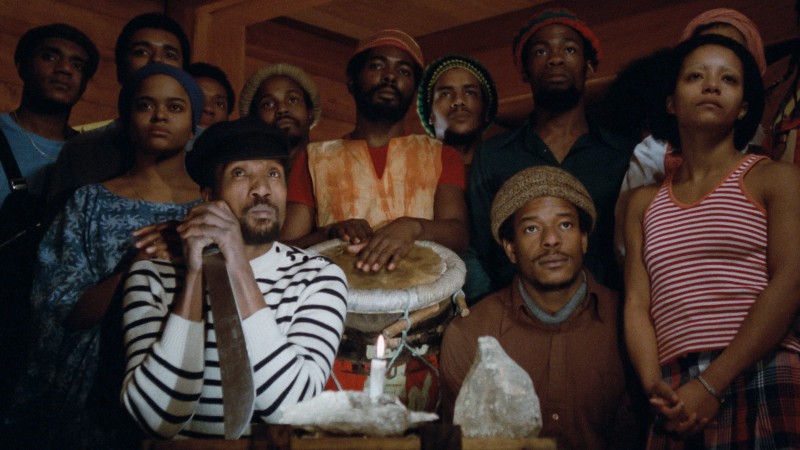
West Indies: The Fugitive Slaves of Liberty: Torrents of Fire, Torrents of Blood
Unfolding in a blaze of vivacious color, Med Hondo’s musical masterpiece is a wildly ambitious exploration of the history of French colonial aggression, the enslavement of African peoples, and their subsequent liberation struggles.
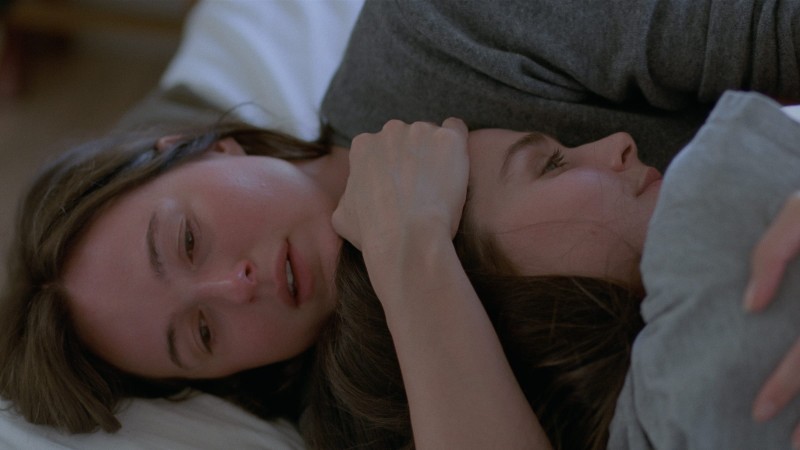
Sentimental Value: Between Trauma and the Sublime
In this powerful drama about family and memory, Joachim Trier explores how the past lives on in us, shapes us, and partly determines who we are and how we feel.
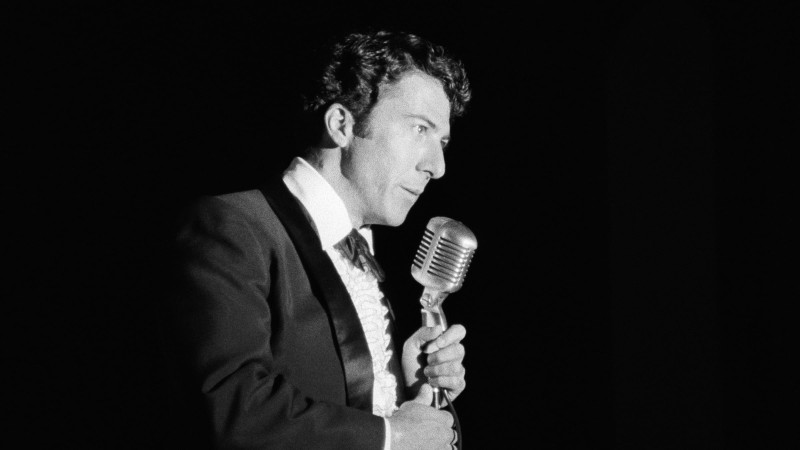
Lenny: High-Wire Act
Featuring a quasi-documentary format that was innovative for its time, Bob Fosse’s complex portrait of stand-up comedian Lenny Bruce is a gesture of postmortem outreach from one prickly, jagged-edged artist to another.

Fresh Kill: Fluid Transmission
New-media pioneer Shu Lea Cheang’s astonishingly prescient dystopian vision takes place in a world where technology feels sticky and bodily, and where networks seep into food, water, and flesh.