George Washington: These American Lives

Presenting five poor, black and white North Carolina preteens as they awaken to love and death, George Washington (2000) tells a common adolescent story, yet the film is distinguished by the poetic, ruminative style of its twenty-five-year-old director, David Gordon Green. Unusually for a deliberately allusive, symbolic movie, George Washington combines emotional amplitude with documentary veracity. While capturing the real contemporary issues of poverty, youth, alienation, and racial interaction, it touches on the noblest, most loving quests of its characters and solicits a personal response from anyone who views it. Nasia (Candace Evanofski) breaks up with love-struck Buddy (Curtis Cotton III) because she is more fascinated by the dreamer George (Donald Holden). Vernon (Damian Jewan Lee) intervenes to help his friend Buddy, and he’s also protective of little blonde Sonya (Rachael Handy). These innocent friendships, enacted by a nonprofessional but deeply charming ensemble cast, illustrate how our national history and our national future are immanent in our present. Each child inherits hope along with the bequest of social deprivation.
The odd significance of the title George Washington provides the key to Green’s unique vision. The affecting title brings together standard African-American christening with the audience’s sophisticated historical awareness. Green transliterates George’s surname, Richardson, into Washington to complete the legacy to which his youthful hero (a fragile kid who must play gently and must not submerge his head in water because his skull has not fused) is fully entitled. Though George Richardson is among the legion of forgotten American youths and the descendant of slaves, he aspires to recognition, to greatness. Nasia believes him capable of it. And Green convincingly insists on that complex intertwining of humanism and history.
George Washington was quickly recognized upon its debut at various film festivals and subsequent theatrical release as one of the triumphs of the current American independent movement. Its original perspective transforms what is appallingly familiar in American life: destitution, nihilism, bewildered youth, and the history of racial deprivation. Green’s unpretentious approach to the backwater setting revels in southern atmosphere and casual intimacy. It’s not a social protest, as done in past movies that grew out of reform movements, but a private, delicate perception unconnected to Hollywood trends or cultural expectations. It comes from Green’s personal feelings about youth, race, and cinema, and these feelings can be felt.
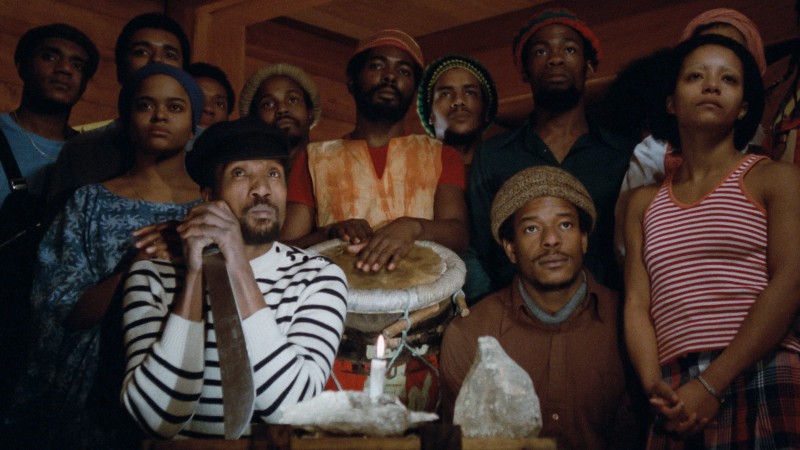
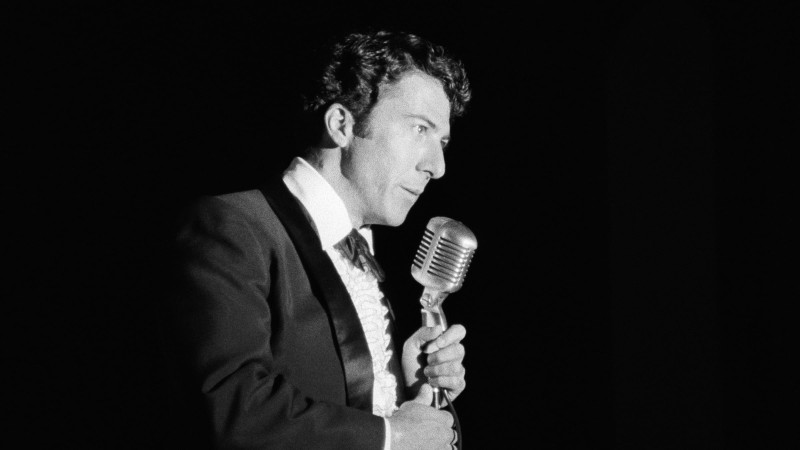
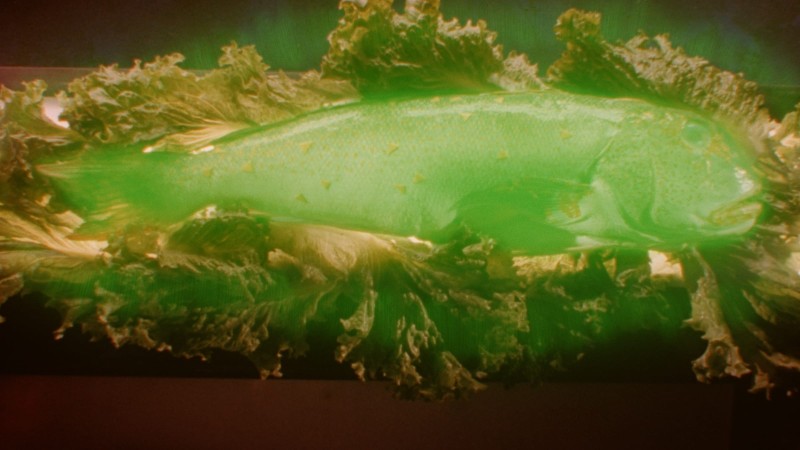
As a student at the North Carolina School of the Arts, Green got a film education that exposed him to the treasury of American cinema, from Hollywood classics customarily screened in 35 mm prints to such landmarks of personal expression as Charles Burnett’s Killer of Sheep (1979), Terrence Malick’s Badlands (1973), and Haskell Wexler’s Medium Cool (1969). The influence of these films is apparent in George Washington’s authentic dailiness (Burnett), its regional fascination (Wexler), and its poetic visual splendor (Malick). Collaborating with his classmate and cinematographer Tim Orr, Green aimed for a deluxe style of filmmaking, shooting in 35 mm anamorphic to give George Washington an undeniable professionalism and grandiloquence. This insistence on cinematic proficiency recalls the instant classicism of the French New Wave. Few movies about African-American youth have ever photographed the performers or their habitats as warmly as Orr does. This aesthetic confers seriousness on George Washington’s modest story.
Green’s breakthrough integration of myths and poetic realism, of varied movie styles, gives viewers a sense of constant discovery and interpretation. The scene of a grave accident among the children is followed by a strangely mournful montage—of trucks and dumpsters in a landfill, uselessly shifting civilization’s debris—that not only changes the film’s emotional tone but subtly comments upon the action in the story to that point. As a metaphor for the kids’ quiet hysteria—and someone’s death—it’s both apt and chilling, an elegy for the postindustrial era’s doomed generation. This unusual approach to filmmaking is also apparent in Green’s mix of vernacular humor—among Nasia and her girlfriends as they discuss boys and do each other’s hair, or in the conversations between Buddy and one of the railroad workers, Rico Rice (Paul Schneider), that contrast their child and adult confessions about women and the perplexity of love.
Circling around these characters, observing their bewilderment, Green makes each scene convey some aspect of American bafflement. He phases in and out of mystifying then mundane experiences as naturally as if shifting verses in a poem, always unafraid of creating poetic echoes and parallels. The kids talk seriously—like adults—and adults are as confused as kids. Green creates an intergenerational emotional harmony that makes the particular lives on view connect to all of ours. George Washington deliberately pursues the ample expressiveness of popular art even when it seems a bit obscure. Buddy is shown in a disused amphitheater wearing a dinosaur mask and performing a kind of elevated oration when Rico walks in, listens to him, and asks, “Is that the Bible or Shakespeare?”
Looking sympathetically at the desperate lives of lost American youths, Green seeks his own method of commemorating them. He also includes reminiscences by disconcerted grown-ups—a scene of husband-wife intimacy; two women reaching across their individual senses of bereavement; George’s Uncle Damascus (Eddie Rouse) disclosing his own childhood trauma; and George extending sympathy and understanding to his uncommunicative father sitting behind bars in jail (an homage to a similar scene in Martin Ritt’s Sounder). Green’s artistic, spiritual search amounts to nothing less than a rediscovery of the American soul. An intertitle that announces July 1 (not July 4) emphasizes the necessity of making just such a personal assessment of one’s social position, rethinking one’s connection to the national spiritual heritage. Vernon expresses this lonely quandary when he says, “I wish there was one belief, my belief. I wish there were two hundred of me.” Nasia’s faith comes through when she describes George’s potential to “lead nations and build back up from a broken land.” And George himself, dressing as a superhero to direct traffic and help his community, reveals his own optimism when he finally sits to get his portrait taken. It becomes part of a montage featuring vintage photos from American history. Green edits its rhythms to resemble the historical-spiritual coda in François Truffaut’s The Story of Adele H., but most significantly, he follows this with a sequence of silent fireworks that epitomizes the multicultural, multispiritual communication of the entire film. George Washington is a work of humbling, breathtaking beauty.
This piece originally appeared in the Criterion Collection’s 2002 DVD release of George Washington.