Testament of Orpheus

PREFACE
Aman who dozes, his mouth half open, in front of a wood fire, lets slip some secrets from that night of the human body that is called the soul, over which he is no longer master.
The sentry of his mouth has fallen into a deep and imprudent sleep, and words escape that do not know the password.
The Testament of Orpheus is simply a machine for creating meanings. The film offers the viewer hieroglyphics that he can interpret as he pleases so as to quench his inquisitive thirst for Cartesianism.
(I have said in The Potomak that if a housewife were given a literary work of art to rearrange, the end result would be a dictionary.)
This film has nothing to do with dreams except that it borrows the rigorous illogicality of dreams, their way of giving during the night, a kind of freshness to the falsehoods of the day that is dulled by routine. In addition, it is realistic, if realism means a detailed painting of the intrigues of a universe that is personal to every artist and is totally unrelated to what we are used to accepting as reality. The film disobeys dead rules, paying homage to all who wish to remain free. It brings into play a form of logic that reason does not recognize. In short, it is Cartesian by means of anti-Cartesianism.
My first attempt of this kind was The Blood of a Poet, and that old film is still puzzling people everywhere. Exegesis, which is a Muse, is still examining it, and the psychoanalyst is discovering what the shadowy part of me unknowingly expressed long ago.
I later orchestrated this method with the film Orpheus. But, looking back I am convinced that there is quite a considerable public who wish to go beyond the plot and do not try to flee the obscure. On the contrary, they are able to find their way unafraid or else with an adorable childish fear.
This is why I am abandoning the career of filmmaker. Technical progress has now brought that career within everyone’s reach. The progress that interests me is of a different, interior kind. And I flatter myself that, thanks to my own long-ago research, I am no longer the only archeologist of my darkness.
P.S. This film may be the first attempt at transmuting words into acts, at organizing these acts instead of organizing the words of a poem, a syntax of images instead of a story accompanied by words.
NO SYMBOLS
When a Frenchman no longer understands he never asks himself if it is necessary to understand—he either gets angry or he takes refuge in symbols. “I don’t understand, therefore it must be a symbol,” is a typically French way of thinking. “Either what I’m seeing doesn’t mean anything, or else it means something different from what I am seeing, and that something different may be hiding a symbolic meaning.” For instance, while in Ibsen’s Peer Gynt the realistic actions, through the intervention of the hero’s imagination, sweep the play along with a procession of symbols and political allusions, my film, though at times it may be reminiscent of Peer Gynt, differs from it in that the mysterious actions that it presents are supposed to correspond to the ceremony of another world, but in fact correspond to nothing in our world, and above all, in my mind, to nothing that I wish to talk about on film.Often, while making the film, I understood so little of what I was producing that I was tempted to call it absurd and to cut it out. At those times, I forced myself to condemn my own judgment and to tell myself that if the film wanted it that way to begin with, it must have had its reasons, or that reason had nothing to do with it. And I was content to obey.
THE FILMMAKER AS A HYPNOTIST
The danger with films is that we get used to seeing them without paying the same attention we would pay to a play or a book. But it is a first-class vehicle of ideas and of poetry that can take the viewer into realms that previously only sleep and dreams had led him to. I have often thought that it would be not only economical but admirable if a fakir were to hypnotize an entire auditorium. He could make his audience see a marvelous show, and moreover could order them not to forget it on waking. This, in a way, is the role of the screen— to practice a kind of hypnotism on the public and enable a large number of people to dream the same dream together. This phenomenon is hard to achieve in France, where every member of an individualistic crowd puts up an instinctive resistance to what is offered him, and feels that the desire to convince him is a rape of his personality.
THE ORIGINAL SIN OF ART
I am too used to being bottom of the class to pretend to be first in anything whatsoever. It is not first place that I covet, but a place apart, however small. “He was of another kind, of another kind was his title of nobility,” thus did I speak of Manolete, thus would I like to be spoken of one day.
The same goes for my film, Testament of Orpheus. It does not claim to be an example, or to give a lesson in daring. Quite simply, I did not burden myself with any commercial idea, or with any of the cinematographic imperatives. A sniper I was born, a sniper I’ll remain. And I want to thank all those who not only agreed to follow me, but who also encouraged me when the absurd control of intelligence made me afraid. They helped me to overcome my fears and never to make the slightest concession. It is probably due to the atmosphere of confidence that they created around me that the film owes its curious effectiveness—I notice its power on people who seem least likely to submit to this kind of hypnosis and penetrate into the realm of the unknown.
The original sin of art is that it wanted to convince and to please, like flowers that grow in the hopes of ending up in a vase. I made this film without expecting anything other than the profound joy that I felt in making it.
Whether this work meets with approval or disapproval, it remains just as true that no one in it seems to obey the rules of acting and that a Maria Casarès, a François Périer, a Jean Marais, a Yul Brynner, a Crémieux cannot be judged as actors, but, along with Madame Alec Weisweiller, the maître d’hôtel, Dermithe or myself, as people to whom things happen, people who cannot depend in any way on any theatrical science. It is the resurrectional and, as Salvador Dali would say, the “phoenixological” quality of the film that makes it re-live at every showing episodes that it was not aware of the night before. Let me add that its economy comes not only from the generosity of the famous actors who cooperated with me, but also from their immediate foreknowledge of what I expected from them.The names of the protagonists do not appear in the credits, because, first of all, I did not want to profit, in terms of publicity, from the favor that they agreed to do me and, secondly, because some names might have tricked the public into hoping for more than just a brief appearance of their favorite stars.
To: Lucien Clergue, “excellent photographer.”
PHOENIXOLOGY
Where will this tight-lipped dream go,
Where the world was in itself made mock of.
Where glory shone like a nocturnal sun
Haloing Minerva, false-faced.
We know those Mata-Haris
Toppling over into middle-age,
From an old masterpiece to a new, soon frescoes
Pinned to the wall by twelve young soldiers.
One foot on the earth locks the other in the dream.
Limping towards the call of Hell in Val des Baux
I enrich, through the holes of its funereal sponge
A night waiting for my choice of graves.
—Jean Cocteau
These essays first appeared in Two Screenplays: The Blood of a Poet and The Testament of Orpheus (1985). Reprinted by permission of Marion Boyars Publishers, New York, London.
More: Essays
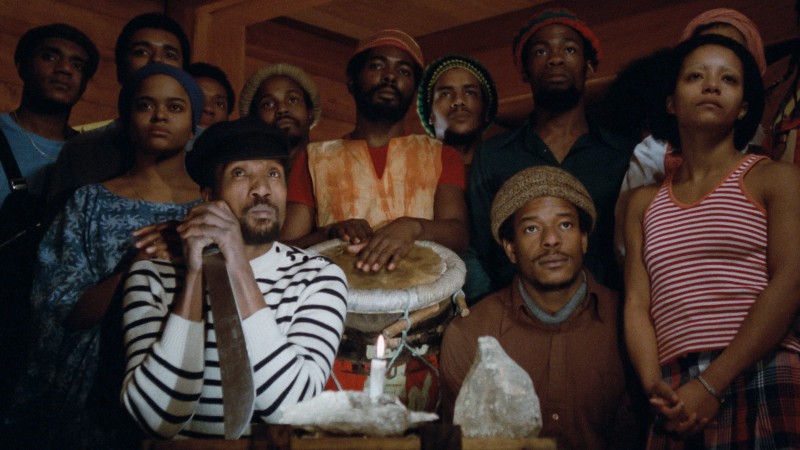
West Indies: The Fugitive Slaves of Liberty: Torrents of Fire, Torrents of Blood
Unfolding in a blaze of vivacious color, Med Hondo’s musical masterpiece is a wildly ambitious exploration of the history of French colonial aggression, the enslavement of African peoples, and their subsequent liberation struggles.
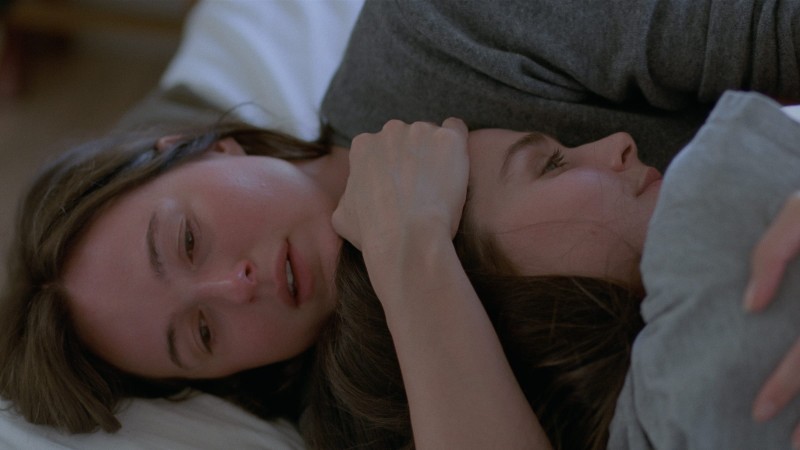
Sentimental Value: Between Trauma and the Sublime
In this powerful drama about family and memory, Joachim Trier explores how the past lives on in us, shapes us, and partly determines who we are and how we feel.
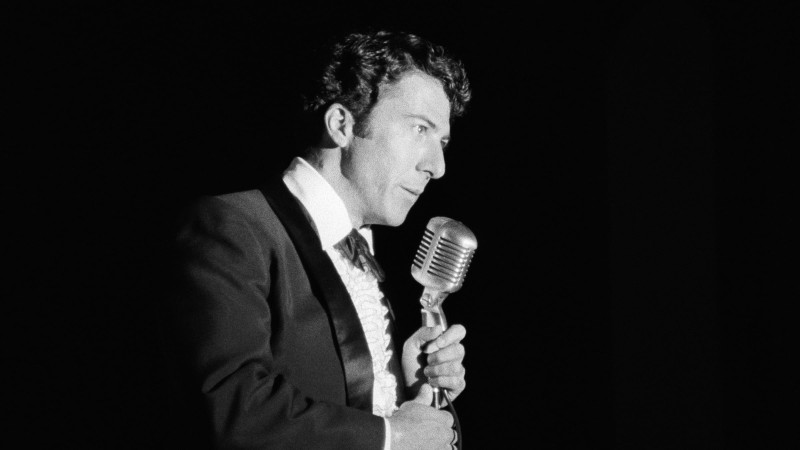
Lenny: High-Wire Act
Featuring a quasi-documentary format that was innovative for its time, Bob Fosse’s complex portrait of stand-up comedian Lenny Bruce is a gesture of postmortem outreach from one prickly, jagged-edged artist to another.
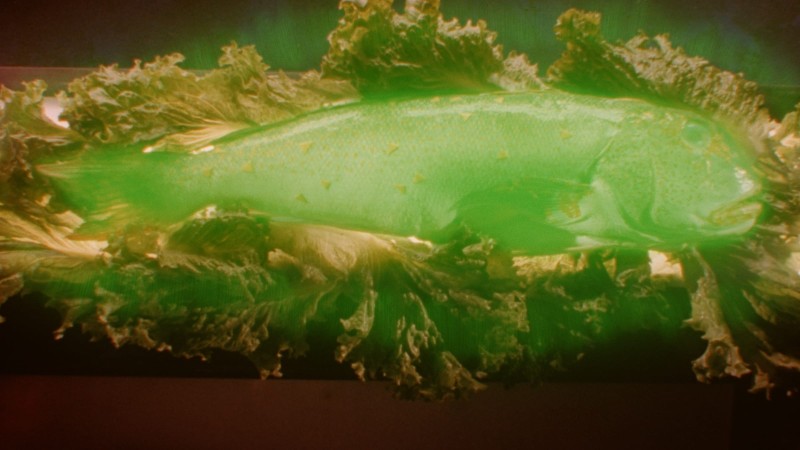
Fresh Kill: Fluid Transmission
New-media pioneer Shu Lea Cheang’s astonishingly prescient dystopian vision takes place in a world where technology feels sticky and bodily, and where networks seep into food, water, and flesh.