My Man Godfrey

With its dunderhead millionaires, erudite bums, effulgently dysfunctional families, and beneficent providence, My Man Godfrey is the Depression comedy par excellence. It is also, superficially at least, a movie about the Depression. A suicidal millionaire regains his zest for living when he discovers the worthy poor.
Godfrey is filled with politically freighted allusions. Its opening shot sweeps down Manhattan's East River only to land on disheveled bum Godfrey (William Powell), ensconced with his out-of-work colleagues in the City Dump. But director Gregory La Cava (Mutt and Jeff cartoons, Gabriel over the White House, Stage Door) is quick to undermine all these totems of social realism. For the Dump’s address is swank Sutton Place, the bums bid each other good night in French, and Godfrey, that purported victim of American inequality, wastes no time pushing an uppity rich girl into an ash pile, showing not the slightest fear of class revenge. So clearly we are in the screwball realm.
And La Cava's gift, like Mitchell Leisen’s in the better-known Easy Living, is to celebrate not our common humanity (if this were really La Cava’s point Godfrey would marry the clever maid), but the classless pleasures of escaping real life. Truth-seekers look elsewhere. The mercilessly competitive heroine Irene (Carole Lombard) sweetly announces her good intentions in the very first sequence, penitently informing Godfrey: “I’ve decided I don’t want to play any more games with human beings as objects. It’s kind of sordid when you think of it, I mean when you think it over.” From here on, it’s let the best man win.
The story is fittingly outrageous: the two Bullock society sisters leave a charity ball, vying to find the last item on their scavenger hunt list: a “Forgotten Man,” or bum. They are overjoyed to find Godfrey, who immediately rebuffs the arrogant older Cornelia (Gail Patrick), but allows wilier, kittenish Irene (Carole Lombard) to beguile him back to the ball, where she displays him and wins the scavenger hunt. Euphoric, Irene repays Godfrey by hiring him to butle for her (in the maid’s words) “nutty” family: trilling, vapid Mrs. Bullock (Alice Brady), her woeful, unintimidating stockbroker spouse (Eugene Pallette), nasty Cornelia, and Mrs. Bullock’s foreign “protégé” Carlo (Mischa Auer), who plays Kurt Weill badly and avidly devours the Bullock meals. Smitten with Godfrey at first sight, Irene is soon head over heels in love with her butler, who, of course, is not really a butler or a bum, but a poseur from a distinguished Boston family, recovering from a bad love affair by seeing how the other half lives. So while Cornelia hides her pearl necklace under Godfrey’s bed, hoping to get him arrested, and Irene stages glamorous nervous breakdowns desperate to win his love, Godfrey—realizing that “the only difference between a derelict and a man is a job” outdoes both government relief and Bullock-style charity by building a glamorous nightclub to give his down-and-out friends amusing work.
One of My Man Godfrey’s great pleasures is its acting (it was the first film to garner Oscar nominations in all four acting categories). From the first lingering profile shot of their City Dump palaver, Powell and Lombard are a thrilling pair: he immensely virile in his overgrown beard and tattered jacket; she dazzlingly vulnerable, yet more than a match for his will. Whether she’s quivering with thwarted desire or leaping from the shower squealing, “Godfrey loves me!” in bliss, Lombard is at her loopiest and most determined here. Particularly hilarious are her attempts to win Powell’s attention: feigning love sickness by ostentatiously refusing dinners (which Carlos happily gobbles up), throwing temper tantrums, and storming onto his bed. Meanwhile, Powell spouts erudite verities and holds his stolid own by resisting her loveliness right up to the thoroughly improbable end.
As good as the film as a whole are Godfrey’s inspired comic moments. In one early bit, the scavenger hunt judge (balletic Franklin Pangborn) prissily tugs at Godfrey’s whiskers to check their authenticity; in another, Carlo sulkily accedes to Mrs. Bullock’s demands that he cheer up Irene by effortlessly impersonating an ape. “He frightens me,” Irene remarks. Carlo’s ardent mastication is a standing joke, as are Mrs. Bullock’s shrill chatter (“She rambles on quite a bit, but then she never says anything,” muses her daughter), Cornelia’s withering looks, and Irene’s petulant airs.
Unlike Frank Capra, La Cava pays no particular homage to the little man. Unlike Preston Sturges, he sees nothing magical about luck. A favorite butt of satire among the film’s bums is the sentimental adage “Prosperity is just around the corner.” What corner? they ask. And while applauding generous endeavors—like Godfrey’s saving Mr. Bullock from financial ruin—Godfrey has no illusions about the power of good deeds, or love for that matter. The game is everything. Competition—between Cornelia and Irene, Irene and Godfrey, Mr. Bullock and everyone—drives the narrative forward. And the film’s ending is less a wedding of hearts and minds than a collapse of resistance on Godfrey’s part. So Irene achieves her vision of happiness, and My Man Godfrey foresees not the end of the American Depression, but the triumph of play and strong wills.
More: Essays
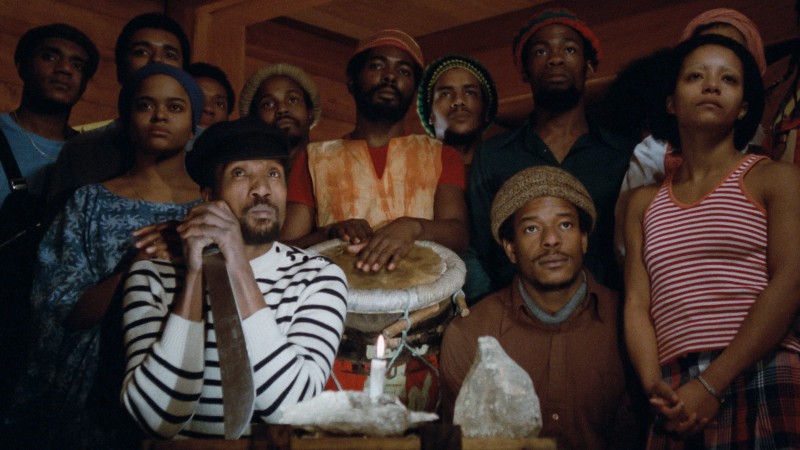
West Indies: The Fugitive Slaves of Liberty: Torrents of Fire, Torrents of Blood
Unfolding in a blaze of vivacious color, Med Hondo’s musical masterpiece is a wildly ambitious exploration of the history of French colonial aggression, the enslavement of African peoples, and their subsequent liberation struggles.

Sentimental Value: Between Trauma and the Sublime
In this powerful drama about family and memory, Joachim Trier explores how the past lives on in us, shapes us, and partly determines who we are and how we feel.

Lenny: High-Wire Act
Featuring a quasi-documentary format that was innovative for its time, Bob Fosse’s complex portrait of stand-up comedian Lenny Bruce is a gesture of postmortem outreach from one prickly, jagged-edged artist to another.

Fresh Kill: Fluid Transmission
New-media pioneer Shu Lea Cheang’s astonishingly prescient dystopian vision takes place in a world where technology feels sticky and bodily, and where networks seep into food, water, and flesh.