September Books
Share

The latest—and, as always, essential—roundup on new and noteworthy books is out from Sabzian, and Tillo Huygelen opens with word that Cinematek, the Royal Belgian Film Archive, is dedicating its library to film theorists and historians David Bordwell and Kristin Thompson. “The inauguration of the Bibliothèque Bordwell-Thompson is accompanied by a carte blanche curated by Thompson, giving a personal take on the collections and of the research that connected the two scholars so closely to the archive,” writes Huygelen.
That series opens tomorrow with a screening of Alberto Capellani’s Germinal, “one of the great films that made 1913 the annus mirabilis of early cinema,” as Thompson points out in her program notes. Bordwell / Thompson: Carte Blanche runs through November 22, and December will see the publication of Observing Film Art: Themes from the Work of David Bordwell, an impressive collection edited by Charlie Keil and Murray Smith.
A. S. Hamrah will be at the n+1 office in Brooklyn on Thursday to discuss Last Week in End Times Cinema, his “study of bad news in the movie industry over the course of 365 days,” with n+1 contributor Will Tavlin and coeditor Lisa Borst. And on October 22, Hamrah will introduce the Vital Signs Film Series screening in Oakland of Zach Clark’s The Becomers (2024).
Starting Saturday, New York’s Metrograph will present Trains: Local Routes, the first half of a two-part series Genevieve Yue has curated in conjunction with the publication of her latest book, Trains. This is the latest title in Cutaways, a series of small-format books, “each entry a journey through the history of cinema guided by a single motif or formal device.”
Cutaways is coedited by Yue and Erika Balsom, whose collection The Edges of Cinema: Essays on Twenty-First Century Film Culture has just hit shelves. On October 5, Light Industry in Brooklyn will celebrate the publication of The Machine That Kills Bad People, a collection of essays commissioned by the screening series that ran from 2018 to June of this year at the Institute of Contemporary Arts in London. Programmed by Balsom, Beatrice Gibson, Maria Palacios Cruz, and Ben Rivers, The Machine that Kills Bad People was known for its double bills, and on the program for Monday evening are Bette Gordon’s Anybody’s Woman (1981) and Dorothy Arzner’s Merrily We Go to Hell (1932).
Then on October 6, Balsom will return to Light Industry to deliver an illustrated lecture on A.A.A. Offresi (1981), in which hidden cameras capture the interactions between a French sex worker and her clients in Rome. A.A.A. Offresi was scheduled to be broadcast on Italian television, but instead, a Radiotelevisione italiana (RAI) presenter announced that the broadcast had been cancelled “at the formal request of the president of the parliamentary oversight commission.”
Critical Context
Siegfried Kracauer, the critic and theorist remembered first and foremost for his 1947 book From Caligari to Hitler: A Psychological History of the German Film, was “among the first to treat films as social symptoms, but today we do it all the time,” writes Jimmy So in the New Republic. When the Nazis came to power, Kracauer fled Berlin for Paris before emigrating to the U.S., and “he carried not just trauma but a conviction that culture could offer early warnings of political disaster. In exile in the United States, he set out to trace a line from Weimar expressionism to the psychic conditions that enabled the Third Reich. If it had happened in Germany, who was to say it couldn’t happen in the United States?”
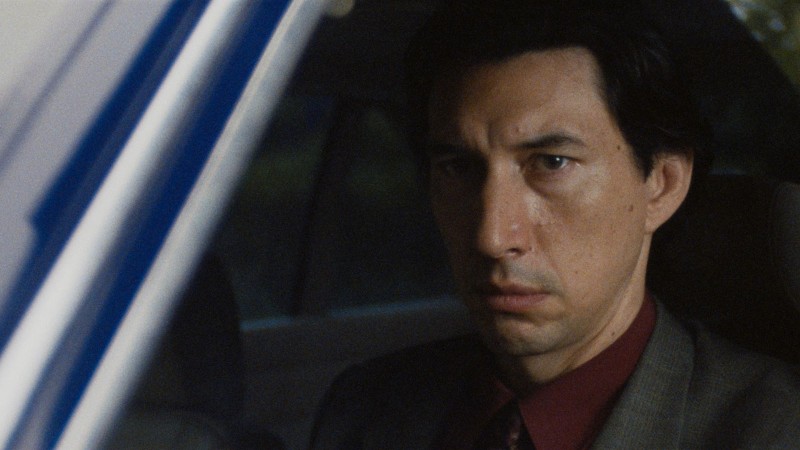
“For Anwen Crawford, author of the recent Decadent Edition from Fireflies Press,” Lynn Ramsay’s Morvern Callar (2002) is “as substantially immersive as it is impossible to grasp,” writes Katherine Connell for Screen Slate. “There are many ideological and historical frameworks that Crawford uses to contextualize the film’s temporal setting, including globalization, Cool Britannia, New Labour, ’90s rave culture in deindustrialized Scotland, as well as its pre–social media and post-9/11 theatrical release. This academic rigor is helpful in working through the sociopolitical implications of the film, but what Crawford’s text most profoundly reveals is that the truest way in to Morvern Callar begins and ends with a personal, haptic relationship to its contents.”
“To be young and in love with films in the early 1960s was to participate in what felt like an international youth movement,” wrote Phillip Lopate in the first chapter of his 1998 collection of essays and criticism, Totally, Tenderly, Tragically. Out now from Sticking Place Books, Essaying Movies gathers Lopate’s conversations with Carrie Rickey (A Complicated Passion: The Life and Work of Agnès Varda). Sticking Place has also just published Cheshire on Film, a collection of interviews and essays by critic and filmmaker Godfrey Cheshire.
More Conversations
Over the weekend, Ioncinema’s Eric Lavallée reported that Kristen Stewart is set to star in Olivier Assayas’s Spiritual World as Ada, “a haunted young woman with clairvoyant powers who is visited by mysterious premonitions.” Stewart and Assayas have previously worked together on Clouds of Sils Maria (2014) and Personal Shopper (2016), and the remarkable cast lined up for Spiritual World also features Vicky Krieps, Niels Schneider, Riley Keough, Wagner Moura, and Barbara Sukowa. Assayas on Assayas presents a wide-ranging series of conversations between the director and critic Jean-Michel Frodon.
Meridian gathers Claudia Nedelcu Duca’s interviews with Andrei Ujica, the writer and director who collaborated with Harun Farocki on Videograms of a Revolution (1992) and is best known for The Autobiography of Nicolae Ceaușescu (2010). “Ujica’s extraordinarily powerful montage of newsreel footage is not a record of the Romanian dictator’s appalling misdeeds,” wrote Jay Weissberg for Variety, “but rather a sly use of Ceausescu’s own propaganda to drive home a devastating critique of both Romanian society and international realpolitik: We all let this happen.”
Fierce and Feisty
In Laurence Kardish’s Shirley Clarke: The Passionate Life and Radical Works of an Exceptional Filmmaker, “a unified field of constant artistic creation appears, of which the feature films were merely the most conspicuous public traces,” writes the New Yorker’s Richard Brody. “Paradoxically and strikingly, these newly revealed continuities of Clarke’s life and work not only put her movies in perspective but also reflect essential concepts of the cinema—and of cinema’s place in her time.”
One of Clarke’s many early supporters was Louis Sher, who by the early 1960s, was running the largest independent cinema chain in the U.S. Clarke’s first feature, The Connection (1961), premiered to considerable acclaim in Cannes but was banned by local censors when it arrived in New York. Sher propelled Clarke’s case forward in the courts by screening The Connection in Los Angeles and declaring in ads: “Now you can see the film that New York tried to ban!” The story is told—along with countless others—in lively detail by filmmaker and programmer Mike Plante in Sensation Cinema: The Audacious, Defiant History of Louis Sher and the Art Theatre Guild.
Making Movies
“As Joseph McBride’s recent book George Cukor’s People: Acting for a Master Director demonstrates in much detail, enjoying a Cukor movie invariably means enjoying what particular actors do and how they do it,” writes Jonathan Rosenbaum at the top of his notes on ten films, including his own favorite Cukor, Sylvia Scarlett (1935). At IndieWire, Jim Hemphill recommends Illeana Douglas’s Jungle Red! The Making of MGM’s The Women, “one of the most entertaining and enlightening books ever written on a single film. Douglas’s approach is informed equally by her background as an actor (Cape Fear, Grace of My Heart) and her work as a film historian for Turner Classic Movies; her filmmaking experience gives her the ability to clearly convey all the complex machinations at work on a film set, but what makes the book special is the way she combines this intimate firsthand knowledge with a historian’s broader perspective.”
With Shooting Eve,Sam Staggs delves into the making of Joseph L. Mankiewicz’s beloved All About Eve (1950), starring Bette Davis, Anne Baxter, George Sanders, and a young Marilyn Monroe. And Daniel Titley traces the history of a lost landmark of the silent era directed by Tod Browning and starring Lon Chaney in The Hypnotist: The Lost Story of London After Midnight.
Writers on Film host John Bleasdale talks with Mark Edlitz about Maverick in the Machine: Orson Welles and the Battle Over Journey Into Fear,and at Wellesnet, Ray Kelly notes that the book sheds “new light on one of the most turbulent chapters in Orson Welles’s Hollywood career.”
Fabulous Fictions
Speaking of Welles, anyone who has “a vague connection” to the novelist Booth Tarkington will likely attribute it to Welles’s The Magnificent Ambersons (1942), the troubled adaptation of the 1918 novel. “Welles may have been one of the last writers to speak of him in unqualified, glowing terms,” writes filmmaker Patrick Wang (A. Rimbaud). “I find Tarkington an eminently capable writer, an even better dramatist, and the rarest interpreter of human psychology and action. His stories are as structured as Brecht, as emotional as Arthur Miller, and as tragically revealing as an Act V monarch in an Elizabethan drama.”
“Deprivatizing my body grants me the capital I crave.” With Bree: An Autobiography, Hannah Bonner takes on the voice of Bree Daniels, the call girl vividly portrayed by Jane Fonda in Alan J. Pakula’s Klute (1971).
In his New York Times review of Hollywood, Ending, the latest novel by John Green (The Fault in Our Stars), David Canfield notes that the main characters—rising young actors cast in a hot biopic called Andy Warhol Never Gets Old—navigate “an imposing landscape of film-industry veterans including exacting directors, weary publicists, cunning agents, and prying journalists. The Tinseltown setting proves dramatically canny: The spotlight always seems to find the young, but it is not for the weak.”
Hollywood Men
“What do you get when screen heroes share their stories?” asks Tim Teeman in the New York Times. “A lot of sex, bravado, determination, illness, depression and insecurity, love-life mazes, addiction, recovery, and—one thing they all share—battles to vanquish various demons.” Tim Teeman has notes on “six potential page-turners”: Ke Huy Quan’s Never Say Die, Dolph Lundgren’s Fights Worth Fighting: Finding Strength in Struggle, Sylvester Stallone’s The Steps, Michael Douglas’s One Helluva Ride, Joe Manganiello’s Bloodlines, and Kyle MacLachlan’s Fictional Selves.Melena Ryzik notes that Fictional Selves “charts MacLachlan’s kinship with [David] Lynch, who died last year; his roles, both earned and lost (he passed on sex, lies and videotape); and his romantic relationships, including with Laura Dern, his Blue Velvet costar, and the actress he cheated on her with.”
Ari Emanuel, “who inspired the manic Ari Gold character on the TV show Entourage, is almost a caricature of a Hollywood personality; cunning, quick-thinking, charming, and heroically profane,” writes Connie Bruck in the New Yorker. “There are three Emanuel brothers: Zeke, the doctor and intellectual; Rahm, the former congressman, White House chief of staff, and mayor of Chicago; and Ari, the businessman. All are consummate schmoozers, though Ari and Rahm balance their ingratiating manners with ferocious tempers.”
Ari’s memoir, Roll the Calls, “breathlessly charges through its 400-plus pages, dropping names, settling scores, and swearing up a storm,” writes the NYT’s Nicole Sperling. The Hollywood Reporter has an excerpt, and Emanuel has been talking with—and at—Lane Brown (Vulture), Matt Donnelly (Variety), Dominic Patten (Deadline), and New Yorker editor David Remnick.
Easy on the Eyes
For AnOther Magazine, Baneet Sarai leafs through Almodóvar Art: The Art in the Films of Pedro Almodóvar. “Exploring the design of his films from pugnacious early gems like Dark Habits to mature masterworks like Volver and All About My Mother,” writes Sarai, “the book has been lovingly compiled by his creative director, Juan Gatti, whose partnership with Almodóvar is one of the most prolific director-designer relationships. Together, they have created a saturated, madcap world that values expression over naturalism, mood over narrative. ‘Pedro conceives of his films as a complete aesthetic experience,’ says Gatti.”
Hat & Beard Press, in the meantime, is previewing another handsome volume, SV105401: The Blade Runner Contact Sheets by Stephen Vaughan, and the sample pages here are tantalizing. Along with shots snapped on the set of Ridley Scott’s 1982 sci-fi classic, the book will include essays by Paul Sammon (Future Noir: The Making of Blade Runner) and critic and novelist Joanne McNeil.
Forthcoming
Richard Kelly’s Donnie Darko will turn twenty-five next month, and over the past ten years, the writer and director has been working on a sequel of sorts—a novel, whittled down to around six hundred pages from Kelly’s 800-plus-page first draft. The Philosophy of Time Travel, due in December, will reconstruct events following the death of young Donnie Darko on October 4, 1988, and Kelly is currently planning to expand the project with animated and live-action films.
Chances are, you’ve seen the trailer for The Further Mis-Adventures of Cliff Booth, written by Quentin Tarantino, directed by David Fincher, and starring Brad Pitt, who won an Oscar for his portrayal of Rick Dalton’s stunt double in Tarantino’s Once Upon a Time in Hollywood (2019). The new film hits theaters during the Thanksgiving holidays, and then Tarantino’s novelization, The Adventures of Cliff Booth, will be out on December 8. His novelization of Once Upon a Time appeared three years after the movie, whereas the new one will be released before The Further Mis-Adventures lands on Netflix on December 23.
November will bring Scott Ryan’s oral history The Road to David Lynch’s Wild at Heart as well as The Future of Reality, a collection edited by Kevin B. Lee, Flavia Mazzarino, and Marine de Dardel that “asks filmmakers and scholars to respond to a contemporary reality framed and filtered by algorithms and synthetic media.” And looking way ahead to 2028, we’re already anticipating Glenn Kenny’s monograph on Fritz Lang’s Scarlet Street (1945).
Endnotes
Matthew Sorrento, the editor of Film International Online and Retreats from Oblivion: The Journal of NoirCon, has launched a new scholarly film and television imprint, Channel Academic. Recent and forthcoming titles include Woody Haut’s Kiss Me Deadly: In Search of Noir’s Great Whatsit and Alexandra Heller-Nicholas’s The Blair Witch Project: Josh’s Blair Witch Mix—An Absent Soundtrack Found.
For more recommendations, turn to the Film Stage, where Christopher Schobert has notes on David Thomson’s A Sudden Flicker of Light: A Revisionist History of Movies—the latest reviews come from Scott Bradfield in the New Republic and Tim Riley in the Los Angeles Review of Books—as well as Scout Tafoya’s The Otherworld: The Mythic Dimensions of Christophe Gans and Sydney Pollack: Collected Interviews, edited by Patrick McGilligan and Paul Cronin.
Don’t miss out on your Daily briefing! Subscribe to the RSS feed.