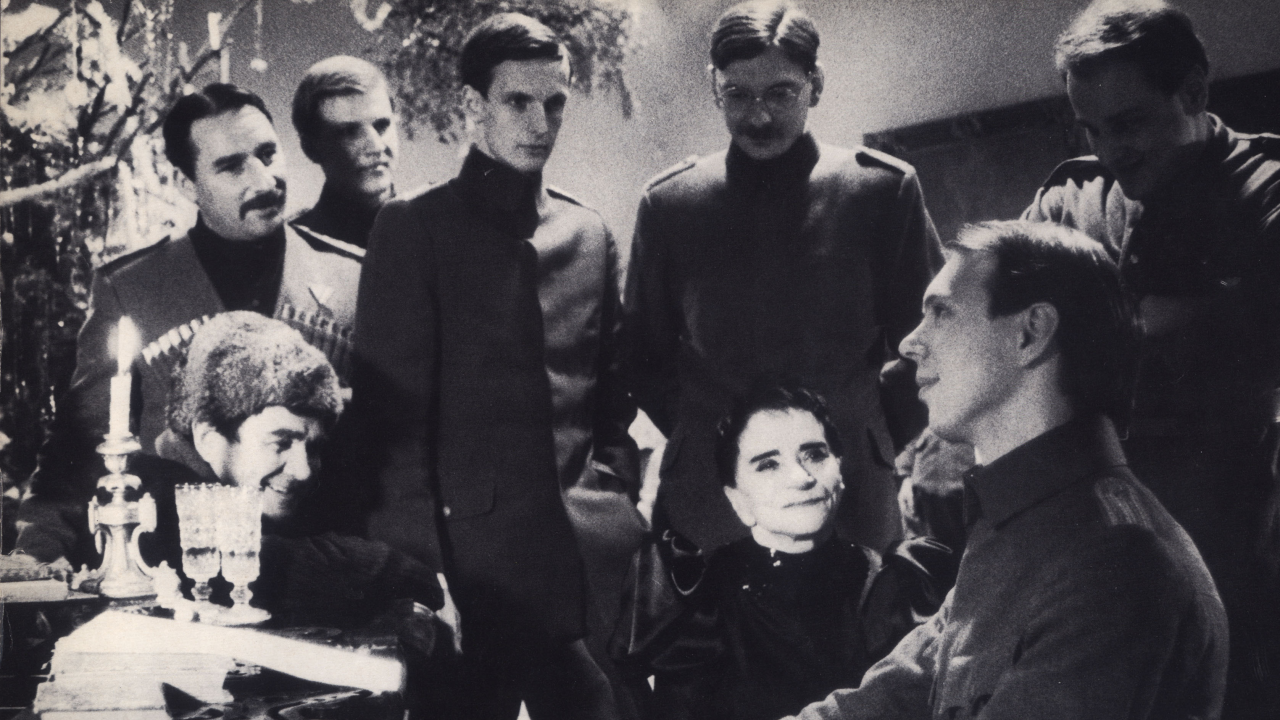
Coup de grâce

Latvia, 1919: the end of the Russian Civil War. An aristocratic young woman (brilliantly played by Margarethe von Trotta) becomes involved with a sexually repressed Prussian soldier. When she is rejected by her love, the young woman is sent into a downward spiral of psychosexual depression, promiscuity, and revolutionary collaboration. A startling tale of heartbreak and violence set against the backdrop of bloody revolution, Volker Schlöndorff's Coup de grâce is a powerful film that explores the interrelation of private passion and political commitment.
SPECIAL EDITION FEATURES
- Interview with director Volker Schlöndorff and screenwriter/star Margarethe von Trotta
- An excerpt from Hans-Bernhard Moeller and George Lellis’s book Volker Schlöndorff’s Cinema: Adaptation, Politics, and the “Movie-Appropriate.
Cover by Eric Skillman
SPECIAL EDITION FEATURES
- Interview with director Volker Schlöndorff and screenwriter/star Margarethe von Trotta
- An excerpt from Hans-Bernhard Moeller and George Lellis’s book Volker Schlöndorff’s Cinema: Adaptation, Politics, and the “Movie-Appropriate.
Cover by Eric Skillman
Cast
- Margarethe von Trotta
- Sophie von Reval
- Matthias Habich
- Erich von Lhomond
- Mathieu Carrière
- Volkmar von Plessen
- Rüdiger Kirschstein
- Konrad von Reval
- Valeska Gert
- Aunt Praskovia
- Marc Eyraud
- Dr. Paul Rugen
- Frederik von Zichy
- Franz von Aland
Credits
- Director
- Volker Schlöndorff
- Executive producer
- Eberhard Junkersdorf
- Cinematography
- Igor Luther
- Editing
- Jane Sperr
- Music
- Stanley Myers
- Sound
- Gerhard Birkholz
- Production design
- Jurgen Kiebach
- Screenplay
- Jutta Brückner
- Screenplay
- Geneviève Dormann
- Screenplay
- Margarethe von Trotta
- From the novel by
- Marguerite Yourcenar


1/1