Time Bandits

Terry Gilliam’s Time Bandits was the most critically well-received children’s film in nearly two decades—and also the most challenging and rewarding fantasy-adventure movie since Alexander Korda’s The Thief of Bagdad, released forty-one years earlier.
At the dawn of the 1980s, filmmakers appeared to have lost the knack for making the kind of movie that could entertain and provoke children and their parents—movies that carried young characters to other times and different worlds, but said something about our reality. Disney was thrashing around in search of a future as something other than a movie museum. Steven Spielberg had yet to issue his cute, cuddly sci-fi megahit E.T. Ray Harryhausen, who’d had some success (most notably with Jason and the Argonauts) as a maker of fantasy films built around stop-motion animation effects, was entering retirement. “Space fantasy” was popular, thanks to George Lucas’s Star Wars, but with the exception of Harryhausen’s valedictory Clash of the Titans, none of the crop of kid films showed an awareness of any storytelling tradition apart from old movies.
Though Gilliam hadn’t read The Lion, the Witch, and the Wardrobe when he made Time Bandits, some viewers may hear echoes of C.S. Lewis as Gilliam fearlessly brings the logic of children’s literature to the screen. Plunging headfirst into history, myth, legend, and fairy tale, Gilliam sends his characters—a boy and six good-natured if rather larcenous little persons (i.e. seven dwarves)—careening through time-twisting interactions with Napoleon, Robin Hood, and Agamemnon (played, respectively, by Ian Holm, John Cleese, and Sean Connery). The landscape is populated by the giants, ogres, and sinister crones of legend and fairy tale, all in the service of Gilliam’s weird, ecstatic vision.
Amid the breakneck pacing, Gilliam gives a nod or two to other movies (the first appearance of the Supreme Being looks and sounds a lot like the introduction of the Great and Powerful Oz from MGM’s 1939 fantasy-musical; Kevin’s toy robot activating on its own in the middle of the night, to no special plot import, tweaks a famous scene from Spielberg’s Close Encounters of the Third Kind). And the script resounds with echoes of J. R. R. Tolkien’s religious storytelling—specifically “Leaf by Niggle”—with respect to the work that the dwarves are supposed be doing, i.e. designing plants and trees for the Creator.
The result is a cinematic roller coaster ride of a kind really seen only once before, four decades earlier, in Korda’s The Thief of Bagdad. The dwarves’ navigation of their universe, and its clear and seemingly effortless presentation by Gilliam, recalls that earlier film, in which a 1000-foot-tall genie suddenly appears before its young hero to whisk him “above the roof of the world, supported by seven pillars, and the seven pillars are set on the shoulders of a genie whose strength is beyond thought, and the genie stands on an eagle, and the eagle on a bull, and the bull on a fish, and the fish swims in the sea of eternity.” The core of Time Bandits’ immense appeal lies in its ability to make an audience willingly suspend disbelief and accept storytelling on this level, navigating a fantasy universe no less complex than Korda’s.
This is a children’s film that appealed to kids and allowed their parents to accept it as though they too were children, with none of the cynicism or intrusions of logic that normally cause the collapse of such fantasies. There are subtleties, of course, that aren’t always obvious: the entire film was shot from a camera angle intended to present a boy’s point of view; apart from the fairy-tale conceit, the presence of the dwarves was intended to give the young hero a band of companions with whom he could stand as an equal.
One can also watch Time Bandits for inklings of Gilliam’s later work. The heroes cross a phantasmagoric landscape of myth and legend that anticipates the more ambitious Adventures of Baron Munchausen, framed by a larger, but not overemphasized, social commentary (especially about modern consumerism) that prefigures Brazil. The plans of David Warner’s Evil Genius take the form of building without purpose—he intends to re-create a world to suit his own needs, starting with computers and fast-breeder reactors (he also wants to make Brazil, it seems), in sharp contrast to the Time Bandits, who created trees and shrubbery before they got above their station. Kevin’s parents reveal themselves as unknowing and uncaring agents of Evil with their fixation on blind consumption, the mortal corollary to the Evil Genius’s desire for construction for its own sake. Their fate—utter destruction as a consequence of ignoring their son’s warnings—makes for the perfect denouement. That part of the ending was disturbing enough to cost Time Bandits unqualified raves from the least imaginative of critics.
In many respects, Time Bandits has a surprisingly conservative theological/philosophical vision, and parts of the script’s conclusion recall the underpinnings of Lewis’s Space Trilogy, with its emphasis on the restoration of a strict order to life and reality. That the film found fans across a vast spectrum of filmgoers, of all religious persuasions as well as ideologies, signifies the power of Gilliam’s visual storytelling and the material he’d tapped for this, his most genial and accessible film to date.
More: Essays
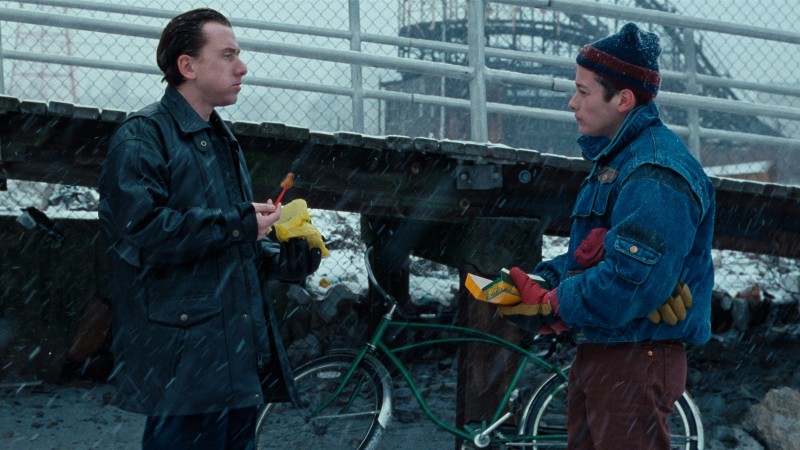
Little Odessa: He Ain’t Heavy, He’s My Brother
James Gray’s extraordinary debut feature is a painstakingly distilled tale of crime and family dysfunction, captured with a merciless gaze and a sharp attention to idiosyncratic detail.

American Dream: The Time Is Right
In her second film, Oscar-winning documentarian Barbara Kopple captures the anguish and perils of disunity in the labor movement and the corrosion of union power during the Reagan era.
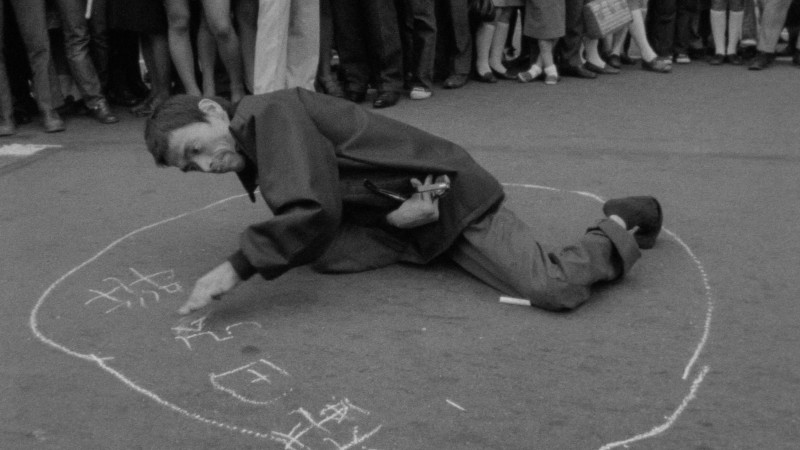
Five Radical Documentaries by Kazuo Hara and Sachiko Kobayashi: Restlessness Refusing Resolution
The pioneering husband-and-wife duo transformed the field of Japanese nonfiction cinema with their portraits of spectacular, edgy personalities and collectives under duress.
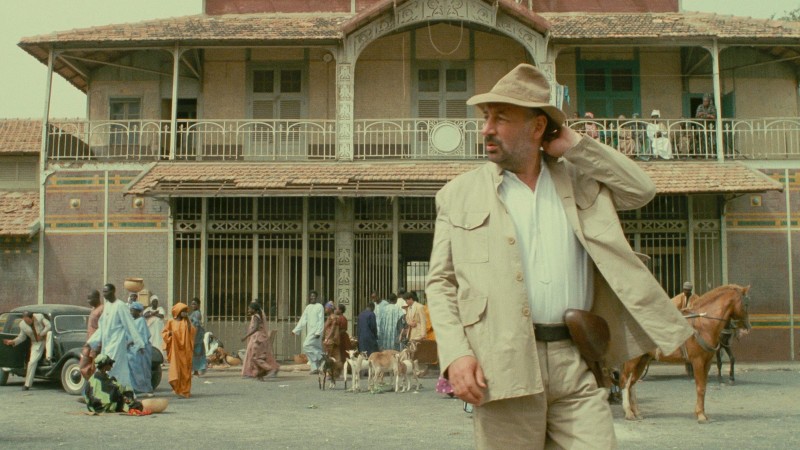
Coup de torchon: “All Crimes Are Collective”
Set in 1930s French West Africa, Bertrand Tavernier’s hard-to-classify adaptation of the Jim Thompson novel Pop. 1280 offers an apocalyptic vision of a society in which institutions have abdicated their moral authority.