America Lost and Found: The BBS Story

Like the rest of America, Hollywood was ripe for revolution in the late sixties. Cinema attendance was down; what had once worked seemed broken. Enter Bob Rafelson, Bert Schneider, and Steve Blauner, who knew that what Hollywood needed was new audiences—namely, young people—and that meant cultivating new talent and new ideas. Fueled by money from their invention of the superstar TV pop group the Monkees, they set off on a film-industry journey that would lead them to form BBS Productions, a company that was also a community. The innovative films produced by this team between 1968 and 1972 are collected in this box set—works that now range from the iconic (Easy Rider, Five Easy Pieces, The Last Picture Show) to the acclaimed (The King of Marvin Gardens) to the obscure (Head; Drive, He Said; A Safe Place), all created within the studio system but lifted right out of the countercultural id.

Films In This Set
-
 Head 1968
Hey, hey, it’s the Monkees . . . being catapulted through one of American cinema’s most surreal sixties odysseys. The brainchild of Bob Rafelson, making his directorial debut; his producing partner and Monkees cocreator Bert Schneider; and Jack Nicholson, a coscreenwriter on the project, Head was the fanciful beginning and ignominious end of the TV-bred supergroup’s big-screen career. In it, Micky Dolenz, Davy Jones, Michael Nesmith, and Peter Tork become trapped in a kaleidoscopic satire that’s movie homage, media send-up, concert movie, and antiwar cry all at once. A constantly looping, self-referential spoof that was ahead of its time, Head dodged commercial success on its release but has since been reclaimed as one of the great cult objects of its era.
-
 Easy Rider 1969
This is the definitive counterculture blockbuster. The down-and-dirty directorial debut of former clean-cut teen star Dennis Hopper, Easy Rider heralded the arrival of a new voice in film, one pitched angrily against the mainstream. After the film’s cross-country journey—with its radical, New Wave–style editing, outsider-rock soundtrack, revelatory performance by a young Jack Nicholson, and explosive ending—the American road trip would never be the same.
-
 Five Easy Pieces 1970
Following Jack Nicholson’s breakout supporting turn in Easy Rider, director Bob Rafelson devised a powerful leading role for the new star in the searing character study Five Easy Pieces. Nicholson plays the now iconic cad Bobby Dupea, a shiftless thirtysomething oil rigger and former piano prodigy immune to any sense of responsibility, who returns to his upper-middle-class childhood home, blue-collar girlfriend (Karen Black, in an Oscar-nominated role) in tow, to see his estranged, ailing father. Moving in its simplicity and gritty in its textures, Five Easy Pieces is a lasting example of early-1970s American alienation.
-
 Drive, He Said 1970
Fresh off of his Five Easy Pieces success, Jack Nicholson mounted his enormously irreverent directorial debut. Based on the best-selling novel by Jeremy Larner, Drive, He Said, free-spirited and sobering by turns, is a sketch of the exploits of a disaffected college basketball player (William Tepper) and his increasingly radical roommate (Michael Margotta), as well as a feverishly shot and edited snapshot of the early seventies (some of it was filmed during an actual campus protest). Fueled by Vietnam-era anxieties and perched on the edge of utter insanity, Nicholson’s audacious comedy (also starring Bruce Dern and Karen Black) is a startling howl direct from the zeitgeist.
-
 A Safe Place 1971
One of the discoveries of the groundbreaking production company BBS was director Henry Jaglom. The fiercely idiosyncratic filmmaker—who would go on to have a decades-spanning career making independently produced female character studies—was first revealed to the film world with A Safe Place. In this delicate, introspective drama, laced with fantasy elements, Tuesday Weld stars as a fragile young woman in New York, unable to reconcile her ambiguous past with her unmoored present; Orson Welles as an enchanting Central Park magician and Jack Nicholson as a mysterious ex-lover round out the cast.
-
 The Last Picture Show 1971
One of the key films of the American seventies cinema renaissance, The Last Picture Show is set in the early fifties, in the loneliest Texas nowheresville to ever dust up a movie screen. This aching portrait of a dying West, adapted from Larry McMurtry’s novel, focuses on the daily shuffles of three futureless teens—enigmatic Sonny (Timothy Bottoms), wayward jock Duane (Jeff Bridges), and desperate-to-be-adored rich girl Jacy (Cybill Shepherd)—and the aging lost souls who bump up against them in the night like drifting tumbleweeds. Featuring evocative black-and-white imagery and profoundly felt performances, this hushed depiction of crumbling American values remains the pivotal work in the career of invaluable film historian and director Peter Bogdanovich.
-
 The King of Marvin Gardens 1972
For his electrifying follow-up to the smash success Five Easy Pieces, Bob Rafelson dug even deeper into the crushed dreams of wayward America. Jack Nicholson and Bruce Dern play estranged siblings David and Jason, the former a depressive late-night-radio talk show host, the latter an extroverted con man; when Jason drags his younger brother to a dreary Atlantic City and into a real-estate scam, events spiral toward tragedy. The King of Marvin Gardens, also starring a brilliant Ellen Burstyn as Jason’s bitter aging beauty-queen squeeze, is one of the most devastating character studies of the seventies.
Special Features
Head
- New, restored high-definition digital transfer, with uncompressed monaural soundtrack and newly created, optional DTS-HD Master Audio 5.1 soundtrack on the Blu-ray edition
- Audio commentary featuring the Monkees
- New video interview with director Bob Rafelson
- New documentary about BBS featuring critic David Thomson and historian Douglas Brinkley
- Screen tests with the Monkees
- Trailers and TV and radio spots
- Ephemera, including behind-the-scenes photos by Henry Diltz
- Rare 1968 television interview with the Monkees
- English subtitles for the deaf and hard of hearing
Easy Rider
- New, restored high-definition digital transfer, supervised by director of photography László Kovács, with uncompressed monaural soundtrack and optional DTS-HD Master Audio soundtrack on the Blu-ray edition
- Two audio commentaries, one featuring actor-director-writer Dennis Hopper, the other Hopper, actor-writer Peter Fonda, and production manager Paul Lewis
- Born to Be Wild (1995) and "Easy Rider": Shaking the Cage, (1999), documentaries about the making and history of the film
- Television excerpts showing Hopper and Fonda at the Cannes Film Festival
- New video interview with BBS cofounder Steve Blauner
- Theatrical trailers
- English subtitles for the deaf and hard of hearing
Five Easy Pieces
- New, restored high-definition digital transfer, supervised by director of photography László Kovács, with uncompressed monaural soundtrack on the Blu-ray edition
- Audio commentary featuring director Bob Rafelson and interior designer Toby Rafelson
- Soul Searching in "Five Easy Pieces," a 2009 video piece with Rafelson
- BBStory, a 2009 documentary about the BBS era, with Rafelson, actors Jack Nicholson, Karen Black, and Ellen Burstyn, and directors Peter Bogdanovich and Henry Jaglom, among others
- Audio excerpts from a 1976 AFI interview with Rafelson
- Theatrical trailer and teasers
- English subtitles for the deaf and hard of hearing
Drive, He Said
- New, restored high-definition digital transfer, supervised by director Jack Nicholson, with uncompressed monaural soundtrack on the Blu-ray edition
- A Cautionary Tale of Campus Revolution and Sexual Freedom, a 2009 video piece featuring Nicholson
- Theatrical trailer
- English subtitles for the deaf and hard of hearing
A Safe Place
- New, restored high-definition digital transfer, with uncompressed monaural soundtrack on the Blu-ray edition
- Audio commentary featuring director Henry Jaglom
- Henry Jaglom Finds “A Safe Place,” a 2009 video piece in which the director discusses the film
- Notes on the New York Film Festival, a 1971 video interview with Jaglom and director Peter Bogdanovich
- Outtakes and screen tests
- Theatrical trailer
- English subtitles for the deaf and hard of hearing
The Last Picture Show
- New, restored high-definition digital transfer of Peter Bogdanovich's director's cut, supervised by Bogdanovich, with uncompressed monaural soundtrack on the Blu-ray edition
- Two audio commentaries, one from 1991, featuring Bogdanovich and actors Cybill Shepherd, Randy Quaid, Cloris Leachman, and Frank Marshall; the other from 2009, featuring Bogdanovich
- “The Last Picture Show”: A Look Back, (1999) and Picture This (1990), documentaries about the making of the film
- A Discussion with Filmmaker Peter Bogdanovich, a 2009 Q&A
- Screen tests and location footage
- Excerpts from a 1972 television interview with director François Truffaut about the New Hollywood
- Theatrical trailers
- English subtitles for the deaf and hard of hearing
The King of Marvin Gardens
- New, restored high-definition digital transfer, supervised by director of photogaphy László Kovács, with uncompressed monaural soundtrack on the Blu-ray edition
- Selected-scene commentary featuring director Bob Rafelson
- Reflections of a Philosopher King, a 2009 video piece with Rafelson and actress Ellen Burstyn
- Afterthoughts, a 2002 interview with Rafelson, about the film, produced by Rafelson, Kovács, and actor Bruce Dern
- Theatrical trailer
- English subtitles for the deaf and hard of hearing
- PLUS: A booklet featuring new essays by critics J. Hoberman, Chuck Stephens, Matt Zoller Seitz, Kent Jones, Graham Fuller, and Mark Le Fanu
New covers by F. Ron Miller, Fred Davis, and Peter Grant
Films In This Set
-
Head 1968
Hey, hey, it’s the Monkees . . . being catapulted through one of American cinema’s most surreal sixties odysseys. The brainchild of Bob Rafelson, making his directorial debut; his producing partner and Monkees cocreator Bert Schneider; and Jack Nicholson, a coscreenwriter on the project, Head was the fanciful beginning and ignominious end of the TV-bred supergroup’s big-screen career. In it, Micky Dolenz, Davy Jones, Michael Nesmith, and Peter Tork become trapped in a kaleidoscopic satire that’s movie homage, media send-up, concert movie, and antiwar cry all at once. A constantly looping, self-referential spoof that was ahead of its time, Head dodged commercial success on its release but has since been reclaimed as one of the great cult objects of its era.
-
Easy Rider 1969
This is the definitive counterculture blockbuster. The down-and-dirty directorial debut of former clean-cut teen star Dennis Hopper, Easy Rider heralded the arrival of a new voice in film, one pitched angrily against the mainstream. After the film’s cross-country journey—with its radical, New Wave–style editing, outsider-rock soundtrack, revelatory performance by a young Jack Nicholson, and explosive ending—the American road trip would never be the same.
-
Five Easy Pieces 1970
Following Jack Nicholson’s breakout supporting turn in Easy Rider, director Bob Rafelson devised a powerful leading role for the new star in the searing character study Five Easy Pieces. Nicholson plays the now iconic cad Bobby Dupea, a shiftless thirtysomething oil rigger and former piano prodigy immune to any sense of responsibility, who returns to his upper-middle-class childhood home, blue-collar girlfriend (Karen Black, in an Oscar-nominated role) in tow, to see his estranged, ailing father. Moving in its simplicity and gritty in its textures, Five Easy Pieces is a lasting example of early-1970s American alienation.
-
Drive, He Said 1970
Fresh off of his Five Easy Pieces success, Jack Nicholson mounted his enormously irreverent directorial debut. Based on the best-selling novel by Jeremy Larner, Drive, He Said, free-spirited and sobering by turns, is a sketch of the exploits of a disaffected college basketball player (William Tepper) and his increasingly radical roommate (Michael Margotta), as well as a feverishly shot and edited snapshot of the early seventies (some of it was filmed during an actual campus protest). Fueled by Vietnam-era anxieties and perched on the edge of utter insanity, Nicholson’s audacious comedy (also starring Bruce Dern and Karen Black) is a startling howl direct from the zeitgeist.
-
A Safe Place 1971
One of the discoveries of the groundbreaking production company BBS was director Henry Jaglom. The fiercely idiosyncratic filmmaker—who would go on to have a decades-spanning career making independently produced female character studies—was first revealed to the film world with A Safe Place. In this delicate, introspective drama, laced with fantasy elements, Tuesday Weld stars as a fragile young woman in New York, unable to reconcile her ambiguous past with her unmoored present; Orson Welles as an enchanting Central Park magician and Jack Nicholson as a mysterious ex-lover round out the cast.
-
The Last Picture Show 1971
One of the key films of the American seventies cinema renaissance, The Last Picture Show is set in the early fifties, in the loneliest Texas nowheresville to ever dust up a movie screen. This aching portrait of a dying West, adapted from Larry McMurtry’s novel, focuses on the daily shuffles of three futureless teens—enigmatic Sonny (Timothy Bottoms), wayward jock Duane (Jeff Bridges), and desperate-to-be-adored rich girl Jacy (Cybill Shepherd)—and the aging lost souls who bump up against them in the night like drifting tumbleweeds. Featuring evocative black-and-white imagery and profoundly felt performances, this hushed depiction of crumbling American values remains the pivotal work in the career of invaluable film historian and director Peter Bogdanovich.
-
The King of Marvin Gardens 1972
For his electrifying follow-up to the smash success Five Easy Pieces, Bob Rafelson dug even deeper into the crushed dreams of wayward America. Jack Nicholson and Bruce Dern play estranged siblings David and Jason, the former a depressive late-night-radio talk show host, the latter an extroverted con man; when Jason drags his younger brother to a dreary Atlantic City and into a real-estate scam, events spiral toward tragedy. The King of Marvin Gardens, also starring a brilliant Ellen Burstyn as Jason’s bitter aging beauty-queen squeeze, is one of the most devastating character studies of the seventies.
Special Features
Head
- New, restored high-definition digital transfer, with uncompressed monaural soundtrack and newly created, optional DTS-HD Master Audio 5.1 soundtrack on the Blu-ray edition
- Audio commentary featuring the Monkees
- New video interview with director Bob Rafelson
- New documentary about BBS featuring critic David Thomson and historian Douglas Brinkley
- Screen tests with the Monkees
- Trailers and TV and radio spots
- Ephemera, including behind-the-scenes photos by Henry Diltz
- Rare 1968 television interview with the Monkees
- English subtitles for the deaf and hard of hearing
Easy Rider
- New, restored high-definition digital transfer, supervised by director of photography László Kovács, with uncompressed monaural soundtrack and optional DTS-HD Master Audio soundtrack on the Blu-ray edition
- Two audio commentaries, one featuring actor-director-writer Dennis Hopper, the other Hopper, actor-writer Peter Fonda, and production manager Paul Lewis
- Born to Be Wild (1995) and "Easy Rider": Shaking the Cage, (1999), documentaries about the making and history of the film
- Television excerpts showing Hopper and Fonda at the Cannes Film Festival
- New video interview with BBS cofounder Steve Blauner
- Theatrical trailers
- English subtitles for the deaf and hard of hearing
Five Easy Pieces
- New, restored high-definition digital transfer, supervised by director of photography László Kovács, with uncompressed monaural soundtrack on the Blu-ray edition
- Audio commentary featuring director Bob Rafelson and interior designer Toby Rafelson
- Soul Searching in "Five Easy Pieces," a 2009 video piece with Rafelson
- BBStory, a 2009 documentary about the BBS era, with Rafelson, actors Jack Nicholson, Karen Black, and Ellen Burstyn, and directors Peter Bogdanovich and Henry Jaglom, among others
- Audio excerpts from a 1976 AFI interview with Rafelson
- Theatrical trailer and teasers
- English subtitles for the deaf and hard of hearing
Drive, He Said
- New, restored high-definition digital transfer, supervised by director Jack Nicholson, with uncompressed monaural soundtrack on the Blu-ray edition
- A Cautionary Tale of Campus Revolution and Sexual Freedom, a 2009 video piece featuring Nicholson
- Theatrical trailer
- English subtitles for the deaf and hard of hearing
A Safe Place
- New, restored high-definition digital transfer, with uncompressed monaural soundtrack on the Blu-ray edition
- Audio commentary featuring director Henry Jaglom
- Henry Jaglom Finds “A Safe Place,” a 2009 video piece in which the director discusses the film
- Notes on the New York Film Festival, a 1971 video interview with Jaglom and director Peter Bogdanovich
- Outtakes and screen tests
- Theatrical trailer
- English subtitles for the deaf and hard of hearing
The Last Picture Show
- New, restored high-definition digital transfer of Peter Bogdanovich's director's cut, supervised by Bogdanovich, with uncompressed monaural soundtrack on the Blu-ray edition
- Two audio commentaries, one from 1991, featuring Bogdanovich and actors Cybill Shepherd, Randy Quaid, Cloris Leachman, and Frank Marshall; the other from 2009, featuring Bogdanovich
- “The Last Picture Show”: A Look Back, (1999) and Picture This (1990), documentaries about the making of the film
- A Discussion with Filmmaker Peter Bogdanovich, a 2009 Q&A
- Screen tests and location footage
- Excerpts from a 1972 television interview with director François Truffaut about the New Hollywood
- Theatrical trailers
- English subtitles for the deaf and hard of hearing
The King of Marvin Gardens
- New, restored high-definition digital transfer, supervised by director of photogaphy László Kovács, with uncompressed monaural soundtrack on the Blu-ray edition
- Selected-scene commentary featuring director Bob Rafelson
- Reflections of a Philosopher King, a 2009 video piece with Rafelson and actress Ellen Burstyn
- Afterthoughts, a 2002 interview with Rafelson, about the film, produced by Rafelson, Kovács, and actor Bruce Dern
- Theatrical trailer
- English subtitles for the deaf and hard of hearing
- PLUS: A booklet featuring new essays by critics J. Hoberman, Chuck Stephens, Matt Zoller Seitz, Kent Jones, Graham Fuller, and Mark Le Fanu
New covers by F. Ron Miller, Fred Davis, and Peter Grant

Head

Easy Rider

Five Easy Pieces

Drive, He Said

A Safe Place
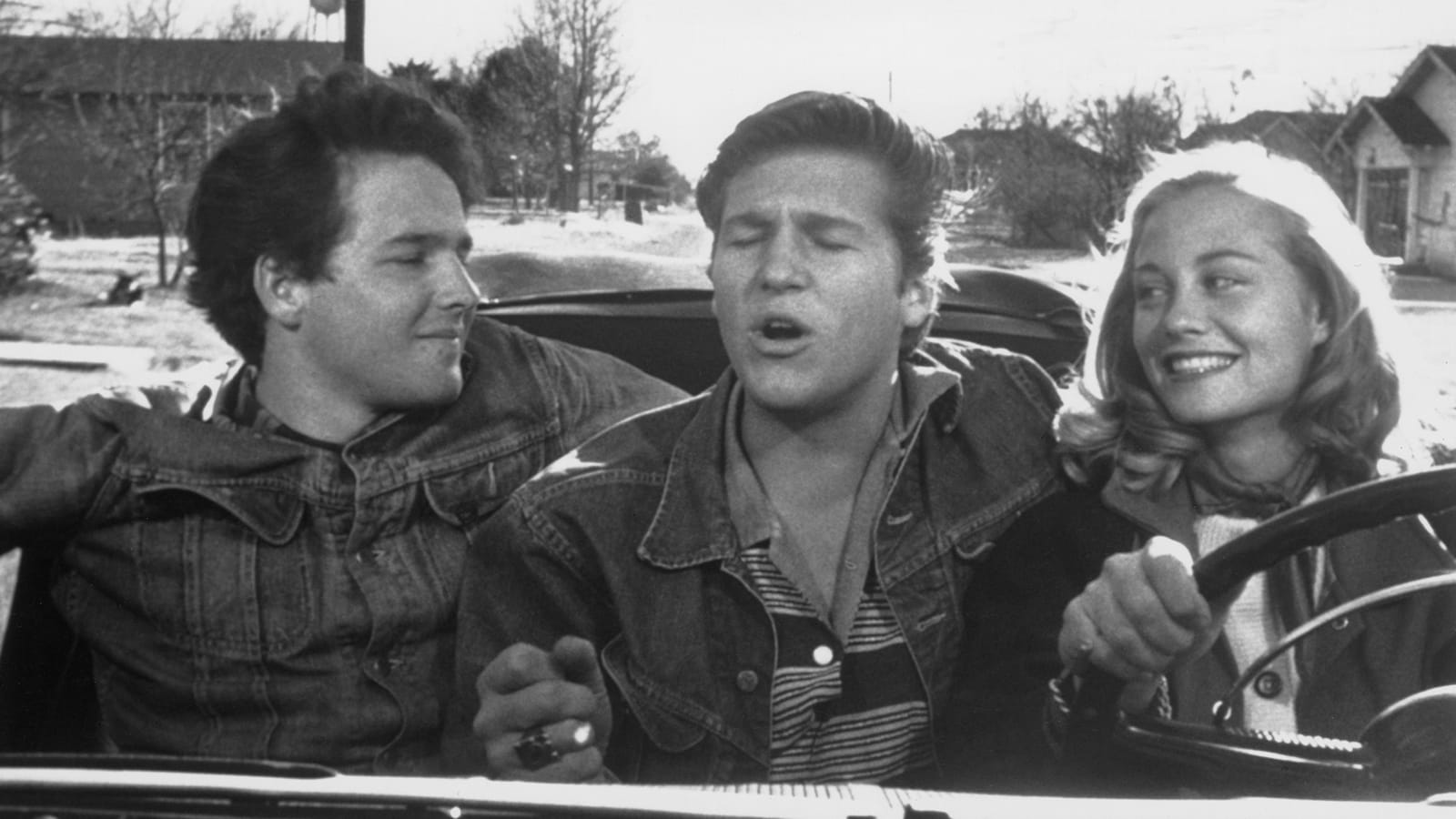
The Last Picture Show

The King of Marvin Gardens