Ashes and Diamonds
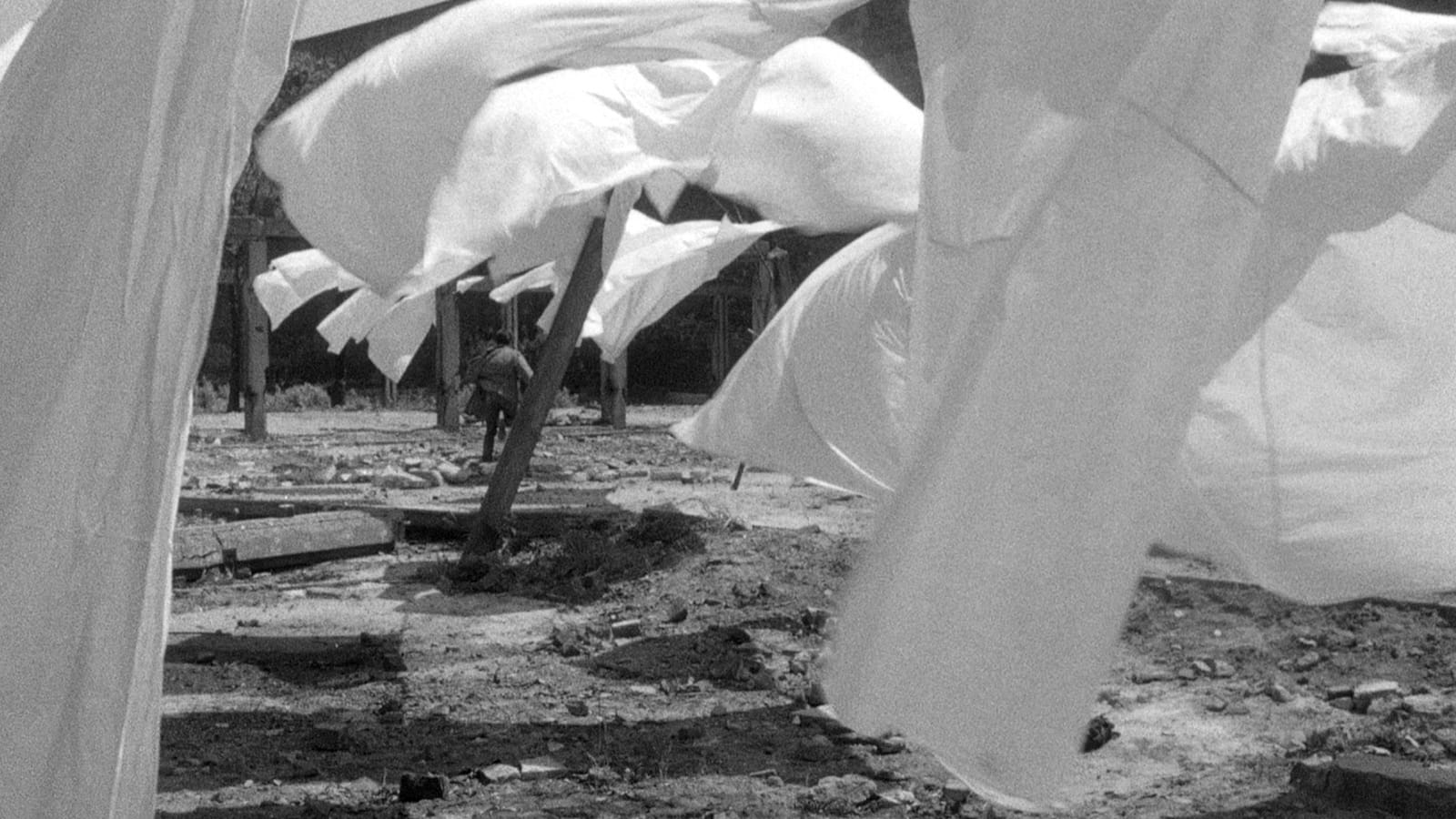
Andrzej Wajda’s third full-length film, Ashes and Diamonds (Popiol y diament) established the director as a leader of the new Polish cinema. Set in a provincial town on May 8, 1945, the day of the German capitulation, Ashes and Diamonds deals ostensibly with the emergence of a Russian-backed Communist regime threatened by armed adversaries. A regional party secretary (Szczuka) has arrived to set up a new government. But so have Andrzej and Maciek, underground soldiers with instructions to assassinate him. In a moment of confused transition, five years of occupation and resistance have come to a sudden end. Previously the Nazis were the common enemy. Now the two groups who led the anti-German struggle—the London-directed Home Army and the pro-Moscow People’s Army—are on opposite sides of the ideological divide. Because the Red Army liberated Poland, the pro-Soviet faction (headed by Poles returning from the USSR) has gained control. A state of civil war exists as splinter groups of Home Army irregulars take to the forests. Members of such a band, Andrzej and Maciek have been conditioned to feel that they owe unquestioning military allegiance to their commanders.
Based on Jerzy Andrzejewski’s 1948 novel of the same name, Ashes and Diamonds was adapted for the screen by Wajda and the author. Time and space have been condensed to less than twenty-four hours in and around a single location—the hotel Monopol—giving the drama great theatrical intensity. Maciek, representative of Poland’s “lost” war generation, is the tragic hero, compelled to commit a crime by the fatality of history. Bound by the soldier’s code of honor to a past steeped in blood, he kills on order without doubts or remorse, even when, as in the case of two working men, he murders in error. His eyes are opened to the possibility of a normal life and the senselessness of further killing only when he falls in love with the bartender Krystyna. Zbigniew Cybulski totally identifies with Maciek, bringing to the role a mysterious inner passion and a number of personal mannerisms, private rituals, and ritualistic props, such as the German canteen out of which he drinks his vodka, and the glasses he rarely removes.
Until 1958, it had been impossible for a Polish artist like Wajda to make a film in which an opponent of the new society was presented as a tragic victim. The Stalinist period in Poland from1949 to1953 had brought open terror, arrest and torture of members of the Home Army, as well as enforcement of Soviet cultural models. The Thaw in 1956 resulted in a more independent Polish Communist regime. Finally the arts, liberated from Soviet-imposed socialist realism, were allowed to return to the Polish tradition of poetic metaphor and political allusion.
During long years of dismemberment and foreign occupation, literature and drama in Poland had always kept alive belief in the nation’s revival. In Ashes and Diamonds, Wajda continues this tradition, posing the question of Poland’s postwar identity. The thoughtful, tired, middle-aged revolutionary Szczuka adheres to the communist line about building a collectivist future. But he lacks the energy and resources to accomplish his own goals. The terrorist Maciek has no answer but violence. Yet the handsome young rebel, overflowing with vitality, moves passionately among national mythic images of suffering and heroism: the white horse, the inverted crucified Christ, the poetry in the ruined church.
Although of different generations and opposing camps, Szczuka and Maciek have much in common. Both fought valiantly against the Nazis to liberate their homeland. Szczuka confronted the Fascists in Spain, where he was wounded, and then joined the Soviets in World War II; Maciek took part in the Warsaw Uprising. Both men remember their vast struggles as better times, and their fallen comrades as true heroes. And despite nostalgia for heroic deeds, Szczuka and Maciek attempt to free themselves from the past.
In a fatal web of circumstance, Szczuka and his surrogate son Maciek are drawn to each other. They have adjacent rooms in the hotel, and each time they meet, the younger man lights the older’s cigarette. The old Communist’s son—named Marek—has been arrested as a member of an outlaw group similar to Maciek’s, whose story he repeats.
When Szczuka ventures out alone at night to visit his imprisoned son, Maciek at last tracks him down. Shot repeatedly, the bleeding Communist falls against his assassin and dies clasped in his arms. The tragedy of wasted individuals reaches its climax with Maciek’s death throes in the dump heap, where he has been relegated by history. (In an odd footnote, Cybulski died tragically in 1967 while hopping a freight train. Wajda’s film of the same year Everything for Sale is, in part, a tribute to the actor.)
But the social tragedy of Poland reaches its high point with the somnambulistic polonaise at dawn when reactionaries, turncoats, and communists all join hands after the drunken banquet celebrating the new regime. This powerful image drives from Wyspianski’s 1901 play, The Wedding (later filmed and staged by Wajda). The trancelike steps constitute a dance of opportunism and compromise out of which the dancers cannot move.
The final juxtaposed scenes of Ashes and Diamonds raise troubling questions for the future. The two best men—on either side of the ideological conflict—are dead. But the dance of puppets goes on, more menacing to revolutionary ideals than terrorism.

More: Essays
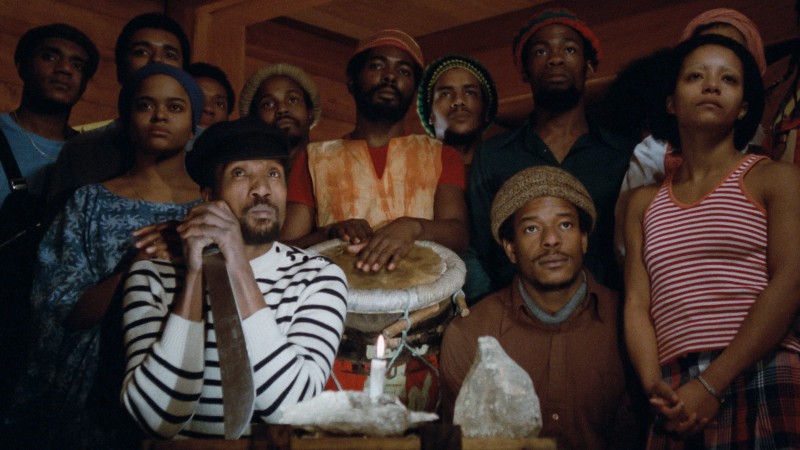
West Indies: The Fugitive Slaves of Liberty: Torrents of Fire, Torrents of Blood
Unfolding in a blaze of vivacious color, Med Hondo’s musical masterpiece is a wildly ambitious exploration of the history of French colonial aggression, the enslavement of African peoples, and their subsequent liberation struggles.

Sentimental Value: Between Trauma and the Sublime
In this powerful drama about family and memory, Joachim Trier explores how the past lives on in us, shapes us, and partly determines who we are and how we feel.
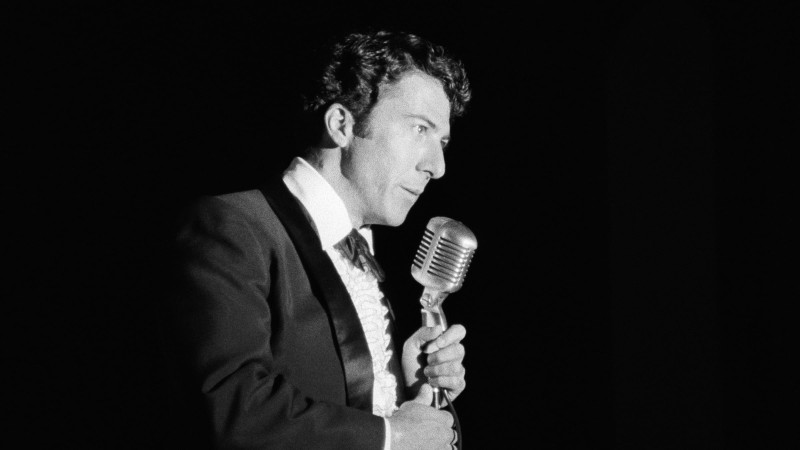
Lenny: High-Wire Act
Featuring a quasi-documentary format that was innovative for its time, Bob Fosse’s complex portrait of stand-up comedian Lenny Bruce is a gesture of postmortem outreach from one prickly, jagged-edged artist to another.
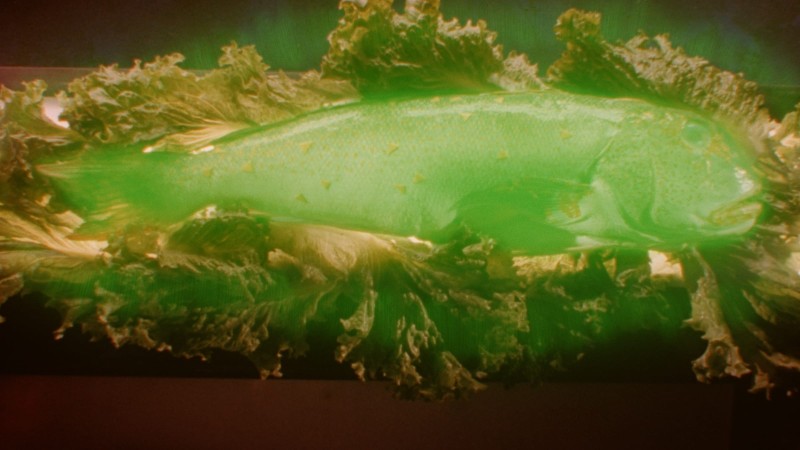
Fresh Kill: Fluid Transmission
New-media pioneer Shu Lea Cheang’s astonishingly prescient dystopian vision takes place in a world where technology feels sticky and bodily, and where networks seep into food, water, and flesh.